
 By
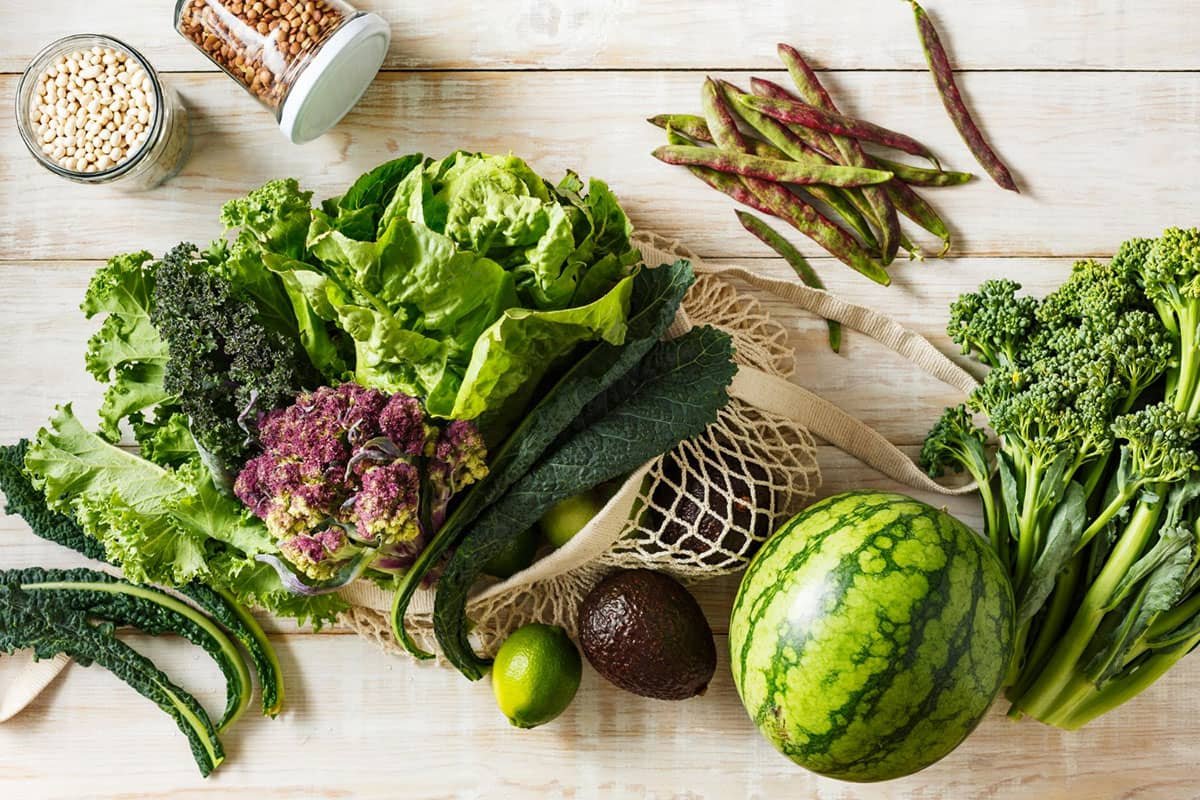
By Vegetables are one of the simplest ways to add more vitamins, minerals, fiber, and beneficial plant compounds to your everyday diet. But with so many choices in the produce aisle, you might wonder which ones offer the most nutritional value.
The good news is that there isn’t just one “healthiest” vegetable. Different vegetables provide different nutrients, which is why variety matters. Leafy greens such as spinach and kale are especially rich in certain vitamins and antioxidants, while colorful vegetables such as carrots and sweet potatoes provide carotenoids and other beneficial plant compounds.
For this guide, we’ve chosen 10 of the healthiest vegetables based on their overall nutrient density, fiber content, variety of vitamins and minerals, and usefulness in a balanced diet.
You’ll find familiar favorites such as broccoli, spinach, carrots, and sweet potatoes, along with simple ideas for adding more of them to your meals. We’ll also look at their nutritional benefits and the best ways to prepare and store vegetables without making healthy eating unnecessarily complicated.
The goal isn’t to eat every vegetable on this list every day. Instead, use it as inspiration to add more variety and color to your plate throughout the week.
If you’re working toward a healthier lifestyle, our guide to Long And Healthy Life offers additional tips for improving overall wellness.
What Makes A Vegetable Healthy?
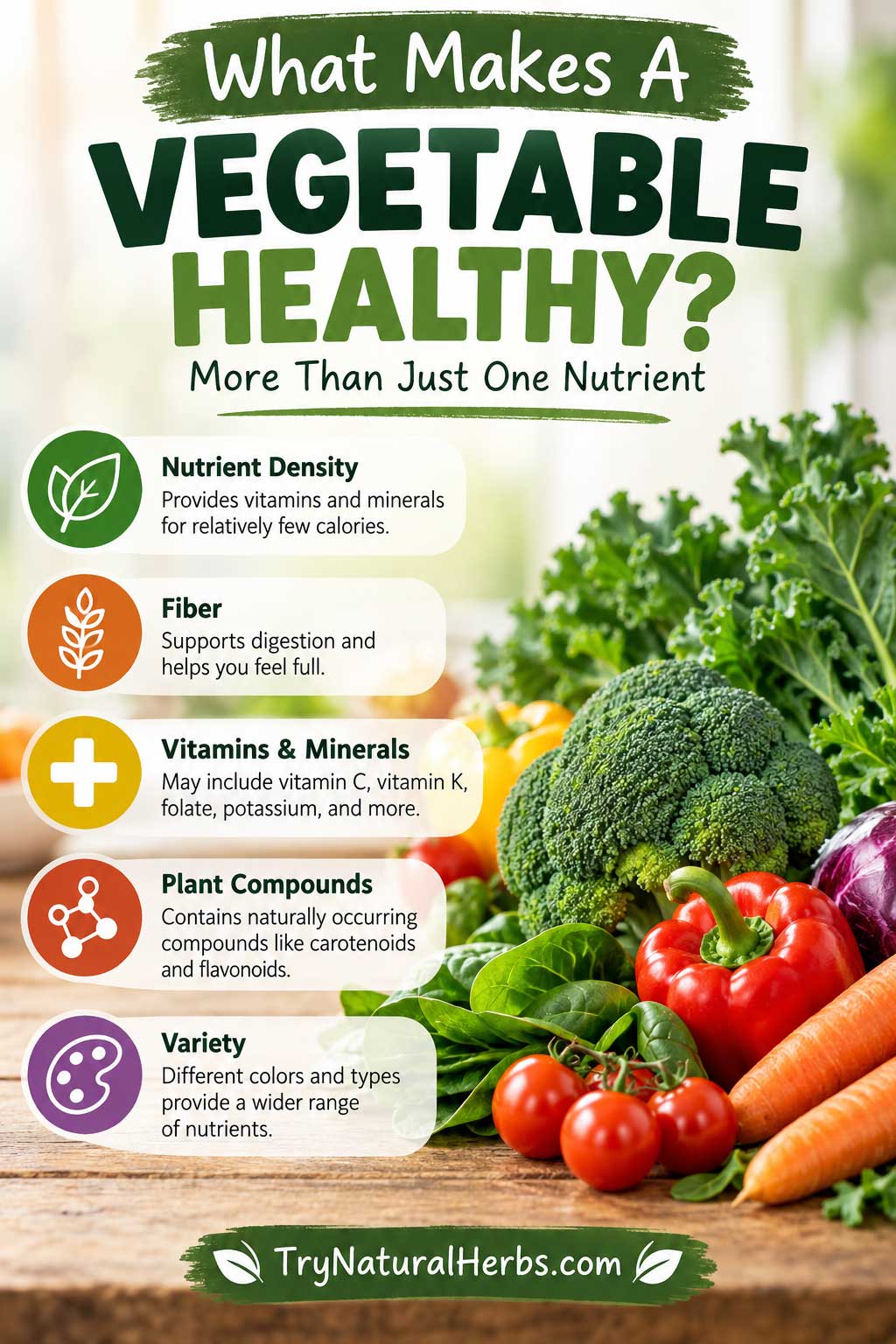
There’s no single nutrient that makes one vegetable “healthier” than another. Instead, the most nutritious vegetables tend to provide a combination of vitamins, minerals, fiber, and naturally occurring plant compounds while being relatively low in calories.
A few things are especially useful to consider:
- Nutrient density: Vegetables can provide substantial amounts of vitamins and minerals for relatively few calories.
- Fiber: Fiber supports normal digestion and helps make meals more satisfying.
- Vitamins and minerals: Depending on the vegetable, these may include vitamin C, vitamin K, folate, potassium, beta-carotene, and other important nutrients.
- Plant compounds: Colorful vegetables contain carotenoids, flavonoids, and other naturally occurring compounds that researchers continue to study for their potential roles in health.
- Variety: No single vegetable provides everything your body needs. Eating different colors and types is one of the easiest ways to obtain a broader range of nutrients.
This is why the healthiest vegetables aren’t necessarily exotic or expensive. Everyday foods such as spinach, broccoli, carrots, tomatoes, and sweet potatoes can all make valuable contributions to a balanced diet.
Rather than focusing on one “superfood,” aim to regularly eat a mix of leafy greens, cruciferous vegetables, root vegetables, and other colorful produce.
You may also enjoy learning about Natural Herbs That Can Help With Everyday Ailments, which can complement a nutrient-rich diet.

Top 10 Healthiest Vegetables
So which vegetables made the list?
The ten choices below aren’t meant to be a strict ranking. Instead, they represent a mix of leafy greens, cruciferous vegetables, root vegetables, legumes, and even fungi, each offering a somewhat different nutritional profile.
Here are 10 of the healthiest vegetables to consider adding to your regular rotation.
Broccoli: One Of The Healthiest Cruciferous Vegetables
Broccoli earns a place among the healthiest vegetables because it delivers an impressive variety of nutrients in a relatively small serving. This cruciferous vegetable provides vitamins C, K, B6, and vitamin A, along with folate, potassium, fiber, and several naturally occurring plant compounds.
Vitamin C supports normal immune function and collagen production, while vitamin K is important for normal blood clotting and bone health. The fiber in broccoli contributes to normal digestive function and can also help make meals more satisfying.
One of broccoli’s most interesting compounds is sulforaphane, which forms from glucosinolates when broccoli is chopped or chewed. Sulforaphane has attracted considerable scientific interest, although research into many of its potential health effects is still ongoing.
Best Ways to Eat Broccoli
Broccoli is easy to work into everyday meals. You can steam or roast it, add it to soups and stir-fries, toss it into pasta dishes, or serve it raw with hummus or another dip.
Try not to overcook it. Light steaming or roasting until the florets are tender but still slightly crisp preserves their texture, color, and flavor better than prolonged boiling.
Quick tip: Don’t throw away the stalk. Peel the tougher outer layer, then slice or shred the tender center for stir-fries, soups, slaws, or salads.
Spinach: A Nutrient-Dense Leafy Green
Spinach is a nutrient-dense leafy green that works well in everything from salads and sandwiches to soups, omelets, and smoothies. It provides vitamin K, folate, vitamin A in the form of carotenoids, and smaller amounts of several other vitamins and minerals.
Its deep green leaves contain plant compounds such as lutein and zeaxanthin, two carotenoids that accumulate in the retina of the eye. These compounds have been widely studied for their role in eye health.
Spinach also contains iron, although plant-based iron is not absorbed as efficiently as the heme iron found in animal foods. Pairing spinach with a source of vitamin C—such as bell peppers, tomatoes, or lemon juice—can help improve the absorption of non-heme iron.
Best Ways to Eat Spinach
Fresh baby spinach is an easy addition to salads, wraps, sandwiches, and smoothies. Mature spinach works particularly well when sautéed with garlic and olive oil or added to soups, pasta dishes, curries, and egg dishes.
Both raw and cooked spinach can be part of a healthy diet. Cooking reduces its volume considerably, making it easier to eat a larger amount, while raw spinach retains its fresh texture and works well in meals that require little preparation.
Quick tip: If fresh spinach regularly goes bad before you use it, keep frozen spinach on hand. It works especially well in soups, sauces, casseroles, smoothies, and cooked dishes.
Spinach also pairs naturally with culinary herbs such as basil, parsley, dill, and oregano. If you’d like to learn more about herbs and their traditional uses beyond everyday cooking, see our guide to Herbal Medicine Basics.
Kale: A Nutrient-Dense Leafy Green
Kale is one of the most nutrient-dense leafy greens you can add to your diet. Its dark green leaves provide an impressive combination of vitamins, minerals, fiber, and naturally occurring plant compounds.
Kale is particularly rich in vitamins A, C, and K. Vitamin A, supplied largely through carotenoids such as beta-carotene, contributes to normal vision and immune function. Vitamin C supports collagen production and helps protect cells from oxidative stress, while vitamin K is important for normal blood clotting and bone health.
Kale also provides smaller amounts of calcium, potassium, magnesium, and other minerals. Its fiber contributes to normal digestive function and can help make meals more filling.
Antioxidants and Plant Compounds in Kale
Beyond its vitamins and minerals, kale contains carotenoids and flavonoids, including lutein, zeaxanthin, quercetin, and kaempferol. These compounds have antioxidant activity and are among the reasons leafy green vegetables continue to receive considerable attention in nutrition research.
Like broccoli, kale belongs to the cruciferous vegetable family. It naturally contains glucosinolates, sulfur-containing compounds also found in vegetables such as cabbage, Brussels sprouts, cauliflower, and broccoli.
Best Ways to Eat Kale
Kale can be eaten raw or cooked. Add chopped leaves to salads, blend a small handful into smoothies, sauté them with garlic and olive oil, stir them into soups and stews, or bake the leaves into crispy kale chips.
If you find raw kale too tough or bitter, remove the thick stems and massage the chopped leaves with a little olive oil and lemon juice for a minute or two. This softens the leaves and makes them much more pleasant in salads.
Quick tip: Different varieties have slightly different textures. Curly kale works well for chips and cooked dishes, while the softer leaves of Tuscan or lacinato kale are particularly good for salads and soups.
Asparagus: Rich in Folate and Fiber
Asparagus is a spring vegetable known for its tender spears, distinctive flavor, and impressive nutritional profile. It is naturally low in calories while providing fiber, folate, vitamin K, and several other vitamins and minerals.
One of its standout nutrients is folate (vitamin B9), which is needed for DNA synthesis and normal cell division. Folate is especially important during periods of rapid growth, including pregnancy. Asparagus also provides vitamin K, which contributes to normal blood clotting and bone health.
You’ll also get smaller amounts of vitamins A, C, and E, along with potassium and other minerals. Its fiber content contributes to normal digestive function and helps add substance to meals without requiring a large number of calories.
Plant Compounds in Asparagus
Asparagus contains several naturally occurring plant compounds with antioxidant activity, including flavonoids and other polyphenols. It also contains glutathione, a compound naturally produced by the body and present in a variety of foods.
Another interesting feature of asparagus is its inulin, a type of fermentable fiber. Inulin acts as a prebiotic, meaning it can be used as a food source by certain beneficial bacteria living in the digestive tract.
Best Ways to Eat Asparagus
Asparagus doesn’t need much preparation to taste good. Roast the spears with olive oil, garlic, and black pepper, grill them until lightly charred, or quickly steam or sauté them until tender-crisp.
Chopped asparagus also works well in omelets, frittatas, pasta, risotto, soups, and grain bowls. Try not to cook it until it becomes very soft—the spears are generally more enjoyable when they retain a little bite.
Quick tip: Before cooking asparagus, trim off the tough, woody ends. With thicker spears, peeling the lower portion of the stalk can make them more tender and reduce waste.
Cauliflower: A Versatile Cruciferous Vegetable
Cauliflower may look simple, but nutritionally it has quite a bit to offer. Like broccoli, kale, cabbage, and Brussels sprouts, it belongs to the cruciferous vegetable family. It is naturally low in calories while providing vitamin C, folate, vitamin K, fiber, and several important plant compounds.
Vitamin C contributes to normal immune function, collagen production, and protection of cells from oxidative stress. Cauliflower’s fiber supports normal digestion and can help make meals more satisfying.
Cauliflower also provides choline, an essential nutrient involved in several processes in the body, including normal cell membrane structure and nervous system function. Although cauliflower isn’t among the richest dietary sources of choline, its contribution is another reason to include it as part of a varied diet.
Plant Compounds in Cauliflower
As a cruciferous vegetable, cauliflower naturally contains glucosinolates. When cauliflower is chopped, chewed, or otherwise broken down, these compounds can be converted into other biologically active substances, including isothiocyanates.
These compounds have attracted considerable scientific interest, particularly in research examining cruciferous vegetables and health. However, that doesn’t mean cauliflower itself should be treated as a cure or preventative treatment for any particular disease.
Best Ways to Eat Cauliflower
Cauliflower’s mild flavor is one of its biggest advantages in the kitchen. Roast the florets until the edges begin to brown, steam them for a simple side dish, add them to curries and soups, or mash cooked cauliflower with garlic and herbs.
You can also finely chop or grate cauliflower to make cauliflower rice. It won’t have exactly the same flavor or texture as regular rice, but it’s an easy way to add another serving of vegetables to a meal.
The leaves and stems are edible too. Instead of throwing them away, chop the tender stems and roast them with the florets. The leaves can also be roasted until their edges become crisp.
Quick tip: If you find plain cauliflower bland, don’t be afraid to season it generously. Garlic, turmeric, cumin, paprika, black pepper, parsley, thyme, and rosemary all pair particularly well with its mild flavor.
Sweet Potatoes: Rich in Beta-Carotene and Fiber
Sweet potatoes are naturally sweet root vegetables that provide fiber, complex carbohydrates, and a variety of vitamins and minerals. Orange-fleshed varieties are especially notable for their high concentration of beta-carotene, the pigment responsible for their bright orange color.
The body can convert beta-carotene into vitamin A, which is important for normal vision, immune function, and cell growth. Sweet potatoes also provide vitamin C, manganese, potassium, and dietary fiber.
Different Colors Offer Different Plant Compounds
Not every sweet potato has orange flesh. Depending on the variety, you may find sweet potatoes with orange, purple, cream, or white interiors.
Orange varieties are particularly rich in beta-carotene, while purple sweet potatoes contain anthocyanins, pigments also responsible for the blue, purple, and red colors found in foods such as blueberries and red cabbage.
Eating different varieties is an easy way to bring a broader range of naturally occurring plant compounds into your diet.
Fiber and Carbohydrates in Sweet Potatoes
Sweet potatoes provide both carbohydrates and fiber. Fiber supports normal digestive function and can help make a meal more satisfying.
Keeping the skin on, when appropriate and thoroughly washed, is an easy way to retain additional fiber. How sweet potatoes affect a meal nutritionally also depends on portion size, preparation method, and what you serve alongside them.
Best Ways to Eat Sweet Potatoes
Sweet potatoes can be baked whole, cut into wedges and roasted, steamed, mashed, or added to soups, stews, curries, and casseroles. Their natural sweetness works surprisingly well with savory seasonings such as garlic, rosemary, thyme, paprika, cumin, and black pepper.
For a simple meal, try a baked sweet potato topped with beans, vegetables, and a spoonful of plain yogurt or tahini. You can also roast cubes with olive oil and herbs for an easy side dish.
Quick tip: You don’t always need to peel sweet potatoes. The skin is edible, so when the potato is in good condition, simply scrub it thoroughly before cooking.
Brussels Sprouts: A Fiber-Rich Cruciferous Vegetable
Brussels sprouts look like miniature cabbages, and that’s no coincidence. They belong to the same cruciferous vegetable family as cabbage, broccoli, kale, and cauliflower.
They provide vitamin C, vitamin K, folate, fiber, manganese, and smaller amounts of several other nutrients. Vitamin C contributes to normal immune function and collagen production, while vitamin K is important for normal blood clotting and bone health.
Their fiber content also makes Brussels sprouts a useful addition to meals. Dietary fiber supports normal digestive function and provides food for some of the microorganisms that live in the digestive tract.
Plant Compounds in Brussels Sprouts
Like other cruciferous vegetables, Brussels sprouts contain naturally occurring glucosinolates. When the vegetable is chopped or chewed, these compounds can be broken down into other substances, including isothiocyanates.
Researchers continue to study these compounds and cruciferous vegetables more broadly. Rather than viewing Brussels sprouts as a special “superfood,” it makes more sense to enjoy them as one of many vegetables that can contribute different nutrients and plant compounds to a varied diet.
Best Ways to Eat Brussels Sprouts
If you remember Brussels sprouts as soft, bitter vegetables from childhood, preparation can make a big difference.
Try cutting them in half and roasting them with olive oil until the outer leaves become browned and crisp. Roasting brings out a sweeter, nuttier flavor that is very different from heavily boiled Brussels sprouts.
They can also be sautéed, steamed, grilled, or thinly shredded and eaten raw in salads and slaws. Garlic, mustard, lemon, balsamic vinegar, rosemary, thyme, and black pepper all pair well with their distinctive flavor.
Quick tip: For more even roasting, choose Brussels sprouts of roughly similar size and place the cut sides against the baking sheet. You’ll get better browning and crispier edges.
Carrots: Rich in Beta-Carotene and Vitamin A
Carrots are probably best known for their connection with eye health, and there is a good nutritional reason for that reputation. Orange carrots are rich in beta-carotene, a plant pigment that the body can convert into vitamin A.
Vitamin A is needed for normal vision, including the ability to see in low-light conditions. It also contributes to normal immune function, cell growth, and the maintenance of healthy skin and other tissues.
That doesn’t mean eating large amounts of carrots will give you better-than-normal eyesight. Instead, carrots can help provide the vitamin A your body needs to maintain normal visual function.
Carrots also provide dietary fiber, vitamin K, potassium, and several naturally occurring plant compounds.
Carrots Aren’t Always Orange
Orange may be the color we associate most strongly with carrots, but carrots also come in purple, yellow, red, and white varieties.
Their colors reflect differences in naturally occurring plant pigments. Orange carrots are particularly rich in beta-carotene, while purple varieties can contain anthocyanins. Red carrots may contain more lycopene, and yellow varieties provide carotenoids such as lutein.
Choosing several colors isn’t necessary for a healthy diet, but it can be an easy—and more interesting—way to add variety to your meals.
Best Ways to Eat Carrots
Carrots are equally useful raw and cooked. Slice them into sticks for a crunchy snack, grate them into salads and slaws, roast them with herbs, or add chopped carrots to soups, stews, curries, and casseroles.
Cooking carrots can soften their plant tissues and make some carotenoids easier for the body to access. Because carotenoids are fat-soluble, eating carrots as part of a meal containing some dietary fat—such as olive oil, avocado, nuts, or seeds—can also help with their absorption.
Quick tip: You don’t always have to peel carrots. If they’re fresh and the skin is in good condition, a thorough scrub under running water may be all they need before cooking.
Peas: A Plant-Based Source of Protein and Fiber
Green peas stand out from many of the other foods on this list because they provide a useful combination of plant-based protein, fiber, and carbohydrates. That makes them more filling than many non-starchy vegetables and a particularly useful ingredient in vegetarian and plant-focused meals.
Peas provide vitamin C, vitamin K, folate, iron, potassium, and manganese, along with smaller amounts of several other vitamins and minerals.
Their combination of fiber and protein is especially noteworthy. Fiber supports normal digestive function, while protein supplies amino acids the body uses to build and maintain muscles and other tissues.
Are Peas Actually Vegetables?
Green peas come from a legume plant, belonging to the same botanical family as beans, lentils, and chickpeas. In everyday cooking and dietary guidance, however, fresh and frozen green peas are commonly treated as vegetables.
Nutritionally, they also differ somewhat from vegetables such as spinach, broccoli, or cauliflower because they contain more starch, carbohydrates, and protein.
That isn’t a reason to avoid them. It simply means peas bring a different nutritional profile to your plate—which is exactly why eating a variety of plant foods is useful.
Fresh, Frozen, or Canned Peas?
Fresh peas are delicious when they’re in season, but frozen peas are one of the easiest vegetables to keep on hand. They require almost no preparation and can be added directly to many cooked dishes.
Canned peas are convenient too, although they may contain added sodium. If that’s something you’re watching, check the label or rinse and drain them before serving.
Best Ways to Eat Peas
Add peas to soups, stews, curries, pasta, risotto, fried rice, grain bowls, or casseroles. They also work well mashed with herbs and a little olive oil or blended into dips and spreads.
Because frozen peas cook quickly, add them toward the end of cooking rather than simmering them for a long time. This helps preserve their bright color and pleasant texture.
Quick tip: Keep a bag of frozen peas in the freezer for nights when you’re short on fresh vegetables. A handful can go straight into soup, pasta, rice, or a skillet meal without thawing first.
Mushrooms: Nutrient-Rich Fungi With a Unique Profile
Mushrooms aren’t actually vegetables. They belong to the kingdom Fungi, but because they’re prepared and eaten much like vegetables, they’re commonly grouped with them in everyday cooking and dietary guidance.
Nutritionally, mushrooms are interesting because their profile is quite different from most vegetables. Depending on the variety, they can provide B vitamins such as riboflavin, niacin, and pantothenic acid, along with minerals including selenium, copper, phosphorus, and potassium.
Mushrooms are also naturally low in calories while providing the deep savory flavor known as umami, which makes them particularly useful for adding richness to plant-focused dishes.
Mushrooms and Vitamin D
One of the most unusual nutritional features of mushrooms is their relationship with vitamin D.
Mushrooms contain a compound called ergosterol that can be converted into vitamin D2 when the mushrooms are exposed to ultraviolet (UV) light. As a result, UV-exposed mushrooms can contain considerably more vitamin D than mushrooms that haven’t received this exposure.
Not every package of mushrooms contains a meaningful amount, though. If you’re buying mushrooms specifically for vitamin D, check the nutrition label rather than assuming all varieties provide the same amount.
Ergothioneine and Other Compounds
Mushrooms also contain ergothioneine, a naturally occurring sulfur-containing compound with antioxidant properties. Researchers continue to investigate ergothioneine and its possible roles in human health, but it’s too early to treat mushrooms or ergothioneine as a treatment for any health condition.
Different mushroom varieties have different nutritional profiles, so rotating among button, cremini, portobello, shiitake, oyster, and other edible varieties can add both nutritional and culinary variety.
Best Ways to Eat Mushrooms
Mushrooms can be sautéed, roasted, grilled, stuffed, or added to soups, stews, omelets, pasta, risotto, and stir-fries. Their savory flavor also makes finely chopped mushrooms useful for adding texture and depth to burgers, meat sauces, or plant-based dishes.
When sautéing mushrooms, give them enough room in the pan. Crowding the pan traps moisture and tends to steam them rather than allowing them to brown.
Quick tip: Store fresh mushrooms in a breathable paper bag or their original ventilated container in the refrigerator. Avoid sealing them in an airtight plastic bag, where accumulated moisture can make them deteriorate more quickly.

Nutritional Benefits of Eating More Vegetables
Vegetables provide much more than individual vitamins and minerals. Eating a variety of them throughout the week can contribute fiber, micronutrients, and numerous naturally occurring plant compounds to your diet.
The nutritional profile varies considerably from one vegetable to another, which is one reason variety matters more than trying to identify a single “best” vegetable.
Vitamins
Vegetables can provide vitamins A, C, K, and several B vitamins, although the amounts vary by type.
Dark leafy greens such as spinach and kale are notable sources of vitamin K and carotenoids that the body can convert into vitamin A. Broccoli and Brussels sprouts provide vitamin C, while asparagus and peas contribute folate.
Rather than relying heavily on one vegetable, eating several different types helps provide a broader mix of vitamins.
Minerals
Vegetables also contribute minerals such as potassium, magnesium, manganese, iron, and calcium.
The amount—and how readily the body absorbs a mineral—depends on the vegetable and the rest of the meal. For example, spinach contains iron, but because it is non-heme iron from a plant source, it isn’t absorbed as efficiently as heme iron from animal foods.
Pairing plant sources of iron with vitamin C-rich foods can improve non-heme iron absorption.
Fiber
Vegetables are an important source of dietary fiber, especially when eaten regularly as part of an overall fiber-rich diet.
Fiber contributes to normal bowel function, adds bulk to the diet, and can help meals feel more satisfying. Certain types of fiber also serve as food for microorganisms living in the digestive tract.
Broccoli, Brussels sprouts, peas, carrots, sweet potatoes, and many other vegetables can all contribute to your daily fiber intake.
Antioxidants and Plant Compounds
The colors in vegetables aren’t there just for appearance. Many come from naturally occurring plant pigments and compounds.
Orange carrots and sweet potatoes contain carotenoids such as beta-carotene. Purple vegetables may contain anthocyanins, while tomatoes are well known for the carotenoid lycopene. Cruciferous vegetables such as broccoli and Brussels sprouts contain glucosinolates.
These compounds are actively studied in nutrition research, but their presence doesn’t mean an individual vegetable can prevent or treat disease. Their value is best understood as part of an overall varied diet.
Why Variety Matters
No single vegetable provides every nutrient your body needs.
Instead of concentrating on one supposed “superfood,” try including several types and colors throughout the week. Leafy greens, cruciferous vegetables, root vegetables, legumes, and other colorful produce each bring something different to the table.
A simple approach is to rotate what you buy. If you usually reach for broccoli and carrots, occasionally switch in Brussels sprouts, asparagus, cauliflower, spinach, or another vegetable you don’t eat as often.
You don’t need a perfect combination at every meal. What matters more is building variety into your diet over time.
How Vegetables Support Overall Health
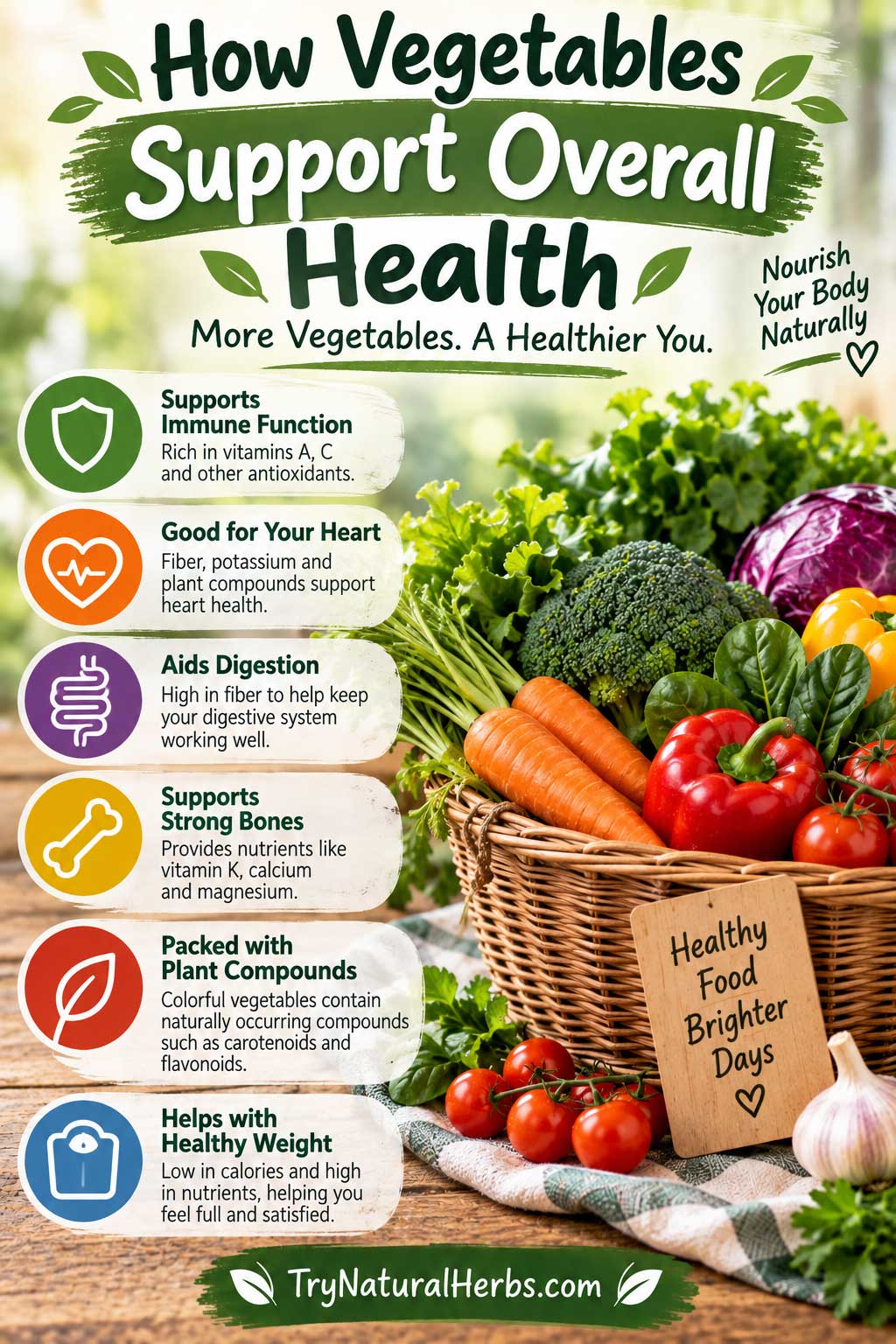
Vegetables contribute nutrients that the body uses for many everyday functions, from digestion and normal immune function to maintaining bones, muscles, and other tissues. They also provide fiber and a wide range of naturally occurring plant compounds, including many substances with antioxidant properties.
The benefits don’t come from one vegetable or nutrient alone. They are part of a broader dietary pattern built around a variety of nutritious foods. Developing that kind of balanced eating pattern is also one of the themes explored in our guide to living a Long And Healthy Life.
Support Normal Immune Function
Several nutrients found in vegetables are involved in normal immune function.
Vitamin C, found in foods such as broccoli and Brussels sprouts, and vitamin A, which the body can produce from carotenoids in carrots and sweet potatoes, are two examples.
Eating a varied diet helps provide these nutrients consistently, but it’s better to think of vegetables as supporting normal immune function rather than as foods that “boost” the immune system.
Support Healthy Digestion
Vegetables can make an important contribution to your daily fiber intake.
Fiber helps maintain normal bowel function, while certain fermentable fibers provide food for microorganisms living in the digestive tract. Asparagus, for example, contains inulin, while vegetables such as broccoli, Brussels sprouts, peas, and carrots contribute other types of dietary fiber.
Because increasing fiber suddenly can cause bloating or gas for some people, it can be more comfortable to increase fiber-rich foods gradually while drinking adequate fluids.
Help With Fullness and Weight Management
Many non-starchy vegetables provide relatively few calories for their volume, allowing you to build larger, more satisfying meals around them.
Fiber can also contribute to feelings of fullness. However, vegetables aren’t weight-loss foods by themselves. Portion sizes, preparation methods, total calorie intake, physical activity, and the rest of your eating pattern all matter.
A plate of roasted vegetables, for example, can fit very differently into a meal depending on how much oil, sauce, cheese, or other ingredients are added.
Support Cardiovascular Health
Vegetables can provide potassium, magnesium, fiber, and other nutrients that are relevant to cardiovascular health.
Potassium, for example, is involved in normal muscle and nerve function and plays a role in blood pressure regulation. Fiber-rich foods can also be part of dietary patterns associated with cardiovascular health.
The important point is the overall eating pattern—not relying on a particular vegetable as a treatment for high blood pressure, high cholesterol, or another medical condition.
Contribute Nutrients Needed for Bone Health
Bone health involves more than calcium.
Vitamin K, magnesium, calcium, protein, vitamin D, and several other nutrients all play roles in maintaining normal bones. Leafy greens such as kale provide vitamin K, while different vegetables can contribute smaller amounts of minerals such as calcium and magnesium.
Vegetables are therefore one part of a varied diet that supplies the nutrients bones need throughout life.
Provide a Variety of Plant Compounds
Vegetables contain a wide range of naturally occurring plant compounds, and their colors can offer clues about some of them.
Orange vegetables may contain beta-carotene, purple vegetables can contain anthocyanins, tomatoes provide lycopene, and cruciferous vegetables contain glucosinolates.
Many of these compounds are being studied for their biological effects. It’s reasonable to include a wide variety of colorful vegetables in your diet, but individual compounds shouldn’t be interpreted as proof that a particular food can prevent or treat disease.
Encourage Better Eating Habits
One of the most practical benefits of eating more vegetables is simply what happens to the rest of your meals.
Adding spinach to an omelet, vegetables to a soup, roasted broccoli to dinner, or carrots and hummus to a snack increases the variety of whole foods in your diet without requiring a complicated nutrition plan.
You don’t need to overhaul every meal at once. Adding one extra vegetable to a meal you already enjoy is a perfectly good place to start.
Easy Ways to Eat More Vegetables Every Day
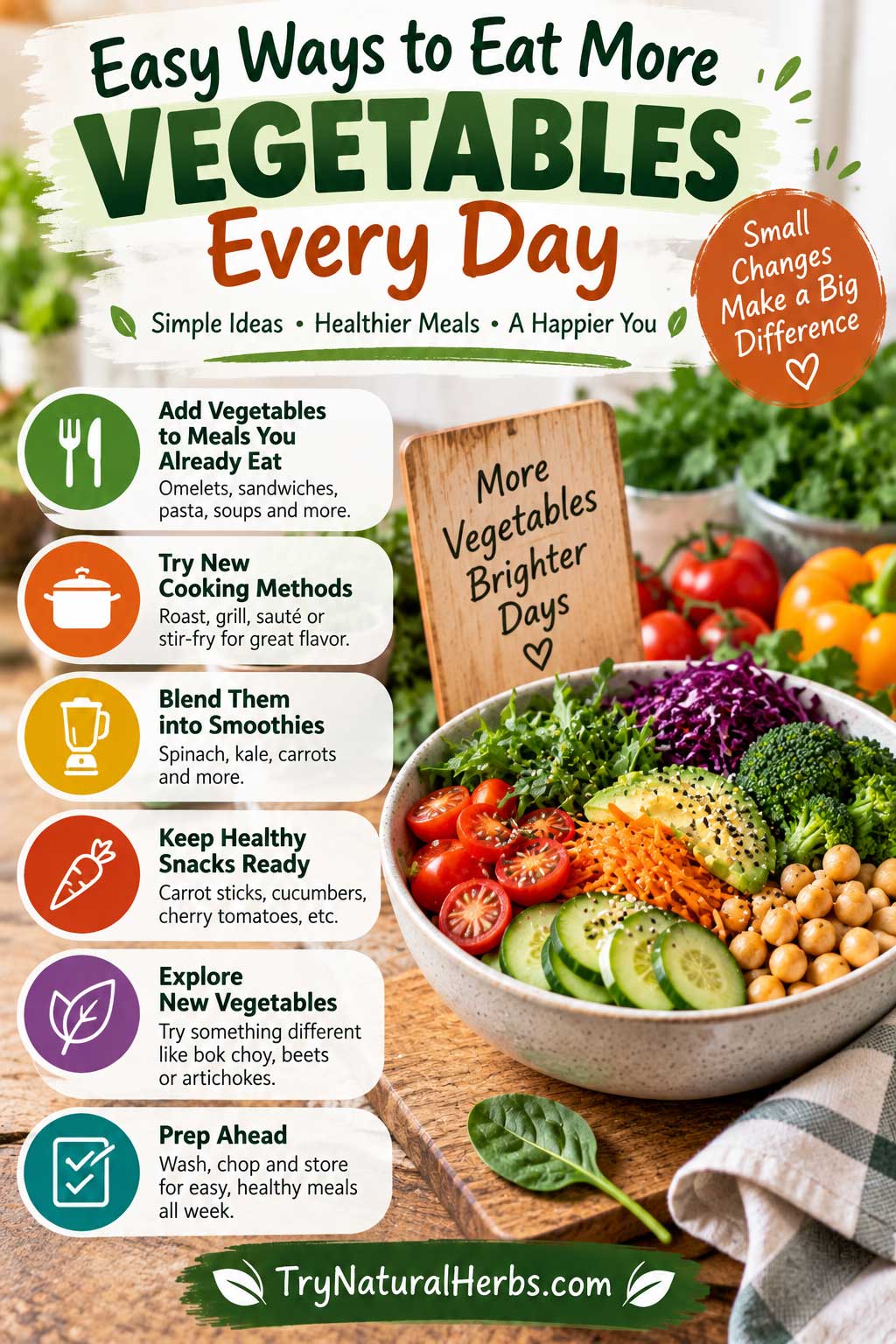
Eating more vegetables doesn’t require completely changing the way you cook. Often, the easiest approach is to add vegetables to meals you already make rather than trying to create an entirely new menu.
A handful of spinach in your eggs, frozen peas stirred into pasta, or an extra tray of vegetables in the oven can add up over the course of a week.
Add Something to Meals You Already Eat
Instead of starting with the goal of eating vegetables at every meal, look at what you already cook and ask where an extra vegetable would fit naturally.
Add spinach, mushrooms, or peppers to scrambled eggs and omelets. Put lettuce, tomatoes, cucumber, or roasted peppers into sandwiches and wraps. Stir peas, broccoli, mushrooms, or spinach into pasta, rice, soups, and casseroles.
For dinner, even a simple side of roasted carrots, broccoli, cauliflower, or Brussels sprouts can add another vegetable without changing the main dish.
Experiment With Different Cooking Methods
If you think you don’t like a particular vegetable, try preparing it differently before giving up on it.
Boiled Brussels sprouts and roasted Brussels sprouts, for example, can taste surprisingly different. Roasting brings out browned, slightly sweet flavors, while grilling adds smokiness and sautéing can keep vegetables crisp and flavorful.
Herbs and spices help too. Garlic, rosemary, thyme, oregano, paprika, cumin, dill, parsley, and black pepper can completely change the character of a simple vegetable dish.
Add Vegetables to Smoothies
Smoothies can be an easy way to use certain vegetables, particularly leafy greens.
Spinach has a relatively mild flavor and blends easily with fruits such as berries, mango, pineapple, or banana. Kale has a stronger flavor but can also work well when paired with naturally sweet fruit.
Carrots, cucumber, cooked beet, and even small amounts of frozen cauliflower can work in certain smoothie combinations.
If you’d like some inspiration, browse our collection of Healthy Smoothie Recipes for more ways to combine fruits, vegetables, and other everyday ingredients.
Keep Easy Vegetable Snacks Available
Vegetables are much more likely to become a snack when they’re already washed and ready to eat.
Try keeping carrot sticks, sliced cucumber, bell pepper strips, celery, snap peas, or cherry tomatoes in the refrigerator. Pair them with hummus, guacamole, bean dip, or a yogurt-based dip if you want something more substantial.
You don’t have to replace every snack with raw vegetables. The goal is simply to make them one convenient option.
Try One New Vegetable at a Time
It’s easy to fall into a routine of buying the same broccoli, carrots, and lettuce every week.
Every so often, choose something different—perhaps bok choy, beets, Swiss chard, watercress, turnips, fennel, or artichokes.
You may not love everything you try, and that’s fine. Finding two or three new vegetables you genuinely enjoy is more useful than forcing yourself to eat something simply because it’s considered healthy.
Use Fresh and Frozen Vegetables
Fresh vegetables are great, but they aren’t your only option.
Frozen spinach, broccoli, cauliflower, peas, green beans, and mixed vegetables can be especially useful when you’re busy. They keep much longer than fresh produce and can often go directly from the freezer into soups, stir-fries, pasta dishes, and other cooked meals.
Having a few bags in the freezer also gives you a backup when the vegetable drawer is empty.
Prepare Some Vegetables Ahead of Time
A little preparation can make weekday meals easier.
Wash and chop vegetables that you’ll use within the next few days, or roast a larger batch and refrigerate the leftovers for grain bowls, salads, wraps, and side dishes.
You don’t need to prep an entire week’s worth of meals. Even preparing tomorrow’s vegetables while you’re already making dinner can save time.
Let Vegetables Take Up More of the Plate
Vegetables don’t always have to sit in a small pile beside the main course.
Build meals around a vegetable stir-fry, hearty soup, large salad, stuffed peppers, roasted vegetable bowl, or vegetable-rich curry. Another easy approach is simply to increase the amount of vegetables in dishes you already enjoy.
Most importantly, make vegetables taste good. A vegetable you genuinely enjoy eating—and therefore eat regularly—is far more useful than a supposedly perfect one that stays untouched in the refrigerator.
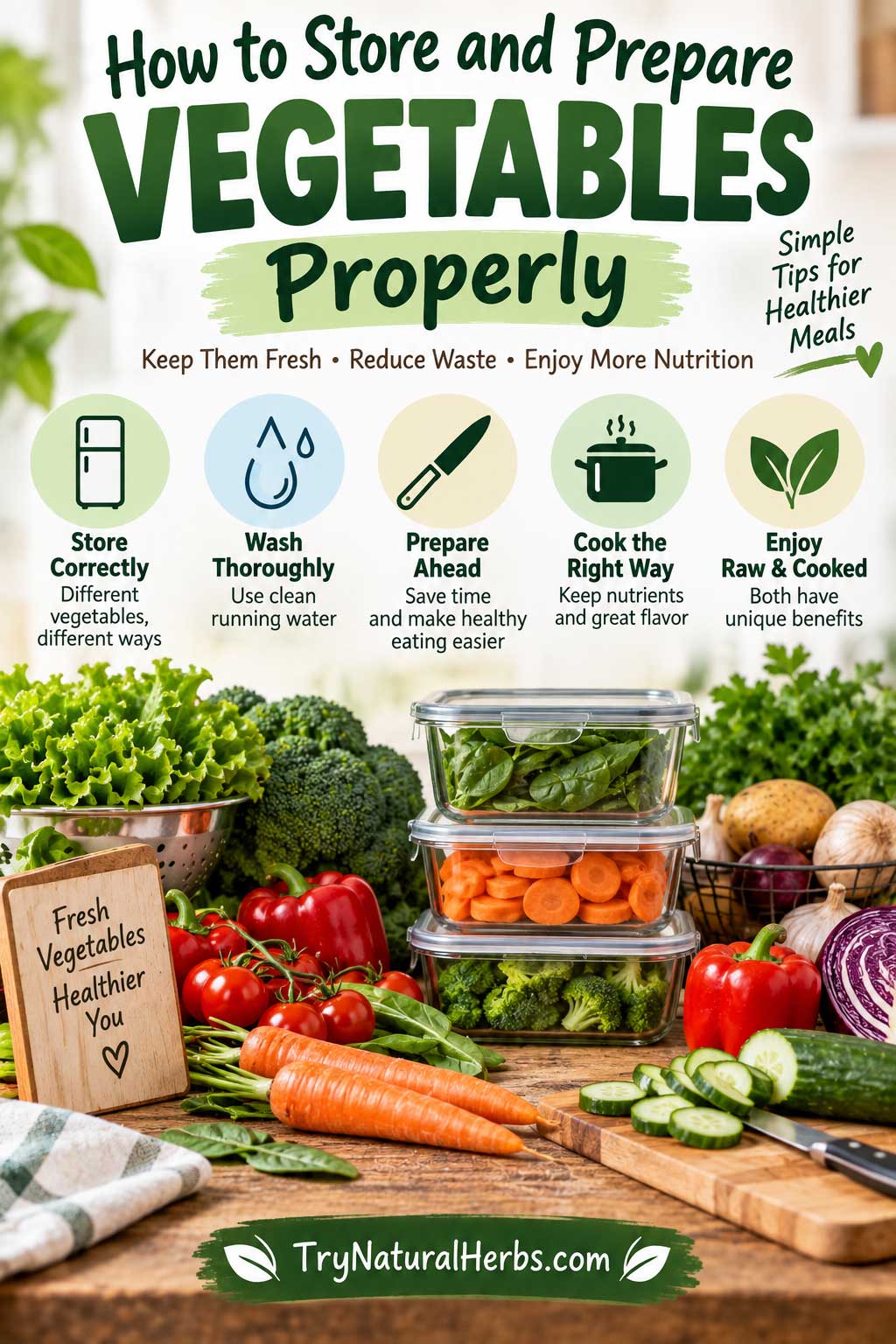
How to Store and Prepare Vegetables Properly
Buying nutritious vegetables doesn’t help much if half of them end up forgotten in the back of the refrigerator. How you store, wash, and cook vegetables can affect their freshness, texture, flavor, and—in some cases—the availability of certain nutrients.
Fortunately, vegetables don’t require complicated handling. A few basic habits can help them last longer and reduce unnecessary food waste.
Store Different Vegetables Differently
Not every vegetable should be stored the same way.
Leafy greens such as spinach and kale generally keep best refrigerated and protected from excess moisture. A container or bag that allows some airflow can help prevent condensation from building up around the leaves.
Carrots, broccoli, cauliflower, Brussels sprouts, asparagus, and many other vegetables also belong in the refrigerator.
Potatoes, onions, and garlic are different. They generally keep better in a cool, dry, dark, and well-ventilated place rather than in the refrigerator. Potatoes and onions should also be stored separately because keeping them together can encourage faster deterioration.
Pay Attention to Ethylene
Some fruits produce ethylene gas, a natural plant hormone involved in ripening.
Apples, bananas, pears, avocados, and some other fruits can release ethylene as they ripen. Certain vegetables are sensitive to it and may yellow, soften, or deteriorate more quickly when stored nearby.
You don’t need to reorganize your entire kitchen around ethylene, but separating sensitive vegetables from high-ethylene-producing fruits can sometimes help them stay fresh longer.
Wash Vegetables Under Running Water
Wash fresh vegetables thoroughly under clean running water before cutting, cooking, or eating them.
Firm produce such as carrots and potatoes can be gently scrubbed with a clean produce brush to remove soil from the surface.
Plain running water is generally sufficient for washing produce. Soap, dish detergent, and household cleaning products should not be used on fruits and vegetables.
For many types of produce, waiting to wash them until shortly before use can also help prevent excess moisture from shortening their storage life.
Raw and Cooked Vegetables Both Have Advantages
Raw isn’t automatically better than cooked.
Cooking can reduce the amount of some heat-sensitive or water-soluble nutrients, particularly when vegetables are boiled for long periods and the cooking water is discarded.
On the other hand, cooking can soften plant cell walls and make certain compounds easier for the body to access. For example, cooking carrots can improve the availability of some carotenoids.
Rather than worrying about whether raw or cooked is universally healthier, enjoy a mixture of both.
Choose Cooking Methods You Actually Enjoy
Steaming is useful for quickly cooking vegetables while retaining their color and texture, but it isn’t the only healthy cooking method.
Roasting can bring out sweetness and create browned, crisp edges. Sautéing and stir-frying are fast and flavorful, while grilling can add smokiness. Soups and stews also have an advantage: nutrients that move into the cooking liquid aren’t necessarily discarded because you consume the broth too.
The best cooking method is often the one that makes you want to eat the vegetables.
Avoid Overcooking When Possible
You don’t need to eat vegetables nearly raw to make them nutritious, but cooking some vegetables until they’re extremely soft can affect their flavor, texture, color, and levels of certain heat-sensitive nutrients.
For vegetables such as broccoli, asparagus, green beans, and Brussels sprouts, cooking until tender but not mushy often produces a better result.
Root vegetables such as carrots and sweet potatoes can tolerate longer cooking and may actually develop richer flavors when roasted.
Don’t Automatically Throw Away Stems and Leaves
Some of the parts we routinely discard are perfectly edible.
Broccoli stalks can be peeled and sliced for stir-fries or slaws. Cauliflower stems and leaves can be roasted. Beet greens can be cooked like other leafy greens, and carrot tops can be used in small amounts in sauces, pestos, and other dishes.
Using more of the vegetable is an easy way to reduce food waste—and occasionally discover a part you like just as much as the one you normally eat.
Proper storage and preparation don’t need to become another set of complicated food rules. Store vegetables according to their needs, wash them safely, cook them in ways you enjoy, and use as much of them as you reasonably can.
Frequently Asked Questions
What is the healthiest vegetable overall?
There isn’t one vegetable that can be considered the healthiest for everyone. Different vegetables provide different combinations of vitamins, minerals, fiber, and plant compounds.
Leafy greens such as spinach and kale are particularly nutrient-dense, while broccoli and Brussels sprouts provide nutrients and compounds characteristic of cruciferous vegetables. Carrots and sweet potatoes are notable for carotenoids such as beta-carotene.
Instead of searching for one “best” vegetable, aim to eat several different types throughout the week.
How many vegetables should you eat per day?
The amount you need depends on factors such as age, sex, and overall calorie needs. For many adults, U.S. dietary guidance recommends roughly 2 to 4 cups of vegetables per day, depending on individual calorie requirements.
You don’t necessarily need to eat vegetables at every meal. Spreading them across meals and snacks is simply one practical way to reach your daily amount.
Are frozen vegetables as healthy as fresh vegetables?
Frozen vegetables can be an excellent choice.
Many are frozen relatively soon after harvest, helping preserve their nutritional quality. Fresh vegetables can also be highly nutritious, but their nutrient content can change during transportation and storage.
Rather than worrying about whether fresh or frozen is always better, choose whichever option makes it easier for you to eat vegetables regularly. When buying frozen vegetables, check whether sauces, salt, or other ingredients have been added.
Which vegetables are highest in fiber?
Artichokes, peas, Brussels sprouts, broccoli, carrots, sweet potatoes, and other vegetables can all contribute meaningful amounts of dietary fiber.
Remember that your total fiber intake matters more than finding the single highest-fiber vegetable. Beans, lentils, whole grains, fruits, nuts, and seeds can also contribute substantially to daily fiber intake.
Can vegetables help with weight management?
Vegetables can be useful in a weight-management eating pattern because many provide relatively few calories for their volume while also contributing fiber.
That doesn’t make vegetables weight-loss foods by themselves. Total calorie intake, portion sizes, preparation methods, physical activity, sleep, and the rest of your diet all play roles in body-weight management.
Is it better to eat vegetables raw or cooked?
Neither is universally better.
Raw vegetables retain nutrients that may be sensitive to heat, while cooking can make certain plant compounds easier for the body to absorb. Cooking also makes some vegetables easier to chew and digest.
A varied diet that includes both raw and cooked vegetables is a practical approach.
What are the best vegetables for beginners?
Start with vegetables that are easy to find, simple to prepare, and compatible with foods you already enjoy.
Carrots, broccoli, spinach, peas, cauliflower, mushrooms, and sweet potatoes are good starting points because they can be used in many different meals.
More importantly, experiment until you discover vegetables and preparation methods you genuinely like. You’re much more likely to eat them regularly.
What are cruciferous vegetables?
Cruciferous vegetables belong to the Brassicaceae family and include broccoli, cauliflower, kale, Brussels sprouts, cabbage, bok choy, and several other vegetables.
They’re known for containing naturally occurring sulfur-containing compounds called glucosinolates, in addition to vitamins, minerals, fiber, and other plant compounds.
Can you eat vegetables every day?
Yes. Eating vegetables every day is consistent with general healthy-eating recommendations.
Rather than eating the same vegetables repeatedly, try rotating among leafy greens, cruciferous vegetables, root vegetables, legumes, and vegetables of different colors. Variety helps provide a broader range of nutrients and plant compounds.
What is the easiest way to eat more vegetables?
Start by adding vegetables to foods you already eat.
Add spinach or mushrooms to eggs, frozen peas to pasta or rice, vegetables to soups and stews, or an extra vegetable side at dinner. Keeping frozen vegetables available can also make this much easier on busy days.
Small changes that become routine are usually more practical than trying to completely change your diet overnight.
Final Thoughts: Variety Matters Most
The 10 healthiest vegetables in this guide—spinach, broccoli, kale, asparagus, cauliflower, sweet potatoes, Brussels sprouts, carrots, peas, and mushrooms—each bring something different to the table.
Some stand out for carotenoids, others for vitamin K, folate, fiber, or the distinctive plant compounds found in cruciferous vegetables. Peas provide more protein than many vegetables, while mushrooms have a nutritional profile unlike anything else on the list.
But you don’t need to eat all ten every day, and there’s no reason to obsess over which one ranks #1.
Variety matters more than finding the perfect vegetable.
Choose vegetables you actually enjoy, prepare them in ways that taste good to you, and occasionally try something new. Fresh, frozen, raw, roasted, steamed, or tossed into a favorite recipe—they can all have a place in a balanced diet.
If you currently eat very few vegetables, start small. Add spinach to your eggs, roast some broccoli with dinner, keep frozen peas in the freezer, or snack on carrots with hummus. Simple habits are much easier to maintain than trying to transform your entire diet overnight.
And remember, vegetables are only one part of a healthy lifestyle. A balanced diet, regular physical activity, adequate sleep, and other everyday habits all contribute to long-term health.
If you’d like to continue exploring plant-based approaches to everyday wellness, read our guides to Natural Herbs That Can Help With Everyday Ailments and Herbal Medicine Basics.
References
- U.S. Department of Agriculture. MyPlate: Vegetable Group. Provides guidance on recommended daily vegetable intake, vegetable subgroups, and what counts as a cup of vegetables.
- National Institutes of Health, Office of Dietary Supplements. Vitamin A and Carotenoids — Health Professional Fact Sheet. Information on beta-carotene, vitamin A, normal vision, immune function, growth, and cell development.
- National Institutes of Health, Office of Dietary Supplements. Vitamin C — Health Professional Fact Sheet. Information on vitamin C’s role in collagen synthesis and antioxidant activity.
- National Institutes of Health, Office of Dietary Supplements. Vitamin K — Health Professional Fact Sheet. Information on vitamin K’s role in normal blood clotting and bone metabolism.
- National Institutes of Health, Office of Dietary Supplements. Manganese — Health Professional Fact Sheet. Information on manganese, dietary sources, metabolism, and its physiological roles.
- National Cancer Institute. Cruciferous Vegetables and Cancer Prevention. Information on broccoli, kale, cauliflower, Brussels sprouts, and other cruciferous vegetables, including glucosinolates and their breakdown products.
- Harvard T.H. Chan School of Public Health, The Nutrition Source. Fiber. Information on dietary fiber, digestion, regularity, satiety, fermentable fibers, and food sources.
- Harvard T.H. Chan School of Public Health, The Nutrition Source. Vegetables and Fruits. Overview of vegetable variety, nutrition, fiber, carotenoids, and the role of vegetables and fruits in a healthy dietary pattern.
- U.S. Food and Drug Administration. Selecting and Serving Produce Safely. Guidance on safely washing, preparing, and storing fresh produce, including the recommendation to use running water rather than soap or detergent.
- Cardwell G, Bornman JF, James AP, Black LJ. A Review of Mushrooms as a Potential Source of Dietary Vitamin D. Nutrients. 2018;10(10):1498. doi:10.3390/nu10101498.
- Kalaras MD, Richie JP Jr, Calcagnotto A, Beelman RB. Mushrooms: A Rich Source of the Antioxidants Ergothioneine and Glutathione. Food Chemistry. 2017;233:429–433. doi:10.1016/j.foodchem.2017.04.109.