 By
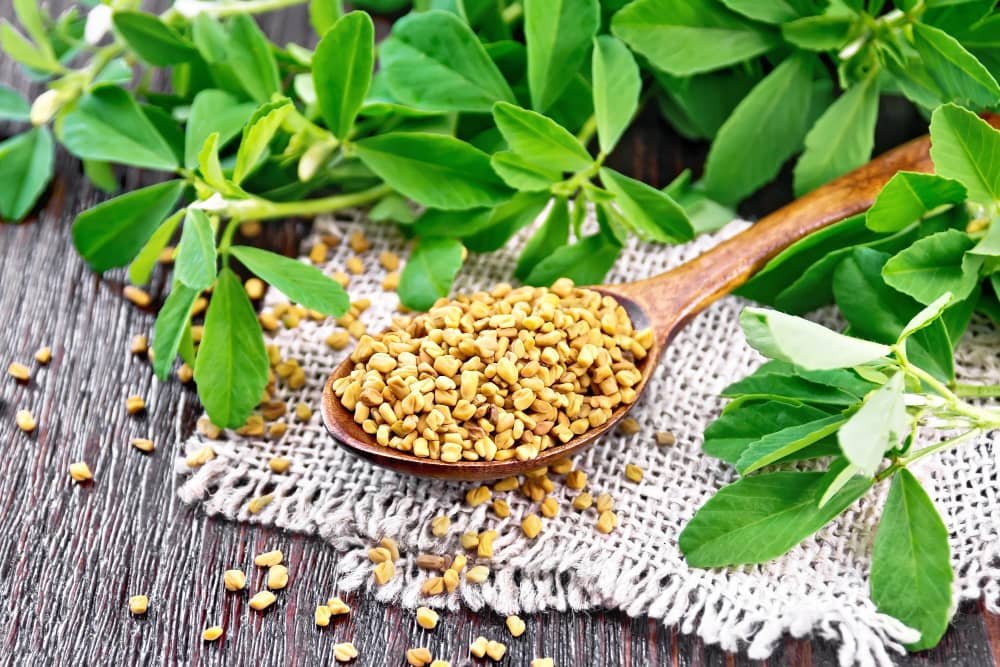
By Fenugreek (Trigonella foenum-graecum) is an aromatic herb whose seeds and leaves have been used for centuries in cooking and traditional wellness practices. Known for its slightly bitter, nutty flavor and distinctive maple-like aroma, fenugreek is especially common in Indian, Middle Eastern, and North African cuisine.
But fenugreek is more than a flavorful spice. Its seeds contain fiber, protein, minerals, and a variety of naturally occurring plant compounds that have attracted considerable scientific interest. Researchers have studied potential fenugreek benefits related to blood sugar management, digestion, cholesterol, breast milk production, and other areas of health, although the strength of the evidence varies depending on the use.
Fenugreek can be enjoyed in several forms. You can toast the seeds, grind them into spice blends, soak them, sprout them, or brew them into tea, while fresh and dried fenugreek leaves—often called methi—are used in curries, flatbreads, vegetables, and other savory dishes.
In this guide, we’ll take a closer look at fenugreek’s nutritional profile, traditional uses, potential health benefits, culinary uses, growing tips, and possible side effects. You’ll also learn practical ways to incorporate this distinctive herb into your kitchen while understanding when a little extra caution may be appropriate.

History and Traditional Uses of Fenugreek
Fenugreek has a long history as both a culinary ingredient and a traditional herbal remedy. Native to parts of the Mediterranean region, southern Europe, and western Asia, Trigonella foenum-graecum has been cultivated for thousands of years and eventually spread throughout many parts of the world.
Fenugreek in Ancient Cultures
Historical evidence suggests that fenugreek was valued by several ancient civilizations. Its seeds were used as food, flavoring, and in traditional preparations, while the plant itself was also grown as animal fodder.
Over time, fenugreek became particularly important in the culinary and traditional wellness practices of India, the Middle East, North Africa, and parts of the Mediterranean.
Traditional Herbal Uses
Different cultures have used fenugreek for a variety of purposes. Traditionally, preparations made from the seeds were used to support digestion, appetite, and general wellness. Fenugreek also developed a long-standing reputation as a galactagogue—an herb traditionally used to support breast milk production.
These historical uses are important to distinguish from proven medical benefits. While modern researchers have investigated several traditional applications of fenugreek, evidence varies considerably depending on the health condition, preparation, and dose studied.
Fenugreek in Traditional Cooking
Fenugreek’s culinary history is just as significant as its medicinal one. Both its seeds and leaves are edible, although they provide different flavors and are used in different ways.
The golden-brown seeds have a strong, slightly bitter flavor with nutty and subtly sweet notes. They are commonly toasted or ground and incorporated into curries, spice blends, pickles, sauces, and other savory dishes.
The fresh or dried leaves, commonly called methi, have a distinctive herbal flavor and are especially popular in Indian cooking. They can be added to curries, lentil dishes, vegetables, flatbreads, and sauces.
Today, fenugreek continues to bridge these two worlds. It remains an everyday cooking ingredient in many cultures while also being sold as tea, powder, capsules, extracts, and other herbal products.
What Does Fenugreek Taste Like?
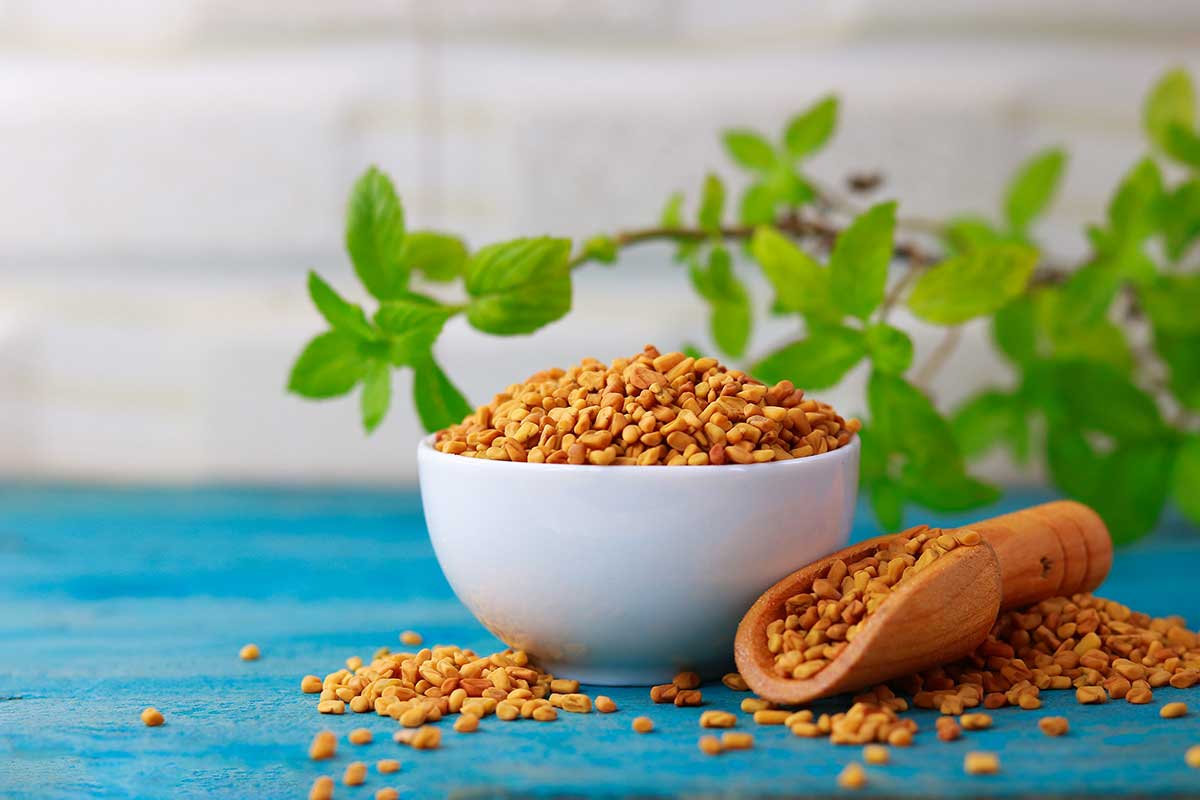
Fenugreek has an earthy, nutty, slightly bitter flavor with a distinctive aroma that is sometimes compared to maple syrup. The seeds have the strongest flavor and can become quite bitter when too much is used. Lightly toasting them helps bring out their nuttier side before they’re ground or added to a dish.
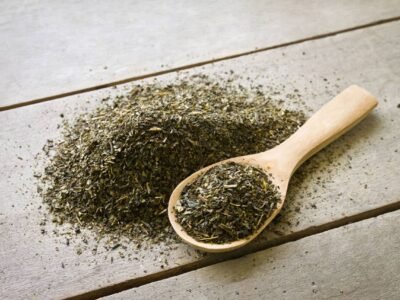
Fresh fenugreek leaves, known as methi, taste greener and more herbal, with a pleasant bitterness similar to other assertive leafy greens. Dried fenugreek leaves, or kasuri methi, have a stronger fragrance and are often crushed over curries and sauces near the end of cooking.
That hint of bitterness is part of fenugreek’s appeal. Combined with tomatoes, yogurt, onions, garlic, lentils, or warming spices, it adds depth rather than simply making a dish taste bitter.
Nutritional Profile of Fenugreek Seeds
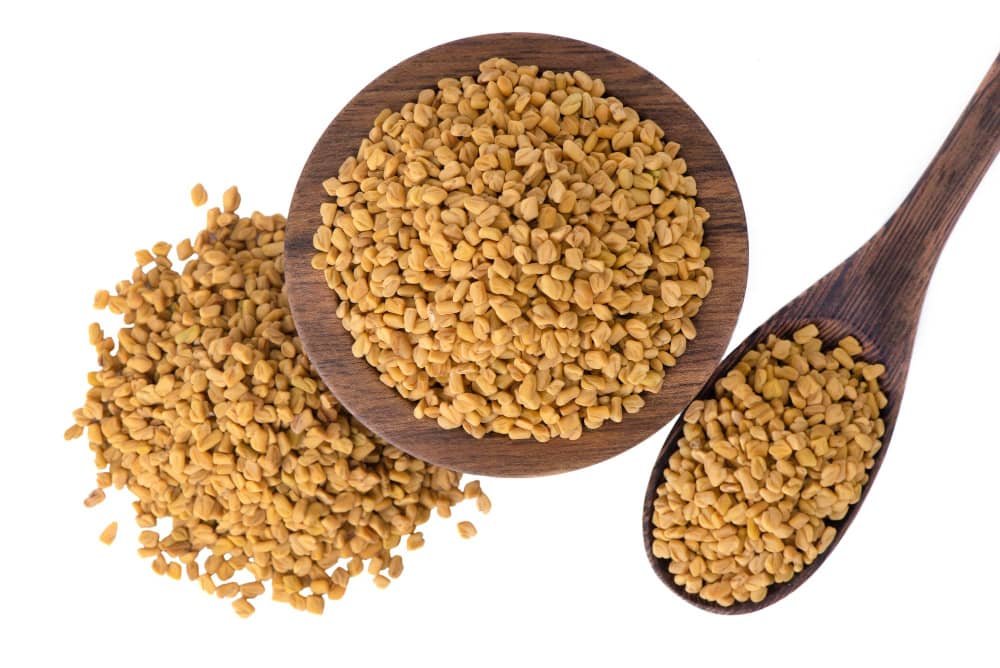
Fenugreek seeds may be small, but they contain an interesting combination of fiber, protein, minerals, and naturally occurring plant compounds. Their nutritional profile is one reason fenugreek has attracted attention both as a traditional food and as a subject of modern research.
However, serving size matters. Fenugreek is usually consumed in relatively small quantities as a spice, so the amount of nutrients you actually receive will depend on how much you use.
Fiber
One of the most notable characteristics of fenugreek seeds is their high fiber content. The seeds contain both soluble and insoluble fiber, including mucilaginous fibers that absorb water and form a gel-like consistency.
Dietary fiber supports normal digestion and bowel regularity. Soluble fiber can also slow digestion and the absorption of carbohydrates, which is one reason researchers have investigated fenugreek for its potential role in blood sugar management.
Protein
Fenugreek seeds also provide plant-based protein. Although the amount consumed in a typical culinary serving is relatively modest, their protein content contributes to the seeds’ overall nutritional value.
This combination of protein and fiber can make fenugreek an interesting addition to meals containing other nutrient-dense plant foods such as lentils, beans, vegetables, and whole grains.
Iron and Other Minerals
Fenugreek seeds contain several essential minerals, including:
- Iron, which is involved in oxygen transport and normal red blood cell production
- Magnesium, which contributes to normal muscle, nerve, and metabolic function
- Manganese, which plays a role in metabolism and antioxidant defenses
- Copper, which supports connective tissue formation and iron metabolism
- Potassium, an important mineral and electrolyte involved in normal muscle and nerve function
Fenugreek seeds also contain calcium, phosphorus, zinc, and other minerals in varying amounts.
Naturally Occurring Plant Compounds
Beyond conventional nutrients, fenugreek contains a variety of naturally occurring compounds that researchers continue to study.
These include saponins, flavonoids, alkaloids, and other phytochemicals. Fenugreek also contains an amino acid derivative called 4-hydroxyisoleucine, which has received scientific attention for its possible effects on glucose and insulin metabolism.
Finding these compounds in fenugreek doesn’t mean the herb can prevent or treat disease. Instead, they give researchers clues about how fenugreek may affect the body and why some of its traditional uses are being studied.
Seeds, Leaves, and Supplements Are Not Nutritionally Identical
It is also important to distinguish between different forms of fenugreek.
Whole seeds, fresh leaves, dried leaves, powders, teas, and concentrated extracts do not provide identical amounts of nutrients or plant compounds. A small amount of fenugreek used to season a curry, for example, is very different from the concentrated doses sometimes used in supplements.
For everyday use, fenugreek is best viewed as one flavorful component of a varied, nutrient-rich diet rather than as a major source of any single vitamin or mineral.
Potential Health Benefits of Fenugreek
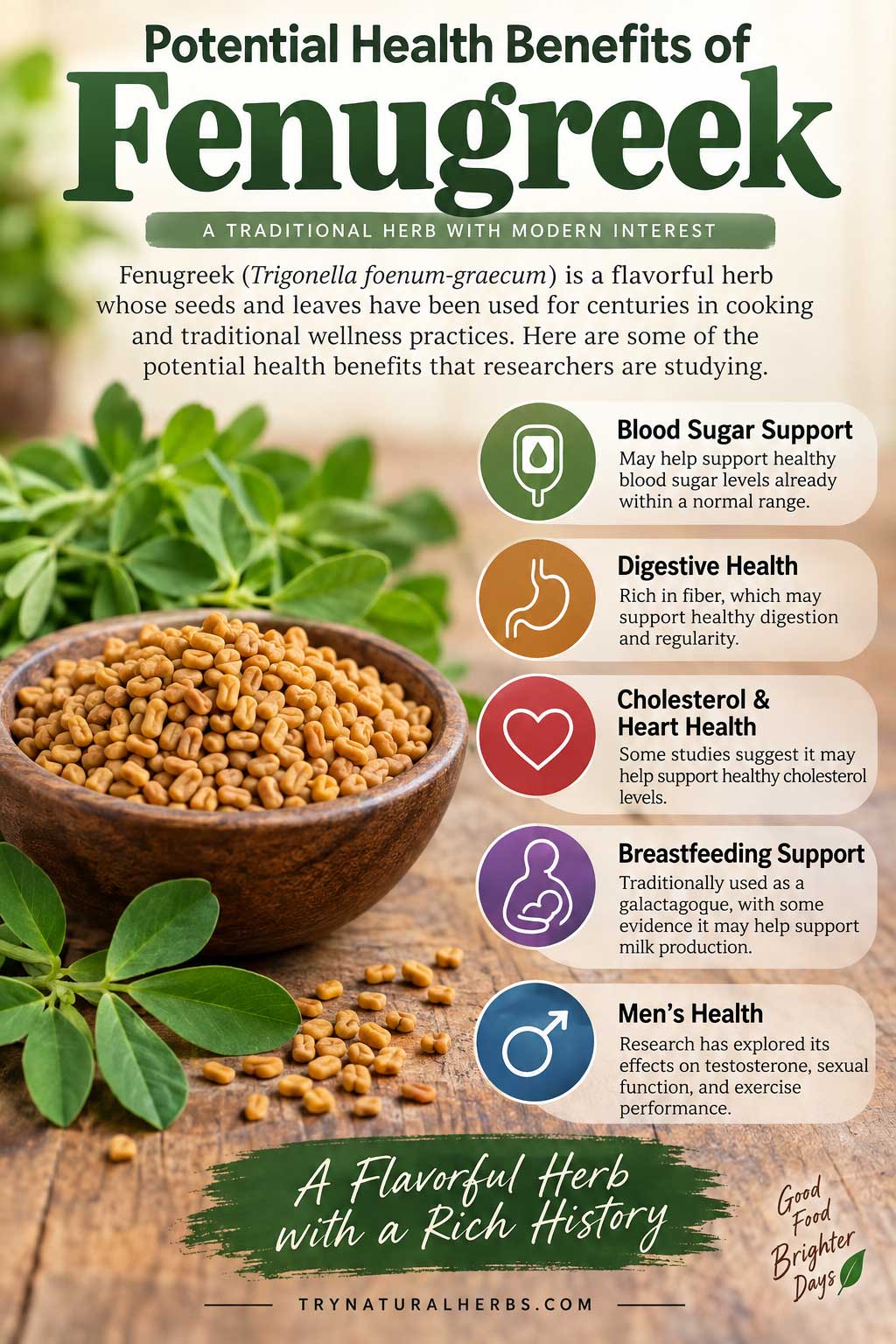
Fenugreek has been part of traditional wellness practices for centuries, and modern researchers are now taking a closer look at many of its potential health effects. Researchers have studied fenugreek seeds and extracts for their possible effects on blood sugar, digestion, cholesterol, breast milk production, and other aspects of health.
Some findings are promising, but the quality and consistency of the evidence vary. Studies also use different forms and amounts of fenugreek, making it difficult to assume that eating the herb as a spice will produce the same effects as taking a concentrated preparation.
Blood Sugar and Metabolic Health
One of the most researched potential fenugreek benefits involves blood sugar management.
Fenugreek seeds are naturally high in fiber, including soluble fiber. Fiber can slow digestion and the absorption of carbohydrates, which may help moderate the rise in blood glucose that occurs after eating.
Fenugreek also contains a naturally occurring amino acid derivative called 4-hydroxyisoleucine. Researchers have investigated this compound, along with the herb’s fiber and other components, to better understand fenugreek’s possible influence on insulin and glucose metabolism.
Clinical studies have examined fenugreek and blood sugar control in people with type 2 diabetes and other metabolic concerns. Some research suggests that fenugreek preparations may help improve certain measures of blood sugar control. However, results have not been completely consistent, and studies vary considerably in their size, duration, preparation, and dosage.
For that reason, fenugreek should not be considered a replacement for diabetes medication, dietary changes, exercise, or other treatments recommended by a healthcare professional.
People who take medications that lower blood sugar should also be particularly cautious with concentrated fenugreek supplements. Combining products that may affect blood glucose with diabetes medication could potentially cause blood sugar to fall too low.
Fenugreek can still be enjoyed as a culinary spice as part of a balanced diet. Concentrated supplements are another matter, especially for people taking medications that lower blood sugar.
Digestive Health
Fenugreek has traditionally been used to support digestion, and its fiber content may help explain some of this long-standing use.
Fenugreek seeds contain substantial amounts of dietary fiber, including soluble fiber and mucilage. When exposed to water, these components absorb liquid and develop a gel-like consistency. This can help add bulk to stool and support regular bowel movements.
For this reason, fenugreek has traditionally been used for occasional constipation and general digestive support. Increasing dietary fiber from a variety of foods—including vegetables, fruits, legumes, whole grains, seeds, and herbs such as fenugreek—is an important part of maintaining normal digestive function.
Fenugreek and the Gut
Researchers have also become interested in how the fiber and plant compounds in fenugreek might interact with the digestive system and gut microbiome. However, research in this area is still developing, and stronger human evidence is needed before specific gut-health benefits can be established.
Fenugreek should therefore be viewed as a fiber-containing food rather than a treatment for digestive conditions.
Larger amounts of fenugreek, particularly from supplements, can cause digestive discomfort in some people. If you’re trying fenugreek seeds for the first time, starting with the small quantities typically used in cooking is a sensible approach.
Persistent digestive symptoms should be evaluated by a healthcare professional rather than treated solely with fenugreek or another herbal product.
Fenugreek and Breast Milk Production
Fenugreek is perhaps one of the best-known herbal galactagogues—a term used for substances traditionally taken to help support breast milk production.
The herb has a long history of use among breastfeeding mothers, and fenugreek teas, capsules, powders, and herbal blends continue to be marketed for this purpose today. However, its popularity does not necessarily mean that its effectiveness has been firmly established.
What Does the Research Say?
The National Library of Medicine’s LactMed database has reviewed research on fenugreek and breast milk production. Some studies have reported improvements in milk volume or other breastfeeding measures, while others have found little or uncertain benefit.
Overall, the available research has limitations. Studies have often been relatively small and have used different fenugreek preparations, doses, treatment periods, and methods for measuring milk production. Some products studied also contained fenugreek alongside other herbs, making it difficult to determine how much of any observed effect came from fenugreek itself.
Because of these differences, there is currently not enough strong evidence to guarantee that fenugreek will increase milk production or to predict how much of an effect an individual might experience.
Is Fenugreek Safe While Breastfeeding?
Using fenugreek in the small quantities normally found in food is different from taking concentrated supplements.
Fenugreek supplements can cause gastrointestinal symptoms such as gas, nausea, and diarrhea. Allergic reactions are also possible, particularly in people who are sensitive to related plants such as peanuts, chickpeas, or other members of the legume family.
Fenugreek can also affect blood sugar and may interact with certain medications, which makes concentrated supplementation inappropriate for some people.
Anyone experiencing concerns about breast milk supply should consider speaking with a healthcare professional or qualified lactation specialist. Low milk production can have several possible causes, and addressing breastfeeding technique, feeding frequency, medications, or an underlying health issue may be more important than simply adding an herbal supplement.
Fenugreek has a long history of use for breastfeeding support, but current evidence doesn’t show that it reliably increases milk production.
Fenugreek, Testosterone, and Men’s Health
Fenugreek is a common ingredient in men’s health supplements, especially products marketed for testosterone, exercise performance, and sexual health. Some of these claims have been studied, but the evidence doesn’t support treating fenugreek as a simple or guaranteed “testosterone booster.”
What Does the Research Show?
Several clinical studies have tested concentrated fenugreek extracts in adult men, with mixed results. Some have reported changes in testosterone, sexual function, body composition, or exercise performance, while others have found smaller or less consistent effects.
One important detail is that many of these studies used standardized fenugreek extracts, rather than the small quantities of fenugreek seeds normally used in cooking.
That distinction matters. Results from a concentrated supplement cannot automatically be applied to fenugreek tea, fresh leaves, or a teaspoon of fenugreek seeds added to a meal.
Researchers have proposed several possible explanations for fenugreek’s effects, including naturally occurring compounds called steroidal saponins. However, exactly how these compounds might influence hormone metabolism in humans remains an area of ongoing research.
Can Fenugreek Increase Testosterone?
At this point, it would be misleading to describe fenugreek as a proven testosterone booster.
Some research suggests that particular fenugreek extracts may support certain measures of male hormonal or sexual health, but more independent, high-quality studies are needed to determine how reliable these effects are, which preparations are most effective, and who might benefit.
Men experiencing symptoms associated with low testosterone—such as persistent fatigue, reduced libido, changes in muscle mass, or other hormonal concerns—should not rely on fenugreek supplements as a substitute for medical evaluation.
A healthcare professional can determine whether testosterone levels should be tested and whether an underlying medical, lifestyle, medication-related, or hormonal issue may be contributing to the symptoms.
For most people, culinary fenugreek can simply be enjoyed as part of a varied diet without expecting it to produce a significant change in testosterone levels.
Fenugreek, Cholesterol, and Heart Health
Another area of interest is whether fenugreek may have beneficial effects on cholesterol and other markers associated with cardiovascular health.
Fenugreek seeds contain soluble fiber and several naturally occurring plant compounds, including saponins. Because soluble fiber can influence the absorption of cholesterol and bile acids in the digestive tract, researchers have investigated whether regularly consuming fenugreek might affect blood lipid levels.
What Does the Research Say?
Some human studies have reported improvements in certain cholesterol measurements after participants consumed fenugreek seeds, powders, or extracts. These changes have included reductions in total cholesterol, LDL cholesterol, or triglycerides in some study populations.
The results aren’t completely straightforward. Studies have tested different preparations and doses, often in relatively small groups of people. Many participants also had diabetes or other metabolic conditions, so the findings may not apply equally to everyone.
For these reasons, fenugreek should not be considered a treatment for high cholesterol or cardiovascular disease.
Fenugreek as Part of a Heart-Healthy Diet
Using fenugreek as a culinary herb or spice can still fit comfortably into a heart-conscious eating pattern.
Its seeds provide fiber and can add considerable flavor to foods without requiring large amounts of salt, sugar, or saturated fat. Fenugreek works particularly well in dishes containing other nutrient-dense plant foods such as:
- Lentils and beans
- Vegetables
- Whole grains
- Herbs and spices
- Nuts and seeds
The overall pattern of your diet is much more important for cardiovascular health than any individual herb.
Anyone with high cholesterol or cardiovascular disease should continue following the treatment and lifestyle recommendations provided by their healthcare professional. Fenugreek supplements should not be used as a replacement for prescribed cholesterol-lowering medication.
Research into fenugreek and cholesterol remains interesting, but stronger clinical evidence is needed before specific cardiovascular benefits can be established.
How to Use Fenugreek in Cooking
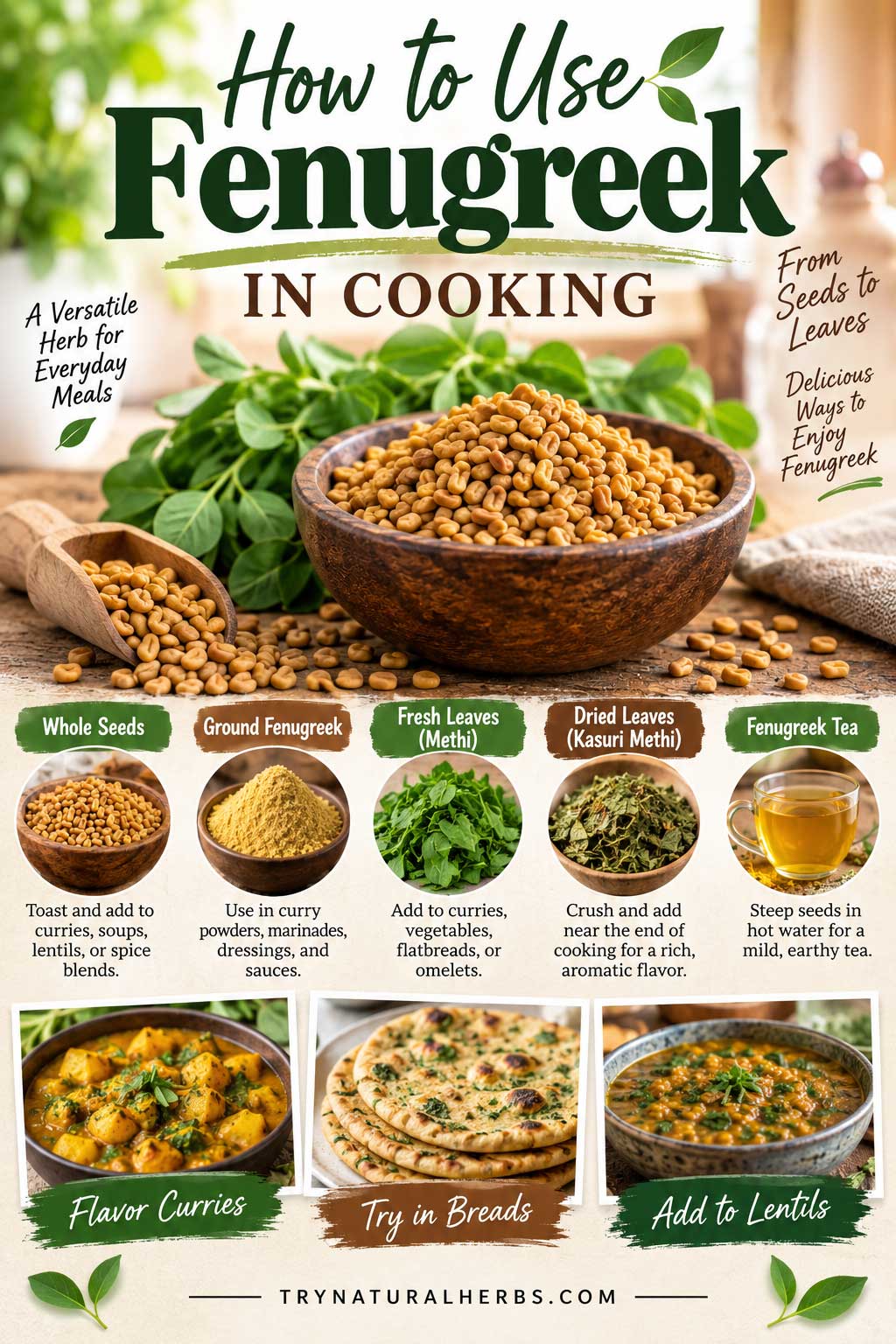
Fenugreek can add a surprising amount of flavor to a dish, so a little usually goes a long way. Both the seeds and leaves are used in cooking, but each brings a different flavor and texture.
Fenugreek is particularly common in Indian, Middle Eastern, and North African cuisines, where it appears in everything from curries and lentil dishes to breads, pickles, and spice blends.
Toast and Grind Fenugreek Seeds
Whole fenugreek seeds have an intense, slightly bitter flavor. Lightly toasting them in a dry pan can bring out their nutty aroma and mellow some of their bitterness.
Toast the seeds over low to medium heat just until they become fragrant. Avoid letting them burn, as overcooked fenugreek can become unpleasantly bitter.
Once cooled, the toasted seeds can be ground with a spice grinder or mortar and pestle and added to:
- Curries
- Lentil dishes
- Soups and stews
- Marinades
- Homemade spice blends
- Roasted vegetables
Ground fenugreek has a strong flavor, so start with a small amount and adjust according to taste.
Cook With Fresh Fenugreek Leaves
Fresh fenugreek leaves, commonly called methi, are treated much like other leafy greens.
Wash the leaves thoroughly, remove any tough stems, and chop them before cooking. Fresh methi can be sautéed with onions and garlic, incorporated into curries, combined with potatoes and other vegetables, or mixed into dough for savory flatbreads.
Cooking helps soften the leaves and mellow their natural bitterness.
Use Dried Fenugreek Leaves
Dried fenugreek leaves, known as kasuri methi, are another convenient way to add fenugreek flavor to recipes.
Before adding them to a dish, gently crush the dried leaves between your palms or fingers. This helps release their aroma.
Kasuri methi works especially well in:
- Curries and sauces
- Lentil dishes
- Vegetable recipes
- Chicken dishes
- Flatbreads
- Tomato-based sauces
Because dried leaves have a concentrated flavor, you usually need only a small amount.
Add Fenugreek to Spice Blends
Fenugreek seeds are frequently combined with spices such as cumin, coriander, turmeric, mustard seed, and chili.
This is one of the easiest ways to experiment with fenugreek if you are unfamiliar with its flavor. Rather than dominating a dish, a small amount can contribute earthy, nutty, and slightly bitter notes that complement other warming spices.
Sprout Fenugreek Seeds
Fenugreek seeds can also be sprouted.
After soaking and sprouting, the young shoots can be added in small amounts to salads, sandwiches, wraps, and other dishes. Sprouting changes both the texture and flavor of the seeds, producing crisp shoots with a distinctive slightly bitter taste.
Good hygiene is particularly important when growing or consuming raw sprouts because warm, humid sprouting conditions can also encourage bacterial growth. People at higher risk of foodborne illness may be advised to avoid raw or lightly cooked sprouts.
Start With Small Amounts
If you’ve never cooked with fenugreek before, don’t judge it by tasting a spoonful of the seeds on their own.
Fenugreek works best when its bitterness is balanced with other ingredients. Tomatoes, onions, garlic, yogurt, lentils, vegetables, and aromatic spices can all complement its distinctive flavor.
Start with a small quantity, taste the dish as it cooks, and add more only if needed. Once you become familiar with fenugreek’s flavor, it becomes much easier to understand why this ancient herb remains an important ingredient in so many cuisines around the world.
Can You Substitute Fenugreek Seeds for Leaves?
Not directly. Fenugreek seeds have a stronger, more bitter flavor than fresh or dried leaves, so substituting them in equal amounts can easily overpower a recipe.
Fresh methi and dried kasuri methi are somewhat easier to substitute for one another, although dried leaves are more concentrated and won’t provide the same texture. When possible, use the form of fenugreek specified in the recipe.

How to Make Fenugreek Tea
Fenugreek tea is a simple herbal drink made by steeping fenugreek seeds in hot water. It has a warm, earthy flavor with noticeable bitterness and a slightly sweet aroma that some people compare to maple syrup.
You can make fenugreek tea using whole seeds without purchasing special tea bags or blends.
Simple Fenugreek Tea Recipe
Ingredients:
- 1 teaspoon whole fenugreek seeds
- 1 cup water
- Lemon or honey, optional
Instructions:
- Lightly crush the fenugreek seeds with a mortar and pestle or the back of a spoon. You don’t need to grind them into a powder.
- Bring the water to a boil.
- Add the crushed fenugreek seeds and reduce the heat.
- Gently simmer for about 5 minutes.
- Remove from the heat and allow the tea to steep for another 5–10 minutes.
- Strain the seeds before drinking.
- Add a little lemon or honey if desired.
The longer fenugreek steeps, the stronger and more bitter the tea will become. If you’re trying it for the first time, start with a relatively mild infusion and adjust the strength according to your preference.
Can You Soak Fenugreek Seeds Overnight?
Fenugreek seeds can also be soaked in water for several hours or overnight. As they absorb water, the soluble fiber and mucilage surrounding the seeds create a slightly thicker texture.
Some people drink the soaking water or consume the softened seeds afterward. However, soaking fenugreek doesn’t transform it into a treatment for diabetes, digestive problems, weight loss, or other medical conditions.
If you prefer the flavor of traditional herbal tea, steeping or gently simmering the seeds in hot water is usually more enjoyable.
When Is the Best Time to Drink Fenugreek Tea?
There is no well-established time of day when everyone needs to drink fenugreek tea.
It can be enjoyed whenever it fits comfortably into your routine. Some people prefer herbal tea after meals, while others enjoy it in the morning or evening.
Claims that fenugreek tea must be consumed on an empty stomach or at a particular time to “detox” the body or dramatically increase its health benefits aren’t supported by strong evidence.
How Much Fenugreek Tea Should You Drink?
There is no single ideal amount of fenugreek tea that is appropriate for everyone.
The concentration of homemade tea can vary considerably depending on the amount of seed used and how long it is steeped. Fenugreek consumed as a culinary ingredient is also different from the concentrated doses found in some supplements.
If you’re new to fenugreek tea, starting with a mild preparation allows you to see how you tolerate it.
Drinking large amounts may cause digestive discomfort, including gas, bloating, nausea, or diarrhea in some people.
People who are pregnant, breastfeeding, taking blood-sugar-lowering medication, using other medications that may interact with herbal products, or managing a medical condition should speak with a healthcare professional before regularly using fenugreek in concentrated or supplemental amounts.

How to Grow Fenugreek at Home
Fenugreek is a fast-growing herb that works well in garden beds, raised beds, and containers. You can harvest the tender leaves while they’re young or allow some plants to mature if you want to collect the seeds.
Choose a Sunny Location
Fenugreek grows best in a location that receives plenty of sunlight. Aim for approximately 4–6 or more hours of direct sunlight per day.
It can tolerate some partial shade, particularly in warmer climates, but stronger light generally encourages healthy, compact growth.
If you’re growing fenugreek indoors, place the container near a bright, sunny window or provide supplemental grow lighting when natural light is limited.
Prepare the Soil
Choose loose, well-draining soil enriched with organic matter.
Before planting outdoors, you can mix compost into the top layer of soil to improve its structure and fertility. For containers, use a quality potting mix rather than dense garden soil.
Fenugreek doesn’t need exceptionally rich soil, but good drainage is important because consistently waterlogged conditions can encourage root problems.
Plant Fenugreek Seeds
Fenugreek is usually grown directly from seed.
Sow the seeds approximately 1/4 to 1/2 inch deep, leaving some space between them. If you’re primarily growing fenugreek for tender leaves, the plants can be grown relatively close together.
After planting, gently water the soil so that it is evenly moist without becoming saturated.
Under suitable conditions, fenugreek can germinate relatively quickly, often within about a week.
Water Consistently
Keep the soil moderately and consistently moist while the seeds are germinating and the young plants become established.
Once established, water when the upper layer of soil begins to dry. Avoid keeping the roots constantly saturated.
Containers may dry more quickly than garden beds, so check their moisture level regularly during warm or windy weather.
Growing Fenugreek in Containers
Fenugreek is well suited to container gardening because the plants remain relatively compact.
Choose a container with drainage holes and enough surface area for the number of plants you want to grow. A container around 6–8 inches deep or deeper is generally sufficient when you’re growing fenugreek primarily for its leaves.
Fill it with well-draining potting mix, sow the seeds, water gently, and place the container in a sunny location.
Container-grown fenugreek can be especially convenient because you can keep fresh methi close to the kitchen.
Harvesting Fenugreek Leaves
Young fenugreek leaves can be harvested once the plants have produced enough healthy growth to withstand cutting.
Use clean scissors to cut the tender upper leaves and stems rather than pulling out the entire plant if you want additional growth.
Harvesting younger leaves generally provides a more tender texture and milder flavor.
Harvesting Fenugreek Seeds
If you want fenugreek seeds rather than leaves, allow some plants to continue growing instead of repeatedly harvesting their foliage.
Fenugreek eventually produces pods containing the seeds. Allow the pods to mature and begin drying on the plant before harvesting them.
Collect the dry pods and remove the seeds. Make sure the seeds are thoroughly dry before placing them into an airtight container for longer-term storage.
Can Fenugreek Grow Indoors?
Yes. Fenugreek can be grown indoors, particularly when you’re interested in harvesting young leaves.
The biggest challenge is usually providing enough light. A bright south-facing window may work well during sunny periods, while supplemental grow lights can help when indoor light is inadequate.
Its relatively fast growth also makes fenugreek a fun herb to grow in succession. Instead of planting all your seeds at once, you can sow another small batch every few weeks to maintain a more continuous supply of fresh leaves.
How to Store Fenugreek Seeds and Leaves
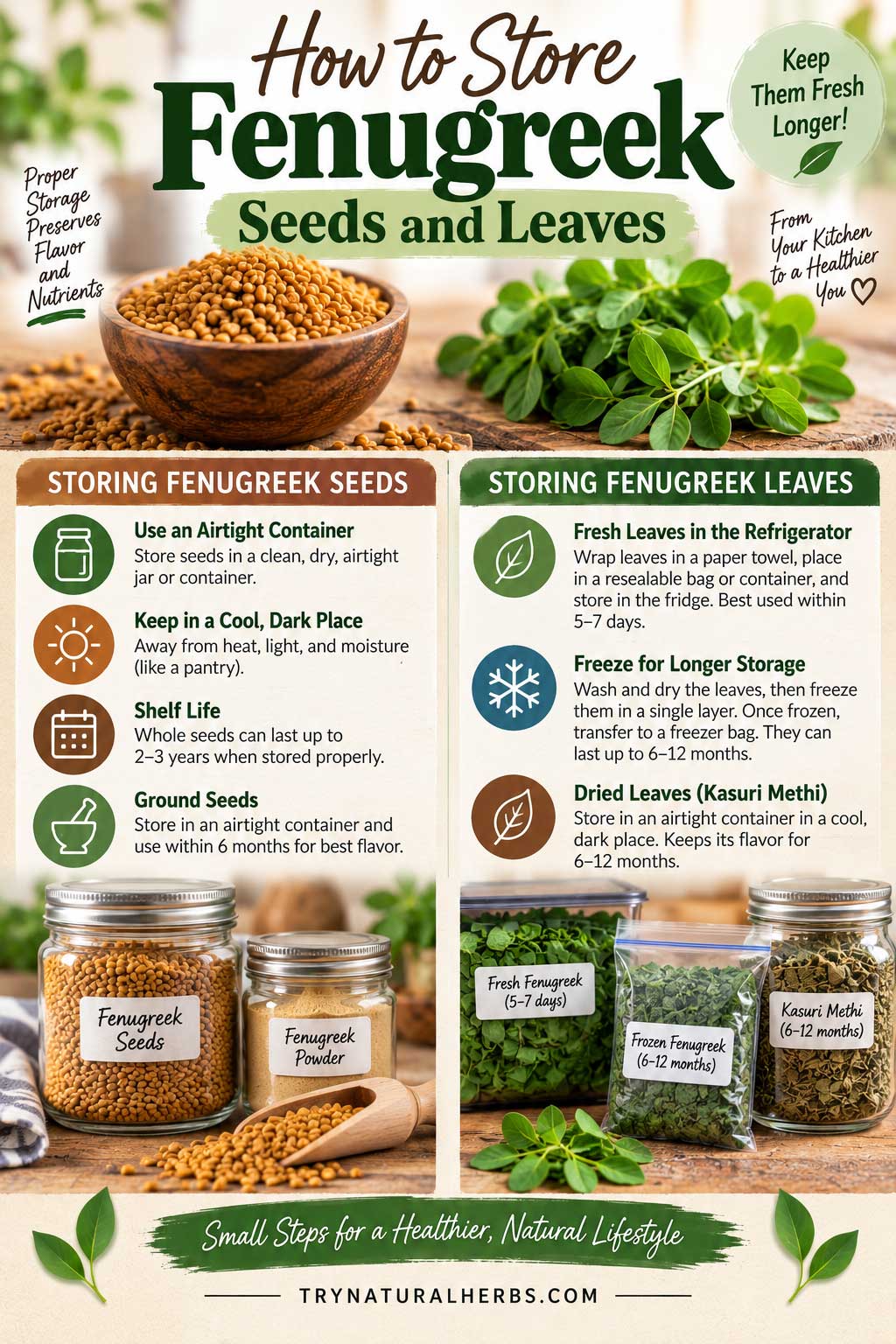
Proper storage helps preserve fenugreek’s distinctive flavor and aroma. The best method depends on whether you’re storing the seeds or leaves.
Storing Fenugreek Seeds
Keep whole fenugreek seeds in an airtight container in a cool, dry, dark place such as a pantry or spice cabinet. Whole seeds generally retain their flavor longer than ground fenugreek.
Ground fenugreek should also be stored in a tightly sealed container away from heat, moisture, and sunlight. Because ground spices lose their aroma more quickly, consider buying whole seeds and grinding small amounts as needed.
Storing Fresh Fenugreek Leaves
Fresh fenugreek leaves, or methi, should be kept relatively dry in the refrigerator. Remove damaged leaves, loosely wrap the remaining greens in a paper towel, and place them in a container or reusable produce bag.
If you have more fresh methi than you can use, wash and thoroughly dry the leaves before freezing them in freezer-safe bags or containers. Frozen leaves lose some of their fresh texture but work well in curries, soups, lentils, and stews.
Storing Dried Fenugreek Leaves
Dried fenugreek leaves, or kasuri methi, should be kept in an airtight container away from heat, light, and moisture. Their aroma will gradually fade over time, so buying quantities you can realistically use will give you better flavor.
Can You Freeze Fresh Fenugreek Leaves?
Yes. Freezing is a convenient option if you have more fresh methi than you can use before it spoils.
Wash the leaves thoroughly, remove tough stems, and dry them well. Chop the leaves if desired, then portion them into freezer-safe containers or bags.
Frozen fenugreek leaves will lose some of their fresh texture after thawing, so they’re better suited to cooked dishes such as curries, soups, lentils, and stews than to recipes where fresh texture matters.
Storing Dried Fenugreek Leaves
Dried fenugreek leaves, commonly sold as kasuri methi, should also be stored in an airtight container away from light, heat, and moisture.
The dried leaves are prized for their concentrated fragrance. If they have lost most of their characteristic aroma, they may still be safe to use if properly stored, but they probably won’t contribute much flavor to your cooking.
Whatever form you choose, buying fenugreek in quantities you can realistically use helps ensure better flavor and reduces unnecessary waste.
Potential Side Effects and Safety of Fenugreek
Fenugreek has a long history of culinary use and is commonly consumed as a spice or leafy vegetable. However, using fenugreek in normal food amounts is different from taking concentrated powders, extracts, or supplements.
Although many people tolerate fenugreek well, the NCCIH notes several potential side effects and safety considerations, particularly when fenugreek is used in larger amounts or as a supplement.
Digestive Side Effects
The most commonly reported problems associated with fenugreek are digestive.
Consuming larger amounts may cause:
- Gas
- Bloating
- Nausea
- Abdominal discomfort
- Diarrhea
Fenugreek seeds contain considerable amounts of fiber, so suddenly consuming much more than your digestive system is accustomed to may contribute to these symptoms.
Starting with the small quantities normally used in cooking may help you determine how well you tolerate the herb.
Allergic Reactions
Allergic reactions to fenugreek are possible.
Fenugreek belongs to the Fabaceae, or legume, family. People with allergies to other legumes, including peanuts or chickpeas, may need to be particularly cautious because allergic cross-reactivity has been reported.
Possible symptoms of an allergic reaction can include itching, hives, swelling, wheezing, or difficulty breathing.
A severe allergic reaction can be a medical emergency. Anyone experiencing difficulty breathing, swelling of the throat, or other symptoms of anaphylaxis should seek immediate medical attention.
Fenugreek and Blood Sugar
Fenugreek has been studied for its potential effects on blood glucose, which also creates an important safety consideration.
People who take insulin or other medications that lower blood sugar should be cautious about using concentrated fenugreek products. Combining them could potentially increase the risk of blood sugar becoming too low.
This doesn’t mean that the small amount of fenugreek used to season food will necessarily produce the same effect as a concentrated supplement. Dose and preparation matter considerably.
Anyone taking diabetes medication should discuss regular or supplemental fenugreek use with their healthcare professional.
Fenugreek During Pregnancy
Fenugreek used in the small quantities normally found in food is different from taking large medicinal or supplemental amounts.
Concentrated fenugreek supplements are generally approached with greater caution during pregnancy because fenugreek has historically been associated with effects on uterine activity, and the safety of high supplemental doses during pregnancy has not been firmly established.
Pregnant individuals should therefore speak with their healthcare professional before taking fenugreek supplements, extracts, or other concentrated preparations.
Fenugreek While Breastfeeding
Fenugreek is commonly marketed to breastfeeding mothers because of its traditional use as a galactagogue.
However, evidence that fenugreek reliably increases breast milk production remains limited, and supplements can still cause side effects or allergic reactions.
Anyone considering fenugreek specifically to increase milk production should discuss the decision with a healthcare professional or qualified lactation specialist, particularly if milk supply is persistently low.
Medication Interactions
Fenugreek supplements may interact with certain medications.
Particular caution may be appropriate for people taking medications that affect:
- Blood sugar
- Blood clotting
- Other conditions for which changes in drug absorption or metabolism could be important
Because herbal supplements can contain substantially larger amounts of active compounds than a typical serving of food, medication interactions are more relevant when fenugreek is consumed regularly in concentrated forms.
If you take prescription medication, ask your healthcare professional or pharmacist before adding a fenugreek supplement to your routine.
Changes in Body Odor
One unusual but generally harmless effect associated with fenugreek is a maple syrup-like smell in sweat or urine.
Fenugreek naturally contains aromatic compounds that can produce this distinctive scent after consumption. The effect is usually harmless and may be more noticeable after consuming larger amounts.
Culinary Use vs. Fenugreek Supplements
One of the most important distinctions when discussing fenugreek safety is the difference between food and supplements.
Adding a small amount of fenugreek seed to a curry or cooking with fresh methi is not equivalent to taking a concentrated extract every day.
Supplements can also vary considerably in their concentration, formulation, and suggested serving size.
If you’re using fenugreek primarily because you enjoy its flavor, ordinary culinary amounts are the most straightforward way to incorporate it into your diet. If you’re considering a concentrated fenugreek supplement for a specific health concern, discussing it with a qualified healthcare professional is a sensible precaution.
Who Should Be Especially Cautious?
Talk with a healthcare professional before using concentrated fenugreek supplements if you are pregnant, take blood-sugar-lowering or blood-clotting medications, have allergies to related legumes, or take other prescription medications that could interact with herbal products.
The same caution applies if you’re considering fenugreek specifically to increase breast milk production or to manage an existing health condition.
Frequently Asked Questions About Fenugreek
What Is Fenugreek Used For?
Fenugreek is used both as a food and as a traditional herbal preparation. The seeds are commonly added to curries, spice blends, pickles, and lentil dishes, while fresh and dried fenugreek leaves are used as herbs and leafy vegetables.
Fenugreek supplements are also marketed for purposes such as blood sugar support, breast milk production, digestive health, and men’s health. Research into several of these uses is ongoing, and evidence varies depending on the specific benefit and preparation studied.
Is It Safe to Eat Fenugreek Every Day?
Small culinary amounts of fenugreek can generally be part of a varied diet. Larger or supplemental amounts are more likely to cause side effects such as gas, bloating, nausea, or diarrhea.
People who are pregnant, take certain medications, have diabetes, or have allergies to related legumes should be particularly cautious with concentrated fenugreek products.
Can Fenugreek Help Lower Blood Sugar?
Fenugreek has been studied for its potential effects on blood glucose and insulin metabolism. Some clinical research suggests that certain fenugreek preparations may improve measures of blood sugar control, but the evidence isn’t strong enough to treat fenugreek as a replacement for established diabetes care.
People taking insulin or blood-sugar-lowering medications should speak with a healthcare professional before using concentrated fenugreek products because of the possibility of additional blood-sugar-lowering effects.
Does Fenugreek Help With Weight Loss?
Fenugreek is sometimes promoted for weight loss because its seeds are rich in fiber, which can help with fullness. However, there isn’t strong evidence that fenugreek itself produces meaningful or lasting weight loss.
It’s better viewed as a nutritious culinary ingredient than as a weight-loss remedy.
Does Fenugreek Increase Breast Milk Production?
Fenugreek has traditionally been used as a galactagogue, or substance intended to support breast milk production.
Some studies have reported possible benefits, but the overall evidence remains limited and inconsistent. Fenugreek should therefore not be described as a guaranteed way to increase milk supply.
Anyone concerned about low milk production may benefit from speaking with a healthcare professional or qualified lactation specialist to identify possible underlying causes.
Does Fenugreek Increase Testosterone?
Some studies involving particular fenugreek extracts have reported changes in testosterone or other measures related to men’s health. However, findings are not consistent enough to conclude that ordinary fenugreek reliably increases testosterone.
The concentrated extracts used in research also shouldn’t be considered equivalent to eating fenugreek seeds or leaves in normal culinary quantities.
Can You Eat Fenugreek Seeds Raw?
Fenugreek seeds are edible, but their hard texture and intense bitterness can make them unpleasant to eat raw.
They are commonly toasted, ground, soaked, sprouted, or cooked before consumption. These preparation methods can make the seeds easier to incorporate into meals and may improve their flavor and texture.
Should You Soak Fenugreek Seeds Before Eating Them?
Fenugreek seeds don’t always need to be soaked. If you’re using them as a spice, they can be toasted, ground, or cooked directly in a recipe.
Soaking softens the seeds and creates a somewhat slippery texture because their soluble fiber absorbs water. This can be useful when preparing them for certain recipes or sprouting.
Claims that soaking fenugreek overnight dramatically increases its medicinal benefits aren’t supported by strong evidence.
Why Does Fenugreek Smell Like Maple Syrup?
Fenugreek contains naturally occurring aromatic compounds that contribute to its characteristic sweet smell. One particularly distinctive compound is sotolon, which is associated with maple-like aromas.
After consuming larger amounts of fenugreek, some people may even notice a similar smell in their sweat or urine.
Are Fenugreek Seeds and Methi the Same Thing?
They come from the same plant, Trigonella foenum-graecum, but the terms can refer to different parts of it.
Methi commonly refers to fenugreek, particularly its fresh leaves in Indian cooking. Methi seeds are fenugreek seeds, while dried fenugreek leaves are often sold as kasuri methi.
The seeds and leaves have different flavors and culinary uses, so they shouldn’t automatically be substituted for one another in equal amounts.
What Is the Best Way to Use Fenugreek?
There isn’t one best way to use fenugreek. It depends on what you’re making.
Whole or ground seeds work well in curries, lentils, spice blends, and pickles. Fresh methi can be cooked like other leafy greens, while dried kasuri methi is excellent for adding aroma to curries and sauces.
Fenugreek seeds can also be steeped in hot water to make herbal tea.
For beginners, using fenugreek as a culinary ingredient is one of the easiest ways to become familiar with its distinctive flavor without consuming the concentrated amounts found in supplements.
Final Thoughts on Fenugreek Benefits and Uses
Fenugreek has earned its place in kitchens and traditional herbal practices around the world. Its seeds provide fiber, protein, minerals, and naturally occurring plant compounds, while both the seeds and leaves bring a distinctive flavor to curries, lentils, spice blends, breads, teas, and other dishes.
Researchers continue to investigate potential fenugreek benefits related to blood sugar, cholesterol, digestion, breast milk production, and men’s health. Some findings are promising, but the evidence varies, and results from concentrated extracts don’t always tell us what to expect from ordinary culinary use.
For most people, the simplest way to explore fenugreek is in the kitchen. Try the seeds in a curry or spice blend, cook with fresh methi, add dried kasuri methi to a sauce, or even grow your own plants for fresh leaves.
Rather than viewing fenugreek as a miracle remedy, consider it for what it genuinely is: a flavorful herb with a fascinating history, useful nutrients, and several potential health effects that scientists are still working to understand.
References
- National Center for Complementary and Integrative Health (NCCIH). Fenugreek: Usefulness and Safety.
https://www.nccih.nih.gov/health/fenugreek - National Library of Medicine. Fenugreek — Drugs and Lactation Database (LactMed).
https://www.ncbi.nlm.nih.gov/books/NBK501779/ - Shabil M, et al. Effect of Fenugreek on Hyperglycemia: A Systematic Review and Meta-Analysis. Medicina. 2023.
https://pubmed.ncbi.nlm.nih.gov/36837450/ - Kim J, et al. The Effect of Fenugreek in Type 2 Diabetes and Prediabetes: A Systematic Review and Meta-Analysis of Randomized Controlled Trials. 2023.
https://pubmed.ncbi.nlm.nih.gov/37762302/ - The Anabolic Effect of Fenugreek: A Systematic Review with Meta-analysis. 2023.
https://pubmed.ncbi.nlm.nih.gov/37253363/