 By Kazim
Basil benefits extend beyond the herb’s fresh aroma and distinctive flavor. Basil (Ocimum basilicum) provides vitamin K, carotenoids, and a variety of plant compounds, including eugenol, rosmarinic acid, and flavonoids. Researchers have studied basil and related species for antioxidant activity and several potential health effects, although much of the evidence comes from laboratory studies or concentrated herbal preparations rather than ordinary culinary use.
Sweet basil is best known for pesto, pasta, salads, and Mediterranean dishes, while holy basil (Ocimum tenuiflorum), or tulsi, has a long history of use in Ayurvedic traditions. Other varieties, including Thai, lemon, and purple basil, bring their own distinctive flavors and plant compounds.
In this guide, we’ll explore the health benefits of basil, its nutrition and uses, what research says about basil tea and holy basil, and important precautions and side effects to know before using concentrated herbal products.
What Is Basil?
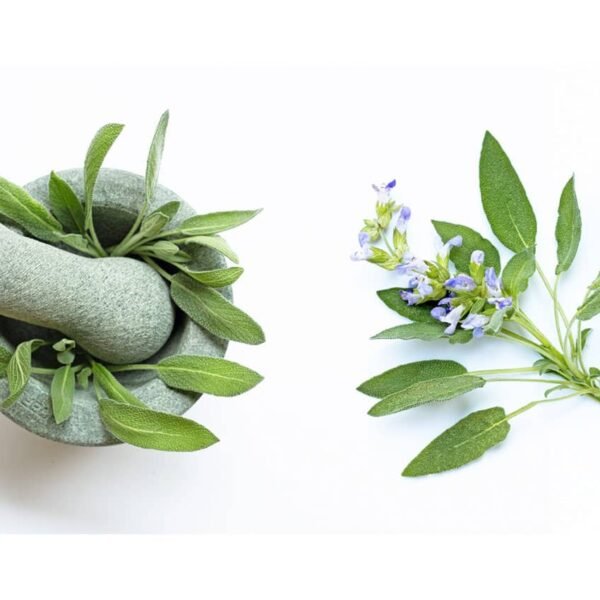
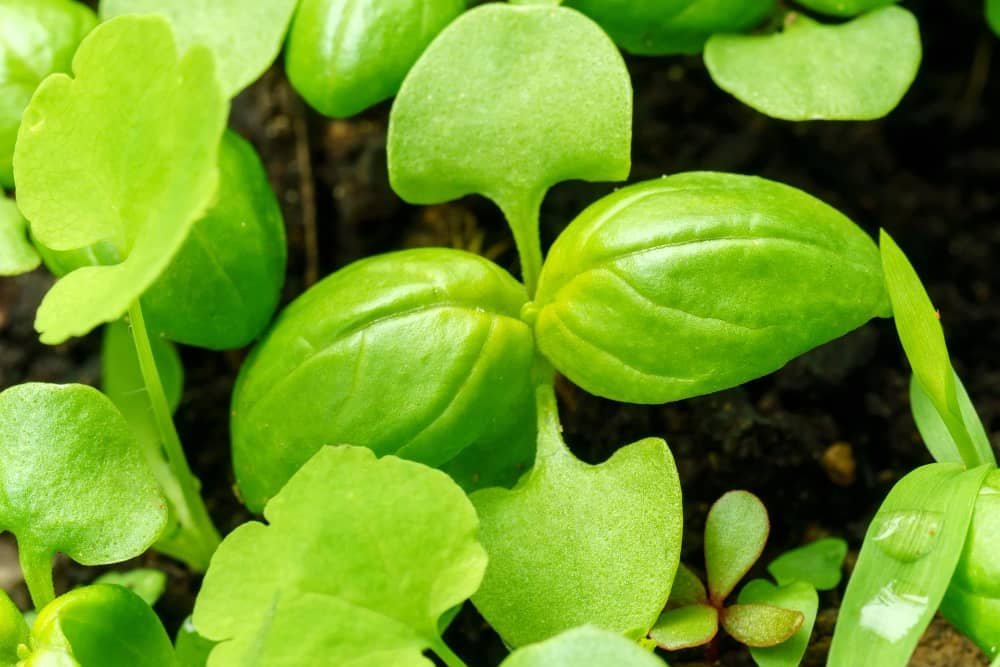
Basil (Ocimum basilicum) is an aromatic herb in the mint family (Lamiaceae), alongside familiar herbs such as oregano, rosemary, sage, thyme, and peppermint. Native to tropical regions of Asia and Africa, basil is now grown around the world for its distinctive flavor, fragrance, and culinary uses.
Most people recognize basil by its soft green leaves and fresh, slightly sweet and peppery flavor. But not all basil tastes the same. Depending on the variety, the leaves can have notes of clove, citrus, cinnamon, mint, or anise.
Sweet basil is especially popular in Mediterranean and Italian cooking, where it appears in pesto, tomato sauces, salads, pasta, and pizza. Other varieties play important roles in Asian cuisines, including Thai basil in curries and stir-fries and holy basil in traditional Indian dishes and herbal preparations.
If you enjoy Mediterranean culinary herbs, marjoram is another member of the mint family worth exploring.
Basil also has a long history of traditional use beyond the kitchen. Today, researchers are studying its essential oils, antioxidants, and other plant compounds to better understand their potential effects on human health.
Common Types of Basil
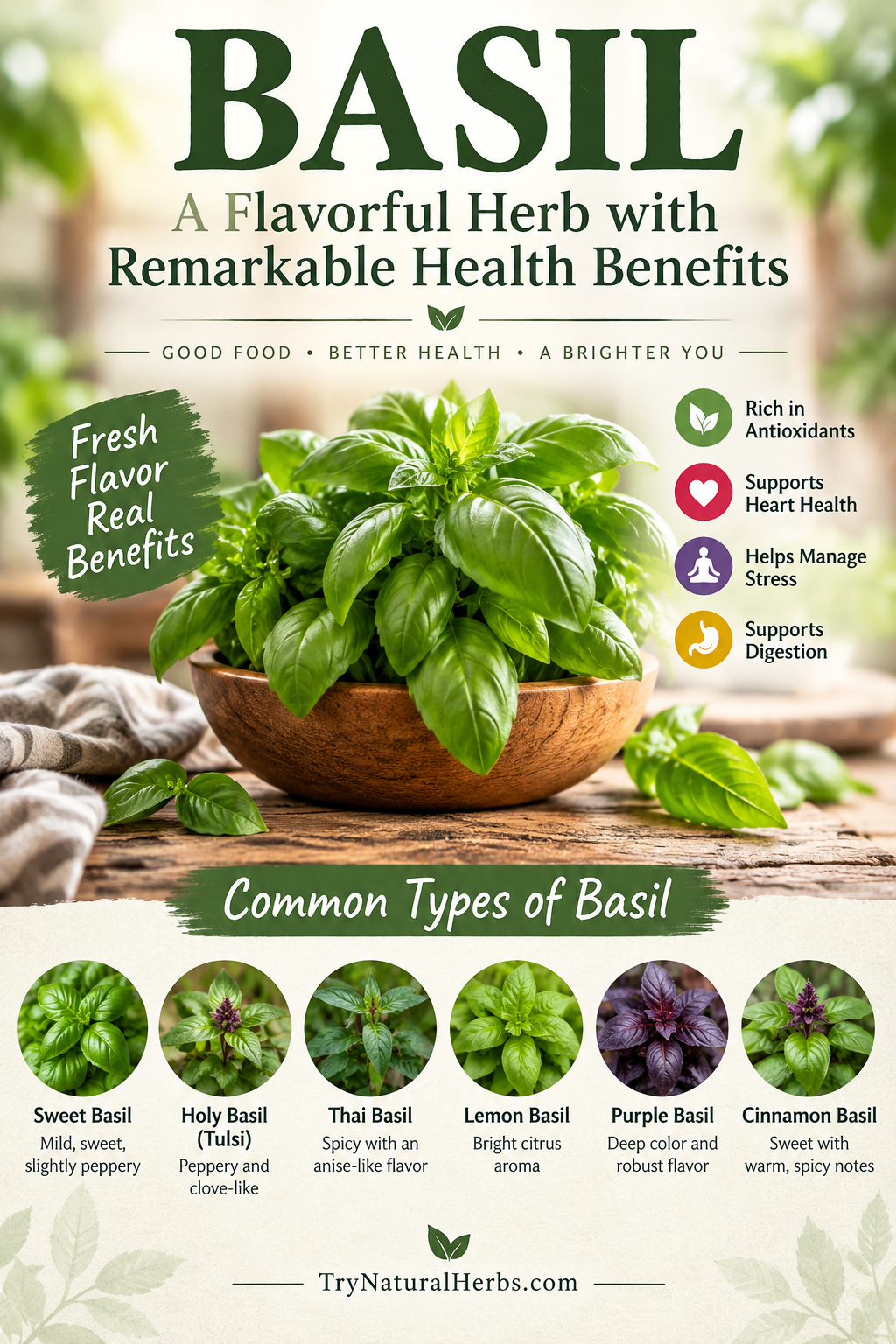
There are many varieties of basil, each with its own flavor and best uses.
| Variety | Characteristics | Common Uses |
|---|---|---|
| Sweet Basil | Mild, sweet, slightly peppery | Pesto, pasta, pizza, salads |
| Holy Basil (Tulsi) | Peppery and clove-like | Herbal tea, traditional preparations |
| Thai Basil | Spicy with an anise-like flavor | Curries, stir-fries, noodle dishes |
| Lemon Basil | Bright citrus aroma | Seafood, salads, tea |
| Purple Basil | Deep purple leaves and robust flavor | Salads, garnishes, infused vinegar |
| Cinnamon Basil | Sweet with warm, spicy notes | Tea, fruit dishes, desserts |
Sweet basil is the variety most commonly sold in U.S. grocery stores, while holy basil (Ocimum tenuiflorum) is a different species and is particularly important in Ayurvedic traditions.
Basil’s Active Plant Compounds
Basil contains numerous naturally occurring phytochemicals. Their concentrations vary by species, variety, growing conditions, and processing.
Some of the most studied include:
- Eugenol — an aromatic compound studied for antioxidant and anti-inflammatory activity.
- Rosmarinic acid — a polyphenol with antioxidant properties also found in rosemary, lemon balm, and other members of the mint family.
- Linalool — an aromatic compound that contributes to the characteristic scent of some basil varieties.
- Apigenin — a plant flavonoid studied for its antioxidant and anti-inflammatory activity.
- Orientin and vicenin — flavonoids found in basil that have demonstrated antioxidant activity in experimental research.
The exact chemical profile varies by species, cultivar, growing conditions, and processing. These compounds help explain researchers’ interest in basil, but laboratory activity doesn’t necessarily translate into measurable health benefits from eating the herb.
For a deeper look at the herb’s chemical composition, see this review of sweet basil’s phytochemistry and biological activity.
Basil Nutrition Facts
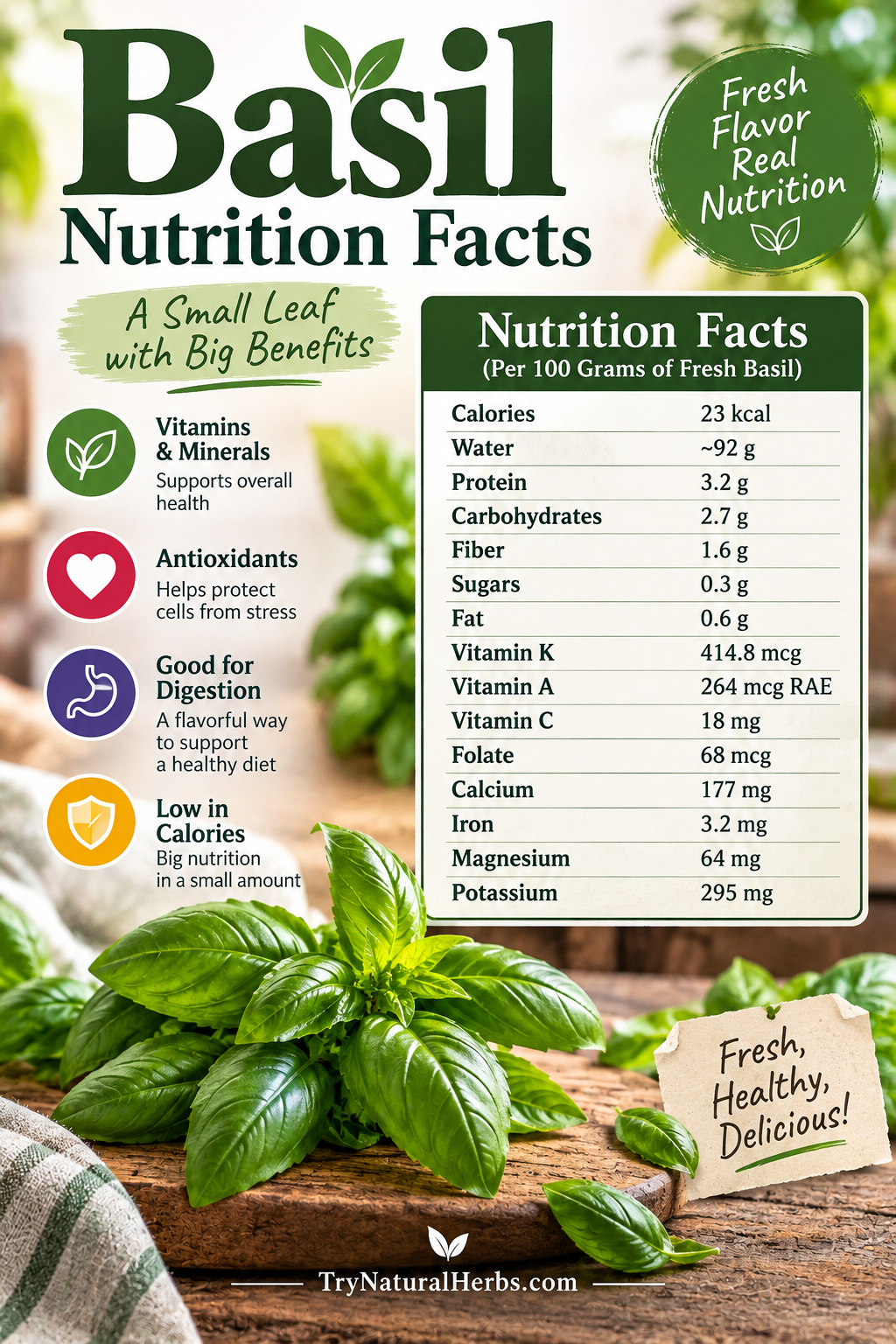
Fresh basil is very low in calories and provides vitamin K, vitamin A precursors, vitamin C, folate, and several minerals. However, basil is normally eaten in relatively small amounts, so its contribution to your daily nutrient intake depends heavily on serving size.
Nutritional values also vary somewhat by variety, growing conditions, and whether basil is eaten fresh or dried. Removing water makes dried basil more concentrated by weight, while fresh basil retains more of certain heat- and processing-sensitive nutrients.
Nutrition Per 100 Grams of Fresh Basil
The table below uses 100 grams as a standardized reference amount for comparing foods. A typical serving of fresh basil is much smaller.
| Nutrient | Amount per 100 g |
|---|---|
| Calories | 23 kcal |
| Water | ~92 g |
| Protein | 3.2 g |
| Carbohydrates | 2.7 g |
| Fiber | 1.6 g |
| Sugars | 0.3 g |
| Fat | 0.6 g |
| Vitamin K | 414.8 mcg |
| Vitamin A | 264 mcg RAE |
| Vitamin C | 18 mg |
| Folate | 68 mcg |
| Calcium | 177 mg |
| Iron | 3.2 mg |
| Magnesium | 64 mg |
| Potassium | 295 mg |
| Manganese | 1.1 mg |
Values are approximate and based on USDA FoodData Central nutrition data for fresh basil. Actual nutrient content can vary.
Key Nutrients in Basil
Vitamin K
Vitamin K is one of the standout nutrients in fresh basil. The body needs it for normal blood clotting, and it also plays a role in bone health.
The numbers in the table above are based on 100 grams of basil, however, which is considerably more than most people eat at one time. A few leaves sprinkled over a meal provide much less.
People taking warfarin or other medications affected by vitamin K should follow their healthcare provider’s advice about keeping vitamin K intake consistent.
Vitamin A
Basil contains carotenoids, including beta-carotene, that can contribute to vitamin A intake. Vitamin A is important for normal vision, immune function, reproduction, and the maintenance of healthy tissues.
Vitamin C
Fresh basil contains vitamin C, an antioxidant nutrient involved in collagen formation, immune function, and iron absorption. Because typical basil portions are small, it shouldn’t be relied upon as a major source of vitamin C.
Calcium
Calcium is essential for bones and teeth and also participates in muscle contraction, nerve signaling, and other physiological processes. Basil contains calcium, although typical culinary portions provide only a modest amount.
Iron
Iron is needed to make hemoglobin, the protein in red blood cells that carries oxygen throughout the body. Fresh basil contains some iron, but again, serving size matters when considering how much it contributes to daily requirements.
Magnesium and Potassium
Basil also provides magnesium and potassium. These minerals are involved in numerous processes throughout the body, including normal muscle and nerve function.
Antioxidants and Other Plant Compounds
Basil also provides carotenoids, polyphenols, and aromatic compounds with antioxidant activity. Their concentrations vary considerably among species and cultivars.
These compounds contribute to basil’s nutritional and research interest, but antioxidant activity measured in a laboratory shouldn’t be interpreted as evidence that eating basil prevents or treats disease.
Top Health Benefits of Basil
The potential health benefits of basil have been studied in several areas, but the strength of evidence varies considerably.
An important distinction runs throughout the research: studies involving holy basil (Ocimum tenuiflorum) or concentrated extracts shouldn’t automatically be applied to sweet basil (Ocimum basilicum) eaten as food.
1. Provides Antioxidant Plant Compounds
Basil contains rosmarinic acid, eugenol, flavonoids, carotenoids, and other phytochemicals with antioxidant activity. These compounds can interact with reactive molecules involved in oxidative stress.
This is one of basil’s better-established biochemical properties, although laboratory antioxidant activity doesn’t necessarily predict a specific health benefit in humans.
2. May Support a Healthy Inflammatory Response
Compounds found in basil, including eugenol and rosmarinic acid, have demonstrated anti-inflammatory activity in experimental research, as summarized in a review of basil’s anti-inflammatory and antioxidant activity.
Much of this evidence comes from laboratory and animal studies, so more human research is needed to understand whether ordinary dietary amounts of basil meaningfully affect inflammation.
3. Fits Naturally Into a Heart-Healthy Diet
Fresh basil provides small amounts of potassium, magnesium, carotenoids, and polyphenols while adding plenty of flavor with very few calories.
Using herbs such as basil to flavor vegetables, beans, fish, whole grains, and other minimally processed foods can also make it easier to prepare flavorful meals without relying heavily on salt.
4. Holy Basil May Affect Blood Sugar
Holy basil has been investigated for possible effects on blood glucose and other markers of metabolic health. Some human studies have reported promising results, but the evidence remains limited and shouldn’t be generalized to ordinary sweet basil.
Anyone taking medication for diabetes should speak with a healthcare professional before using concentrated holy basil supplements.
5. Has a Long History of Use for Digestion
Basil has traditionally been used for digestive complaints in several herbal traditions. Its aromatic compounds are one reason it has remained popular both as a culinary herb and in traditional preparations.
However, strong clinical evidence that eating basil treats bloating, indigestion, or other gastrointestinal problems is currently limited.
6. Contributes Nutrients Involved in Immune Function
Fresh basil contains vitamin A precursors, vitamin C, and numerous plant compounds. These nutrients participate in normal immune and cellular functions.
Because typical servings of basil are relatively small, however, it shouldn’t be considered an immune “booster” or relied upon as a major source of these nutrients.
7. Holy Basil Has Been Studied for Stress
Holy basil, also known as Tulsi, has a long history of use in Ayurveda and is often described as an adaptogenic herb.
Small human trials have investigated holy basil extracts for stress, mood, sleep, and related measures, with some encouraging findings. More high-quality research is needed to establish how effective it is, what doses are appropriate, and which people are most likely to benefit.
8. Contains Compounds With Antimicrobial Activity
Essential oils and extracts from basil have demonstrated activity against certain microorganisms in laboratory experiments.
That’s scientifically interesting, but it doesn’t mean that eating basil can prevent or treat an infection. Laboratory antimicrobial activity and clinical effectiveness in humans are very different things.
What the Evidence Really Tells Us
Basil contains several biologically active compounds, but evidence from laboratory studies, animal research, or concentrated extracts isn’t equivalent to evidence from eating fresh basil.
For culinary basil, the strongest case remains simple: it’s a flavorful herb that fits easily into a varied, nutrient-rich diet. More specific therapeutic claims require stronger human evidence.

Basil for Heart Health
Basil can fit naturally into a heart-healthy diet, but it’s important to separate the nutritional benefits of eating the herb from research involving concentrated basil extracts.
Fresh basil provides small amounts of potassium and magnesium along with carotenoids, polyphenols, and other plant compounds. Because typical servings are small, however, basil shouldn’t be considered a major source of cardiovascular nutrients on its own.
What About Blood Pressure?
Fresh basil contains potassium, a mineral involved in blood-pressure regulation and normal heart and muscle function.
But serving size matters. Because most people eat only a small amount of basil at a time, it contributes far less potassium than foods such as beans, potatoes, leafy greens, tomatoes, and avocados.
Basil is therefore better viewed as one small part of a potassium-rich dietary pattern rather than a food that lowers blood pressure by itself.
Can Basil Lower Cholesterol?
Some research has examined holy basil (Ocimum tenuiflorum) for possible effects on cholesterol, triglycerides, blood glucose, and other cardiovascular risk markers.
Results from small studies have been encouraging in some cases, but the evidence isn’t strong enough to conclude that basil reliably lowers cholesterol. These findings also shouldn’t be automatically applied to sweet basil (Ocimum basilicum) used in everyday cooking.
If you have high cholesterol or cardiovascular disease, basil shouldn’t replace medications or other treatments recommended by your healthcare provider.
A Simple Way to Add Flavor Without More Salt
One of basil’s most practical advantages for heart-conscious cooking is simple: it adds plenty of flavor without adding sodium. Fresh or dried basil works well in tomato sauces, soups, roasted vegetables, beans, eggs, fish, chicken, whole grains, and homemade dressings.
Combined with garlic, citrus, spices, and other aromatics, basil can make lower-sodium meals much more enjoyable.
Basil is especially at home in Mediterranean-style meals built around vegetables, legumes, whole grains, olive oil, nuts, and fish.
Overall, basil makes the most sense as a flavorful part of a heart-healthy eating pattern rather than as a treatment for high blood pressure, cholesterol, or cardiovascular disease.

Basil and Blood Sugar
Basil has attracted attention for its possible effects on blood sugar, but most of the relevant human research involves holy basil (Ocimum tenuiflorum), also known as Tulsi—not the sweet basil (Ocimum basilicum) typically used in pesto and other Mediterranean dishes.
That distinction matters. Eating fresh culinary basil should not be expected to produce the same effects as the holy basil preparations used in clinical research.
What Does Human Research Show?
An older randomized, placebo-controlled crossover trial investigated holy basil leaves in people with non-insulin-dependent diabetes mellitus, now generally called type 2 diabetes.
During the holy basil treatment period, researchers reported reductions in both fasting and post-meal blood glucose compared with the placebo period. The study also reported a modest reduction in total cholesterol.
These results are interesting, but the trial was small and was published in 1996. It shouldn’t be interpreted as evidence that holy basil can replace established diabetes treatment.
A later systematic review of human holy basil studies found potentially favorable results across several metabolic outcomes, including blood glucose. However, the authors also emphasized the need for additional research to establish appropriate preparations and doses and determine which populations might benefit.
What About Regular Sweet Basil?
There is much less evidence that ordinary culinary sweet basil has a clinically meaningful effect on blood glucose.
Fresh basil is naturally low in calories and carbohydrates, making it easy to include in meals containing vegetables, legumes, whole grains, healthy fats, and protein.
That’s a good nutritional reason to eat basil, but it isn’t the same as saying basil lowers blood sugar.
Holy Basil and Diabetes Medication
People taking insulin or medications that lower blood glucose should be particularly cautious with concentrated holy basil products.
If you use insulin or glucose-lowering medication, discuss concentrated holy basil products with your healthcare provider before adding them to your routine. Holy basil shouldn’t replace prescribed treatment, glucose monitoring, or regular diabetes care.
Human research on holy basil is interesting but still limited, while ordinary sweet basil shouldn’t be promoted as a treatment for diabetes or high blood sugar.
Basil for Digestion
Basil has a long history of traditional use for digestive complaints, but modern evidence for basil’s digestive benefits in humans is limited. Most people are more likely to encounter basil as a flavorful part of a balanced meal than as a treatment for digestive problems.
Traditional Use for Digestive Comfort
Basil has traditionally been consumed in foods, herbal preparations, and teas for complaints such as indigestion and abdominal discomfort.
Its leaves contain aromatic compounds, including eugenol and linalool, as well as various polyphenols. Researchers have investigated some of these compounds for biological activities that could be relevant to digestive health.
However, there isn’t strong clinical evidence showing that eating culinary basil reliably reduces bloating, improves digestion, or stimulates digestive enzymes in humans.
For that reason, traditional use and proven clinical benefit should be treated as two different things.
What About the Gut Microbiome?
Basil extracts and essential oils have shown antimicrobial activity in laboratory studies, but that doesn’t demonstrate that eating basil “balances” the gut microbiome.
For gut health, the overall diet—particularly the variety of fiber-rich plant foods you eat—matters far more than any single herb.
Basil Tea After Meals
Some people enjoy basil tea after eating simply because a warm, caffeine-free herbal drink can be pleasant and soothing.
For another widely used mint-family infusion, see our guide topeppermint.
Sweet basil can be steeped in hot water, while holy basil is commonly sold specifically as an herbal tea. Evidence that either tea directly treats indigestion or bloating is limited, so it’s better to describe basil tea as a traditional beverage rather than a digestive remedy.
We’ll cover preparation methods and the differences between sweet basil tea and holy basil tea later in this guide.
Basil for Inflammation
Basil contains plant compounds that have been investigated for anti-inflammatory activity, including eugenol, rosmarinic acid, and various flavonoids.
Most of this evidence comes from laboratory and animal research. Extracts from Ocimum basilicum and individual basil compounds can affect inflammatory pathways under experimental conditions, but that doesn’t establish that eating fresh basil meaningfully reduces inflammation in people.
Holy basil (Ocimum tenuiflorum) has also been studied, often using preparations much more concentrated than culinary servings. Findings from those studies shouldn’t automatically be applied to sweet basil or used to suggest that either species can treat an inflammatory condition.
In practical terms, basil works well as part of a varied eating pattern that includes vegetables, legumes, whole grains, nuts, seeds, olive oil, and fish.

Basil for Stress and Anxiety
Research on basil for stress primarily involves holy basil (Ocimum tenuiflorum), or Tulsi, rather than the sweet basil used in Italian cooking.
Holy basil has a long history of use in Ayurveda and is often described as an adaptogenic herb. More recently, researchers have tested standardized holy basil extracts in people experiencing stress.
What Does Human Research Show?
A 2022 randomized, double-blind, placebo-controlled trial studied 100 adults experiencing stress. Participants received either a standardized holy basil extract or placebo for eight weeks.
Compared with placebo, the holy basil group experienced greater improvements in perceived stress and insomnia scores. Researchers also reported lower hair cortisol concentrations at the end of the study and a reduced cortisol response during a laboratory stress test.
These findings are noteworthy because the researchers measured both subjective symptoms and biological markers of stress.
An earlier placebo-controlled study also investigated holy basil extract in people experiencing general stress. After six weeks, the holy basil group showed greater improvement in overall stress-related symptom scores than the placebo group.
Together, these trials provide preliminary human evidence that standardized holy basil extracts may influence the stress response. They don’t establish that ordinary basil leaves or Tulsi tea will produce the same effects.
What About Cortisol?
Cortisol is a hormone involved in the body’s response to stress as well as metabolism, blood glucose regulation, immune activity, and the sleep-wake cycle.
The 2022 trial is particularly interesting because researchers measured cortisol rather than relying entirely on participants’ descriptions of how they felt.
After eight weeks, hair cortisol was lower in the holy basil group than in the placebo group. During an experimentally induced stress test, participants taking holy basil also showed a smaller salivary cortisol response.
That’s more specific evidence than simply claiming that holy basil “balances cortisol.” The study suggests a possible effect, but additional independent trials are needed before we know how consistent or clinically meaningful that effect is.
Can Holy Basil Help With Anxiety?
Stress and clinical anxiety disorders aren’t the same thing.
Some holy basil studies have included measures related to mood, stress, cognition, or anxiety, but the current evidence isn’t strong enough to recommend holy basil as a treatment for an anxiety disorder.
If anxiety is persistent, severe, or interfering with everyday life, professional evaluation and evidence-based treatment are more appropriate than relying on an herbal supplement.
What About Sleep?
The 2022 clinical trial also reported an improvement in participants’ self-reported insomnia scores.
However, objective sleep measurements collected with wearable devices didn’t provide equally strong evidence. The researchers themselves noted that better studies using gold-standard objective sleep measurements are needed.
For now, it’s reasonable to say that holy basil has been studied for stress-related sleep problems, but describing it as a proven sleep aid would go beyond the evidence.
Holy Basil Tea vs. Extracts
Holy basil is commonly consumed as a caffeine-free herbal tea, and many people enjoy it as part of an evening or relaxation routine.
But there’s an important distinction:
| Holy Basil Tea | Standardized Holy Basil Extract |
|---|---|
| Traditional herbal beverage | Concentrated preparation |
| Strength varies with preparation | Provides a measured amount of extract |
| Commonly consumed for enjoyment and relaxation | Used in most modern clinical trials |
| Limited direct clinical evidence | Some placebo-controlled human research |
So far, the strongest stress-related evidence comes from standardized extracts, not an ordinary cup of Tulsi tea.
We’ll look more closely at basil tea and how to prepare it later in this guide.
Basil and the Immune System
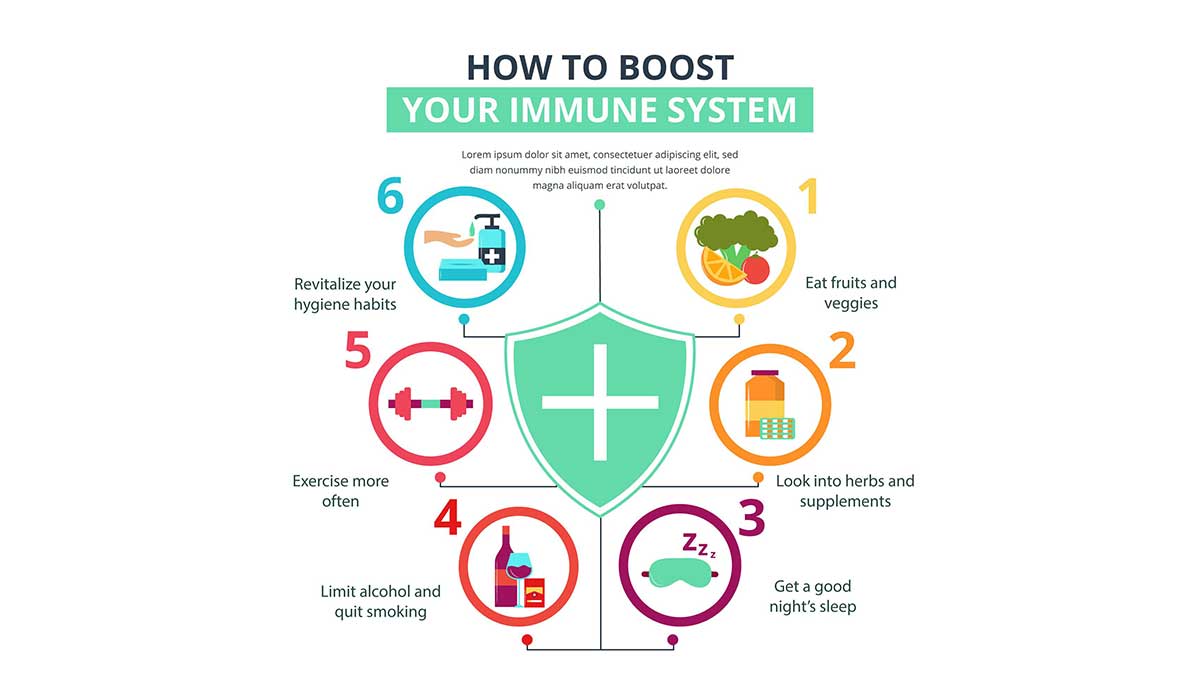
Basil is sometimes described as an immune-boosting herb, but there’s no good clinical evidence that eating basil prevents colds, flu, or other infections.
Fresh basil provides small amounts of vitamin C and carotenoids that can contribute to vitamin A intake. Both nutrients are involved in normal immune function, although typical basil servings are too small to make the herb a major source of either.
Basil extracts and essential oils have also demonstrated antioxidant, anti-inflammatory, and antimicrobial activity in laboratory experiments. These findings are interesting, but they don’t show that eating basil strengthens the immune system or treats an infection.
Holy basil (Ocimum tenuiflorum) also has a long history of traditional use, particularly in Ayurveda. Traditional use, however, isn’t the same as clinical evidence.
Basil can contribute nutrients and plant compounds to a healthy diet, but there’s no need to think of it as an immune booster.
Basil for Skin
Basil is sometimes promoted for clearer or younger-looking skin, but there’s little direct human evidence supporting those claims.
Fresh basil provides vitamin C, carotenoids, polyphenols, and other plant compounds that contribute to overall nutrition. However, typical servings are small, and foods such as bell peppers, citrus fruits, berries, carrots, and leafy greens are generally more substantial sources of nutrients commonly associated with skin health.
Claims that eating basil prevents wrinkles, clears acne, or protects against UV damage aren’t supported by strong clinical evidence. Basil is also not a substitute for sunscreen or other established sun-protection measures.
Can You Put Basil on Your Skin?
Basil extracts and essential oils have been studied for antimicrobial and other biological properties, but human evidence supporting homemade basil treatments for acne, eczema, wounds, or other skin conditions is limited.
Basil essential oil is highly concentrated and shouldn’t be applied undiluted to the skin. Essential oils can cause irritation or allergic contact reactions in some people.
Enjoy basil as part of a varied diet, but be skeptical of claims that eating it or applying homemade basil preparations can treat skin conditions or reverse skin aging.
Basil for Hair
Basil is sometimes promoted for hair growth, thinning hair, and scalp health, but there’s little clinical evidence supporting these uses.
Fresh basil contains small amounts of vitamin C, carotenoids, iron, and other nutrients involved in normal tissue function. That doesn’t mean eating basil stimulates hair follicles or prevents hair loss.
Basil extracts and essential oils have also demonstrated antimicrobial, antioxidant, and anti-inflammatory activity in laboratory studies. Those findings don’t establish that applying basil to the scalp treats dandruff, irritation, or hair loss.
Traditional basil hair oils and rinses are used in some cultures, but traditional use alone doesn’t prove effectiveness. Basil essential oil also shouldn’t be applied undiluted to the scalp because concentrated essential oils can cause irritation or allergic reactions.
Hair growth depends on genetics, hormones, age, nutrition, health conditions, medications, and other factors. Persistent or sudden hair loss deserves proper evaluation rather than treatment with a particular herb.
There’s currently no convincing evidence that basil promotes hair growth or prevents hair loss.
Basil Tea Benefits
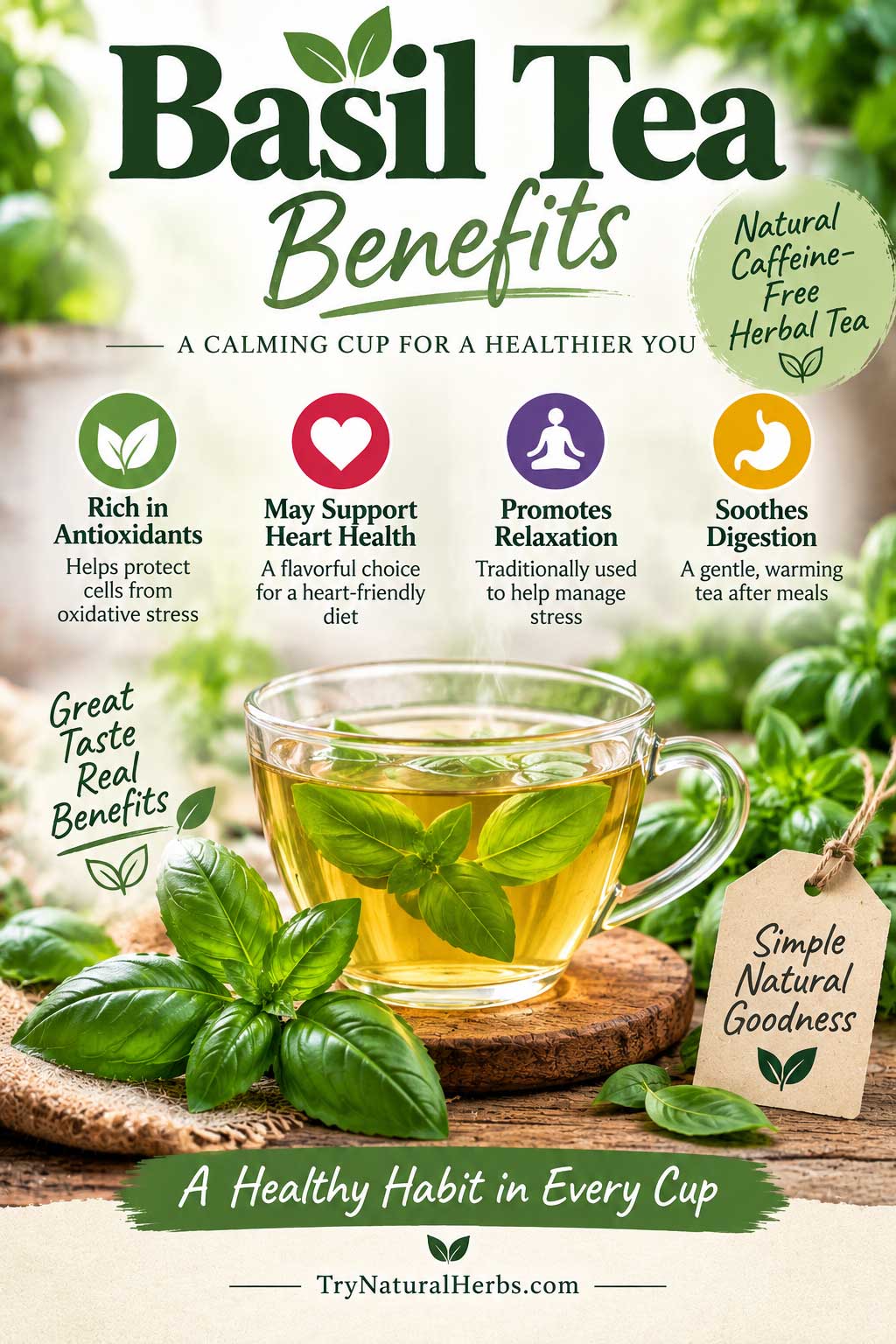
Basil tea is a naturally caffeine-free herbal infusion made by steeping fresh or dried basil leaves in hot water. Depending on the variety, it can taste sweet, peppery, citrusy, earthy, or slightly spicy.
There are two important types to distinguish. Sweet basil (Ocimum basilicum) tea is usually made from the familiar culinary herb, while holy basil (Ocimum tenuiflorum) tea, commonly called Tulsi tea, comes from the species traditionally used in Ayurveda.
Most modern human research into basil and stress has involved standardized holy basil extracts rather than brewed tea, so the benefits of the two shouldn’t be treated as interchangeable.
1. A Caffeine-Free Way to Stay Hydrated
The clearest benefit of basil tea is also the simplest: it contributes to daily fluid intake.
Because plain basil tea is naturally caffeine-free and contains virtually no calories when prepared without sweeteners, it can be a useful alternative to sugary drinks or caffeinated beverages.
It can be enjoyed hot or cold and at almost any time of day.
2. Provides Water-Soluble Plant Compounds
Steeping basil leaves in hot water extracts some of the plant’s aromatic and phenolic compounds into the beverage.
Exactly how much ends up in your cup depends on the basil variety, whether the leaves are fresh or dried, the amount used, water temperature, and steeping time.
For that reason, it’s better to say basil tea contains extracted plant compounds than to describe every cup as a concentrated source of antioxidants.
3. Tulsi Tea Can Be Part of a Relaxation Routine
Holy basil has been studied in humans for its possible effects on perceived stress, mood, sleep, and cortisol.
However, the clinical trials discussed earlier in this guide used standardized holy basil extracts. We don’t yet have equivalent evidence showing that an ordinary cup of Tulsi tea produces the same effects.
That doesn’t make the tea useless. A warm, caffeine-free herbal beverage can still be an enjoyable part of an evening or relaxation routine—just without promising a medicinal effect that hasn’t been established.
How to Make Fresh Basil Tea
You can make a simple cup with either fresh or dried culinary basil.
Ingredients
- 1 cup (8 ounces) water
- 8–10 fresh basil leaves or 1–2 teaspoons dried basil
- Optional lemon, ginger, or a small amount of honey
Instructions
- Bring the water to a boil and remove it from the heat.
- Place the basil in a mug or teapot.
- Pour the hot water over the leaves.
- Cover and steep for about 5–10 minutes.
- Strain and taste.
- Adjust the next cup with more or less basil depending on how strong you prefer it.
Fresh sweet basil produces a light, aromatic infusion. For traditional Tulsi tea, use holy basil leaves or a commercial tea product specifically labeled holy basil or Tulsi and follow its preparation directions.
Sweet Basil Tea vs. Holy Basil Tea
| Sweet Basil Tea | Holy Basil (Tulsi) Tea |
|---|---|
| Made from Ocimum basilicum | Made from Ocimum tenuiflorum |
| Sweet, fresh, slightly peppery | Earthy, peppery, sometimes clove-like |
| Primarily a culinary herb | Important herb in Ayurvedic traditions |
| Limited human research as a tea | Traditional use for stress and wellness |
| Easy to make from garden basil | Widely sold as packaged herbal tea |
| Naturally caffeine-free | Naturally caffeine-free when pure Tulsi is used |
If your interest is specifically in the stress research surrounding holy basil, remember that the strongest clinical evidence involves extracts rather than tea.
Does Basil Tea Contain Caffeine?
Pure basil tea and pure holy basil tea are naturally caffeine-free.
Check the ingredient list on commercial blends, though. A Tulsi product blended with green tea, black tea, yerba mate, or another caffeinated ingredient will contain caffeine.
How Much Basil Tea Can You Drink?
Overall, basil tea is best viewed as an aromatic herbal beverage. Research on stress and other specific health effects has primarily involved standardized holy basil extracts rather than ordinary brewed tea.
Holy Basil vs. Sweet Basil
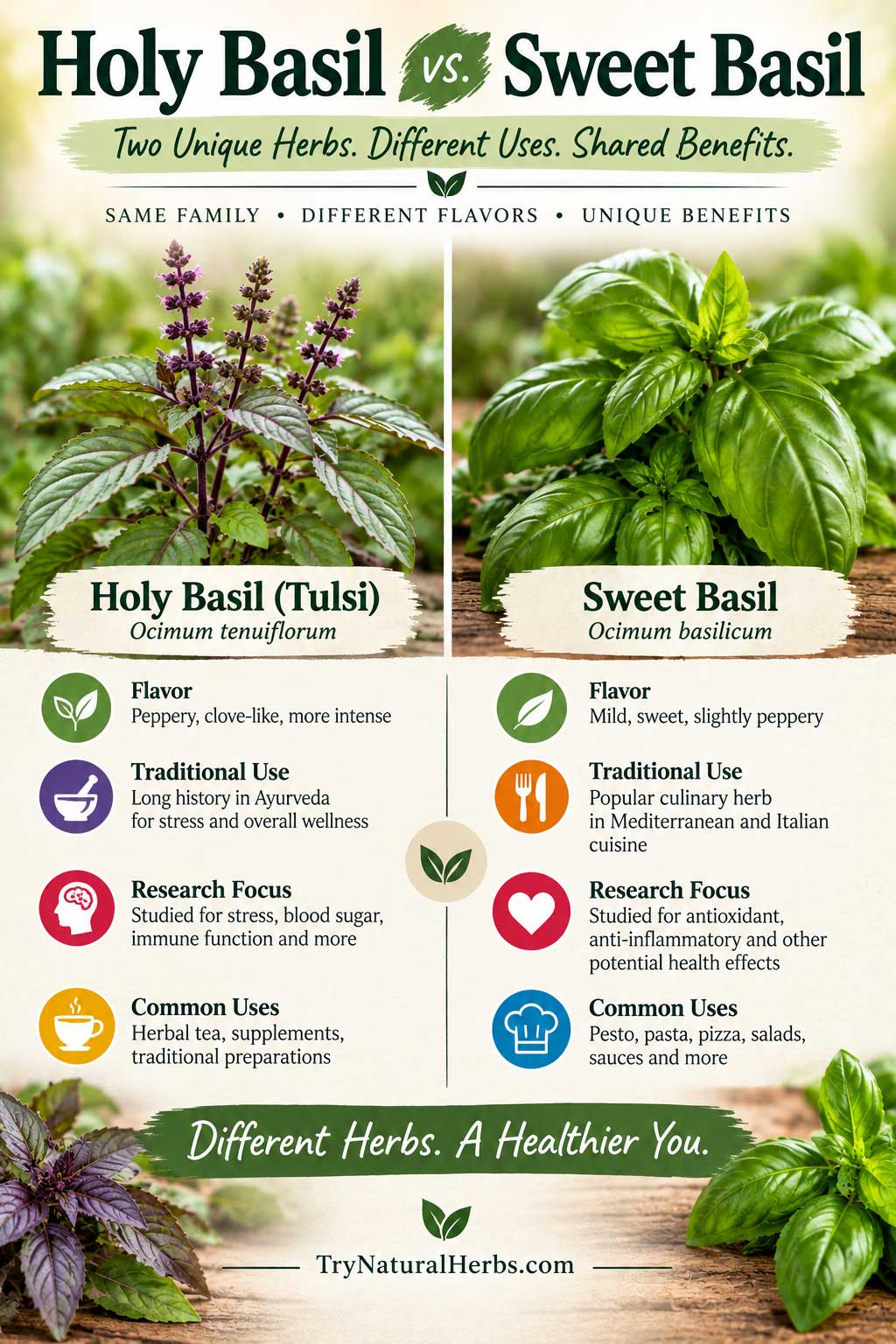
Holy basil and sweet basil are different species, even though both belong to the Ocimum genus and mint family (Lamiaceae).
Sweet basil (Ocimum basilicum) is primarily known as a culinary herb, while holy basil (Ocimum tenuiflorum), commonly called Tulsi, has an important place in Ayurveda and is frequently consumed as tea or in herbal preparations.
Holy Basil vs. Sweet Basil at a Glance
| Feature | Sweet Basil | Holy Basil (Tulsi) |
|---|---|---|
| Scientific name | Ocimum basilicum | Ocimum tenuiflorum |
| Main modern use | Culinary herb | Tea, food, and traditional herbal preparations |
| Flavor | Sweet, fresh, slightly peppery | Peppery, earthy, often clove-like |
| Common culinary association | Mediterranean and Italian cooking | Indian cuisine and Ayurvedic traditions |
| Commonly used for tea | Sometimes | Yes |
| Human stress research | Limited | Yes, primarily using extracts |
| Blood-glucose research | Limited | Some human research |
| Typical form | Fresh or dried leaves | Tea, leaves, powders, capsules, extracts |
The research distinction is especially important. Much of the human evidence discussed in this guide—particularly studies involving stress and blood glucose—comes from holy basil preparations, not culinary sweet basil.
Do They Contain the Same Plant Compounds?
There is considerable overlap, but the chemical profiles aren’t identical.
Different basil species and cultivars can contain varying amounts of eugenol, rosmarinic acid, linalool, ursolic acid, flavonoids, and other phenolic and volatile compounds.
Even plants belonging to the same species can differ depending on cultivar, climate, growing conditions, harvest time, and processing.
That’s another reason it’s risky to take a study involving one standardized holy basil extract and assume that every basil plant—or every Tulsi tea—will have the same chemical composition or biological effect.
Which Type of Basil Should You Choose?
For everyday cooking, sweet basil is usually the obvious choice. Its flavor works especially well with tomatoes, olive oil, garlic, vegetables, pasta, and many Mediterranean dishes.
If you’re interested in Tulsi tea or the research surrounding holy basil, look specifically for products labeled holy basil, Tulsi, or Ocimum tenuiflorum.
Don’t assume a bottle or tea labeled simply “basil” contains the species used in holy basil clinical studies.
Can You Substitute Holy Basil for Sweet Basil?
You can experiment with either herb in cooking, but they aren’t direct flavor substitutes.
Sweet basil’s mild flavor makes it ideal for pesto and fresh tomato dishes. Holy basil is generally more pungent and spicy, which can noticeably change the character of a recipe.
This kind of species distinction also matters with other mint-family herbs, including spearmint, where flavor, traditional use, and research can differ from closely related plants.
The same distinction applies to tea. Sweet basil makes a light herbal infusion, while Tulsi produces the more robust herbal tea traditionally associated with holy basil.
How to Use Basil
Basil is remarkably versatile. You can use it fresh or dried, blend it into sauces, steep it for tea, freeze it for later, or grow your own supply at home.
The best method depends largely on the type of basil you have and the flavor you want.
Use Fresh Basil
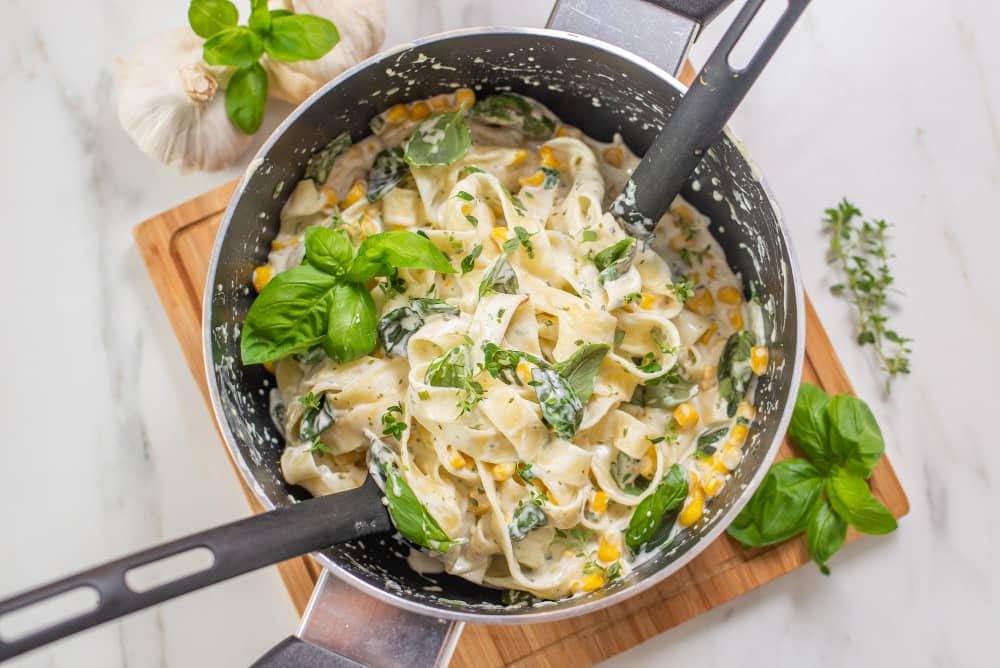
Fresh sweet basil is at its best when its aroma remains prominent. Tear or chop it shortly before serving and use it in pesto, salads, sandwiches, tomato dishes, eggs, pasta, pizza, soups, roasted vegetables, fish, or chicken.
It pairs especially well with tomatoes, garlic, olive oil, mozzarella, Parmesan, lemon, eggplant, zucchini, and beans. Thai basil is better suited to many curries, noodle dishes, and stir-fries.
Use Dried Basil
Because dried basil has a more concentrated flavor, you’ll generally need less of it than fresh basil. Dried basil is convenient for soups, sauces, marinades, casseroles, and other dishes where the herb has time to blend with the other ingredients. We’ll compare the two forms more closely in the Fresh vs. Dried Basil section below.
It also pairs naturally with oregano, especially in tomato sauces, roasted vegetables, and Mediterranean-style seasoning blends.
Make Basil Pesto
Pesto is one of the easiest ways to use a large amount of fresh sweet basil.
Classic pesto combines fresh basil with extra-virgin olive oil, pine nuts, garlic, Parmesan or Pecorino, and salt. Blend until you reach the texture you prefer.
Pesto isn’t limited to pasta. Try it with roasted vegetables, sandwiches, grain bowls, fish, chicken, or as a flavorful spread.
Make Basil Tea
Both sweet basil and holy basil can be steeped in hot water.
Sweet basil creates a lighter culinary-herb infusion, while holy basil (Tulsi) is much more commonly sold specifically for tea.
We’ve included complete brewing instructions in the Basil Tea Benefits section above, so there’s no need to repeat the recipe here.
Add Basil to Drinks and Smoothies
Fresh basil can work surprisingly well with fruit.
Basil pairs surprisingly well with strawberries, watermelon, mango, pineapple, citrus, and cucumber. Start with only a few leaves because its flavor can quickly dominate a drink.
Be Careful With Homemade Basil Oil
Fresh basil and olive oil taste wonderful together, but homemade herb-infused oils require special attention to food safety.
Fresh herbs can introduce moisture and microorganisms into an oxygen-poor oil environment. Under improper conditions, this can allow Clostridium botulinum to grow and produce the toxin responsible for botulism.
Don’t leave homemade fresh basil oil sitting at room temperature for extended storage.
If you want to make infused oil, follow food-safety guidance for herbs and vegetables in oil, including the recommended preparation and storage procedures.
For everyday cooking, the simplest alternative is to combine fresh basil and olive oil immediately before serving.
Freeze Fresh Basil
Freezing is useful when your basil plant produces more leaves than you can use.
You can freeze chopped basil in water, freeze it as pesto, or portion chopped leaves for future soups and sauces. Frozen basil loses its fresh texture, so it’s better for cooked dishes than salads or garnishes.
Dry Basil for Later
Basil can also be dried for longer storage.
A food dehydrator provides good control over temperature and airflow. Other drying methods can work as well, provided the leaves are dried thoroughly before storage.
Once completely dry, keep basil in an airtight container away from heat, moisture, and direct sunlight. Crush the leaves when you use them rather than immediately after drying to help preserve their aroma.
Grow Your Own Basil
Basil is well suited to containers, raised beds, and herb gardens.
Most culinary basil varieties prefer plenty of sunlight, warm temperatures, well-drained soil, consistent watering, and regular harvesting.
Pinching or harvesting the growing tips encourages branching and can produce a fuller plant.
If you’re growing basil primarily for its leaves, removing developing flower spikes can also help keep the plant focused on leafy growth.
Fresh vs. Dried Basil
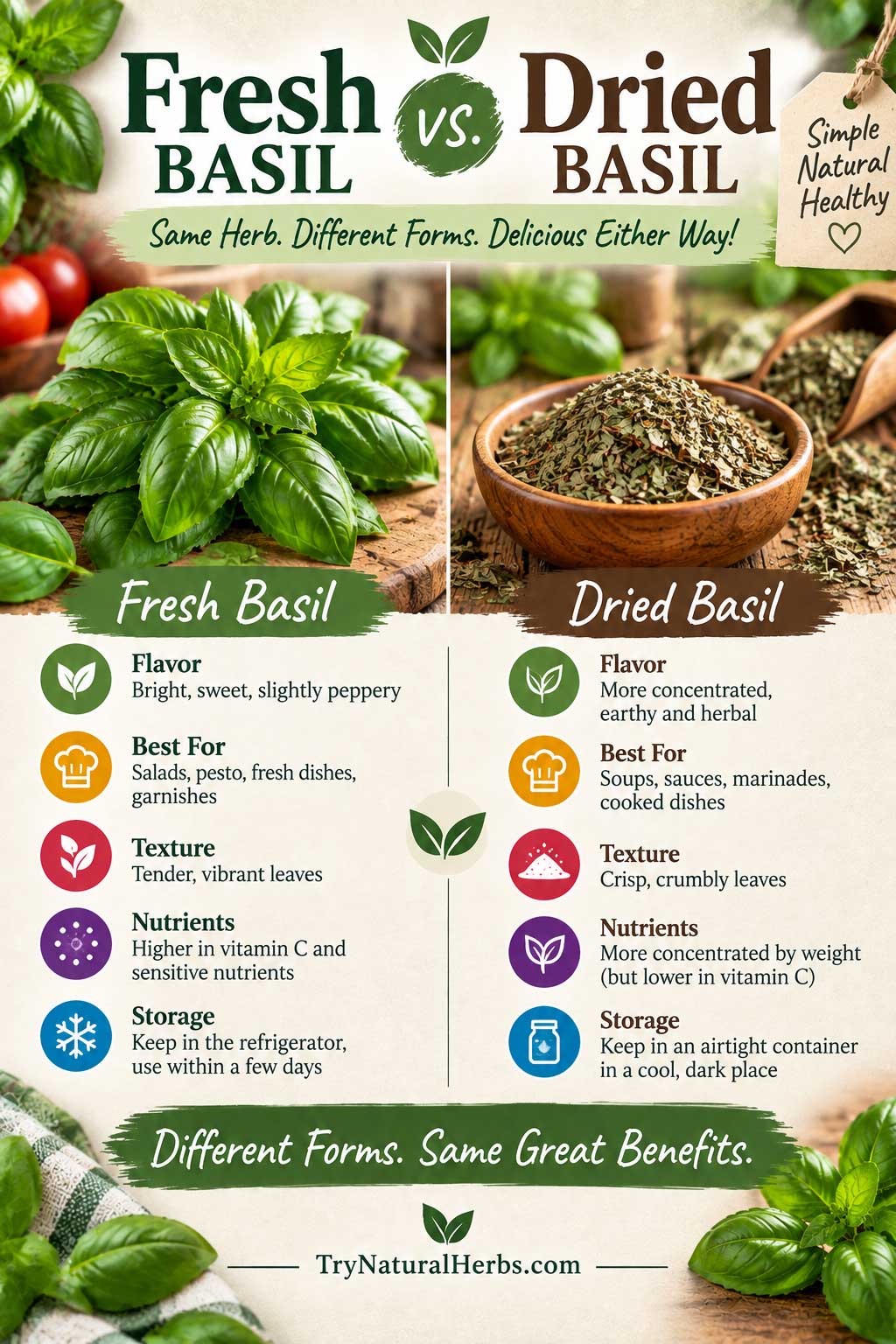
Fresh and dried basil aren’t interchangeable in flavor or texture, but both are useful in the kitchen.
| Fresh Basil | Dried Basil |
|---|---|
| Bright, aromatic flavor | More concentrated, earthy flavor |
| Soft, tender leaves | Dry, crumbled leaves |
| Best for pesto, salads, garnishes, and finishing dishes | Best for sauces, soups, marinades, and longer cooking |
| More perishable | Stores much longer |
| Retains more of some processing-sensitive compounds | Some nutrients are more concentrated by weight |
Is Fresh Basil More Nutritious?
It depends on the comparison. Drying removes water, so many nutrients become more concentrated by weight, but people normally use much smaller amounts of dried basil.
Drying and storage can also alter some sensitive nutrients and plant compounds. Neither form is automatically “healthier.”
How Much Dried Basil Replaces Fresh?
A useful starting point is:
1 tablespoon fresh basil ≈ 1 teaspoon dried basil
The strength of dried herbs varies with age and storage, so adjust according to taste.
How to Store Basil
Fresh basil with stems attached can be kept in water somewhat like cut flowers. Dried basil should be stored tightly sealed in a cool, dry, dark place away from heat and moisture.
Choose fresh basil when aroma and texture matter most and dried basil when convenience and longer cooking are more important.
How Much Basil Should You Consume?
There is no established recommended daily intake for basil.
Fresh and dried sweet basil can generally be used according to taste in normal cooking. There’s no evidence that deliberately eating a particular number of basil leaves each day provides additional health benefits.
There is also no scientifically established daily amount of basil tea. Homemade tea can be prepared according to taste, while packaged Tulsi products should be prepared according to their directions.
What About Holy Basil Supplements?
Holy basil supplements are different from culinary basil. Capsules, powders, tinctures, and standardized extracts can vary considerably in composition and concentration, and doses used in one clinical study can’t automatically be applied to another product.
If you’re considering holy basil for a particular health concern, discuss the product with an appropriate healthcare professional rather than trying to reproduce a research dose on your own.
For most people, there’s no reason to measure basil or aim for a daily target. Use culinary basil according to taste, while treating concentrated holy basil products more cautiously.
Possible Side Effects of Basil
Basil used in normal culinary amounts is generally well tolerated. The more important safety questions involve holy basil (Tulsi) supplements, concentrated extracts, and essential oils, which aren’t equivalent to adding fresh or dried sweet basil to food.
Side effects and potential interactions can also differ depending on the basil species, preparation, dose, medications, and individual health conditions.
1. Basil Allergy
Allergic reactions to basil are possible, although they don’t appear to be common.
Symptoms of a food allergy can include itching, hives, swelling, gastrointestinal symptoms, or respiratory symptoms.
A severe allergic reaction involving difficulty breathing, throat swelling, dizziness, or other signs of anaphylaxis requires emergency medical attention.
2. Basil, Vitamin K, and Warfarin
Fresh basil contains vitamin K, a nutrient involved in normal blood clotting.
This is particularly relevant for people taking warfarin, because significant changes in vitamin K intake can affect how the medication works.
That doesn’t necessarily mean basil needs to be eliminated.
The NIH guidance on vitamin K and warfarin emphasizes maintaining a consistent vitamin K intake when using vitamin K antagonist medications.
An occasional garnish is also very different from suddenly consuming large quantities of basil every day.
3. Holy Basil and Blood Glucose
As discussed earlier, some human research suggests that holy basil preparations may affect blood glucose.
That creates a potential concern for people already using medications or insulin to control blood glucose, particularly when holy basil is taken as a concentrated supplement or extract.
If you use glucose-lowering medication, discuss regular medicinal use of holy basil with your healthcare professional. Don’t alter medication doses based on an herbal supplement without medical guidance.
4. Pregnancy and Breastfeeding
Using sweet basil as a normal culinary herb is different from taking concentrated holy basil supplements.
There isn’t enough high-quality human evidence to establish the safety of medicinal amounts of holy basil during pregnancy or breastfeeding.
For that reason, pregnant or breastfeeding individuals should discuss holy basil supplements and concentrated preparations with an appropriate healthcare professional before using them.
5. Surgery and Medical Procedures
If you take holy basil supplements or other concentrated herbal preparations, make sure your healthcare team knows about them before a scheduled surgery or medical procedure.
Follow your surgeon’s, physician’s, or pharmacist’s instructions about whether and when a particular supplement should be stopped.
6. Basil Essential Oil Requires More Caution
Basil essential oil is far more concentrated than basil leaves or tea and shouldn’t be treated as though it were simply another form of the herb.
Don’t ingest basil essential oil unless its use is specifically supervised by an appropriately qualified healthcare professional.
Essential oils can also irritate the skin or cause allergic contact reactions. Avoid applying undiluted basil essential oil directly to the skin, eyes, or mucous membranes.
Keep essential oils securely stored away from children and pets.
7. Supplement Quality Matters
Herbal supplements can vary in identity, concentration, purity, and formulation.
If you choose a holy basil supplement, look for a product that clearly identifies the plant species and amount per serving, provides a complete ingredient list, and comes from a manufacturer with appropriate quality controls. Independent third-party testing can provide an additional layer of quality assurance when available.
A label that simply says “basil” without identifying the species makes it difficult to know whether the product corresponds to the holy basil preparations used in clinical research.
Who Should Use Caution With Basil?
Most precautions involve concentrated holy basil products rather than culinary sweet basil. People taking warfarin or glucose-lowering medication, those who are pregnant or breastfeeding, anyone preparing for surgery, and people taking multiple medications should discuss regular medicinal use of holy basil with a healthcare professional.
A previous allergic reaction to basil is another reason to avoid the responsible product and seek appropriate medical advice.
Frequently Asked Questions About Basil
Is it safe to eat basil every day?
For most people, fresh or dried sweet basil can be eaten regularly in the amounts normally used in food. There isn’t an established amount of basil you need to eat each day, so use it according to taste.
Daily use of concentrated holy basil supplements is different from eating culinary basil. If you take medications or have a medical condition, discuss regular supplement use with a healthcare professional.
Is basil good for diabetes?
Sweet basil can be included in a balanced eating pattern for people with diabetes, but it shouldn’t be considered a diabetes treatment.
Some small human studies involving holy basil (Ocimum tenuiflorum) have reported changes in blood glucose. Those findings shouldn’t be applied automatically to ordinary sweet basil. Anyone taking insulin or glucose-lowering medication should discuss medicinal holy basil use with a healthcare professional.
Can I drink basil tea every day?
There isn’t an established number of cups of basil tea that everyone should drink each day.
An occasional cup of sweet basil or Tulsi tea can be an enjoyable caffeine-free beverage. However, research involving concentrated holy basil extracts doesn’t establish a medicinal daily dose for brewed Tulsi tea.
Can you eat basil raw?
Yes. Fresh sweet basil is commonly eaten raw in pesto, salads, sandwiches, Caprese salad, and many other dishes.
Raw basil preserves the herb’s characteristic fresh aroma particularly well. Cooking changes its flavor, which is why fresh basil is often added near the end of cooking or immediately before serving.
Does cooking destroy basil’s nutrients?
Cooking can reduce some heat-sensitive nutrients and alter basil’s aromatic and plant compounds, but it doesn’t make cooked basil nutritionally worthless.
There’s no need to eat basil exclusively raw. Using some fresh and some cooked basil provides variety while allowing you to enjoy the herb in many different dishes.
Final Thoughts on Basil Benefits
Basil doesn’t need exaggerated health claims to earn a place in a healthy kitchen. Sweet basil adds flavor along with small amounts of vitamins, minerals, carotenoids, and polyphenols, while holy basil has generated some interesting—but still limited—human research involving stress and blood glucose.
The key is knowing which basil you’re talking about. Evidence from concentrated holy basil extracts shouldn’t automatically be applied to sweet basil, Tulsi tea, or ordinary culinary use.
Enjoy basil fresh, dried, cooked, or steeped as tea for what it is: a flavorful and versatile herb that fits naturally into a varied diet.
References
- U.S. Department of Agriculture. FoodData Central: Basil, Fresh. USDA Agricultural Research Service. FoodData Central ID 172232.
- Agrawal P, Rai V, Singh RB. Randomized placebo-controlled, single blind trial of holy basil leaves in patients with noninsulin-dependent diabetes mellitus. International Journal of Clinical Pharmacology and Therapeutics. 1996;34(9):406–409. PMID: 8880292.
- Saxena RC, Singh R, Kumar P, et al. Efficacy of an Extract of Ocimum tenuiflorum (OciBest) in the Management of General Stress: A Double-Blind, Placebo-Controlled Study. Evidence-Based Complementary and Alternative Medicine. 2012;2012:894509. doi:10.1155/2012/894509. PMID: 21977056.
- Lopresti AL, Smith SJ, Metse AP, Drummond PD. A randomized, double-blind, placebo-controlled trial investigating the effects of an Ocimum tenuiflorum (Holy Basil) extract on stress, mood, and sleep in adults experiencing stress. Frontiers in Nutrition. 2022;9:965130. doi:10.3389/fnut.2022.965130. PMID: 36185698.
- Jamshidi N, Cohen MM. The Clinical Efficacy and Safety of Tulsi in Humans: A Systematic Review of the Literature. Evidence-Based Complementary and Alternative Medicine. 2017;2017:9217567. doi:10.1155/2017/9217567. PMID: 28400848.
- National Institutes of Health, Office of Dietary Supplements. Vitamin K: Fact Sheet for Health Professionals. Provides guidance on vitamin K intake and its interaction with warfarin and related vitamin K antagonist anticoagulants.
- Oregon State University Extension Service. Herbs and Vegetables in Oil. Food Safety & Preservation guidance on safely preparing and storing fresh herbs, including basil, in oil and reducing the risk of botulism.