
 By Kazim
Rosemary benefits go well beyond the herb’s familiar aroma and bold, piney flavor. Native to the Mediterranean region, rosemary (Salvia rosmarinus) has a long history of use in cooking and traditional herbal practices. Today, it remains a favorite for seasoning everything from roasted vegetables and potatoes to meats, breads, soups, and sauces.
Rosemary also contains naturally occurring plant compounds, including rosmarinic acid and carnosic acid, that have attracted scientific interest for their antioxidant and other biological properties. People commonly use fresh and dried rosemary in food, while rosemary tea and essential oil offer different ways to use the plant.
In this guide, we’ll look at rosemary’s nutrition, potential health benefits, culinary uses, tea, safety, and the best ways to grow, harvest, and store it.
What Is Rosemary?
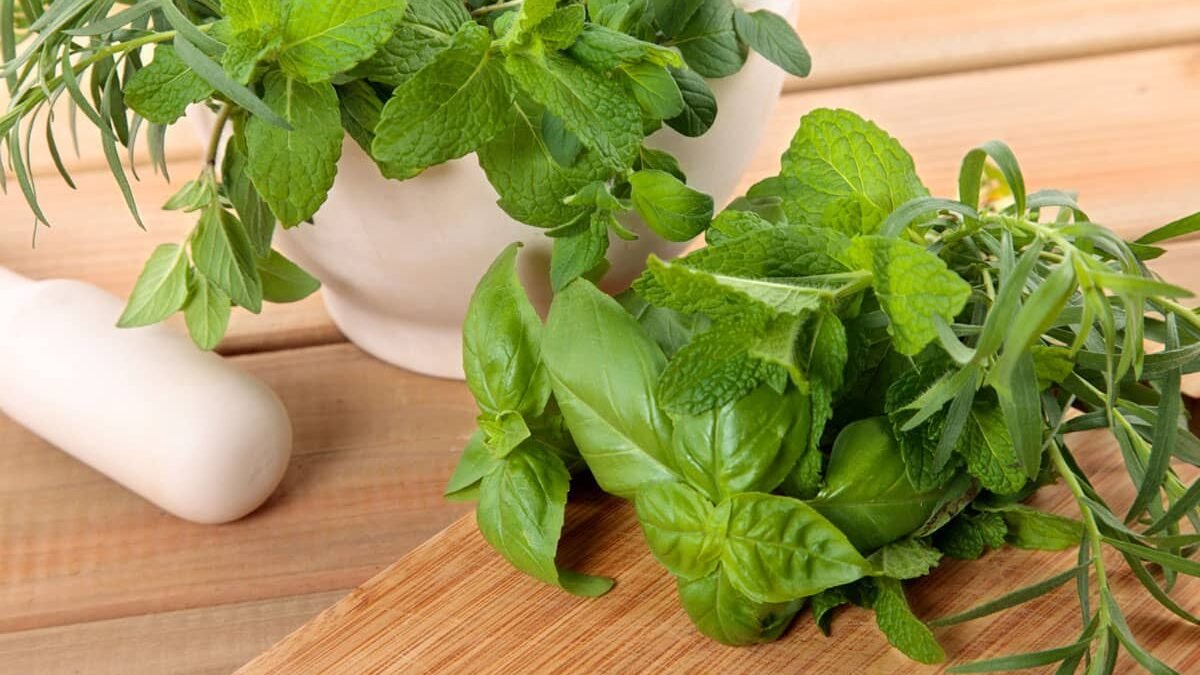
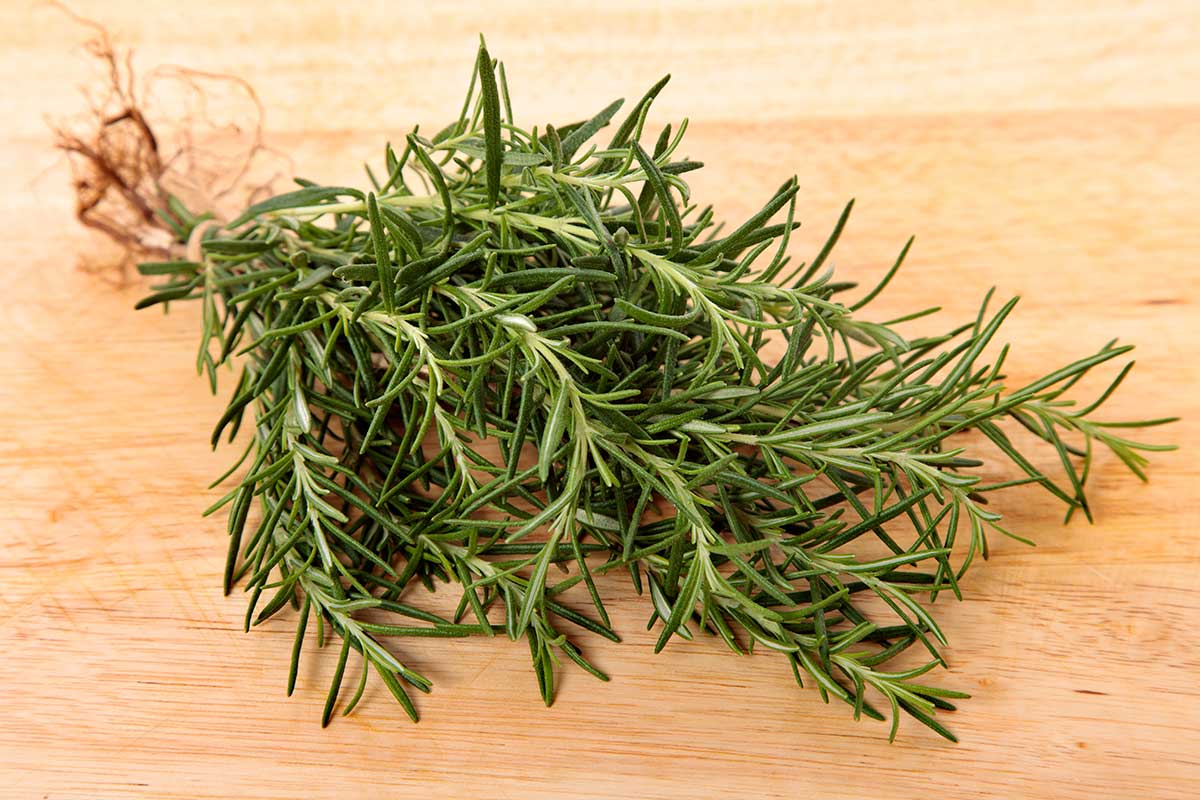
Rosemary (Salvia rosmarinus) is an evergreen herb in the mint family (Lamiaceae), the same plant family that includes basil, oregano, thyme, sage, and mint. It is native to the Mediterranean region, where it grows as a woody shrub with narrow, needle-like leaves and small flowers that are typically blue, purple, pink, or white.
You may also see rosemary listed under its older scientific name, Rosmarinus officinalis. Botanists reclassified the plant into the genus Salvia, making Salvia rosmarinus its currently accepted botanical name.
Rosemary has also been associated with remembrance and memory in European tradition, a connection that has persisted for centuries.
The leaves contain aromatic compounds that give rosemary its distinctive fragrance and slightly bitter, pine-like flavor. They can be used fresh or dried in cooking, particularly with potatoes, vegetables, breads, beans, poultry, and roasted meats. Rosemary leaves can also be steeped in hot water to make herbal tea.
Beyond the kitchen, rosemary has a long history of use in traditional herbal practices. Modern research has focused on several of its naturally occurring compounds, particularly rosmarinic acid, carnosic acid, and carnosol. These compounds help explain much of the scientific interest in rosemary, which we’ll examine more closely in the sections below.
Rosemary Nutrition Facts
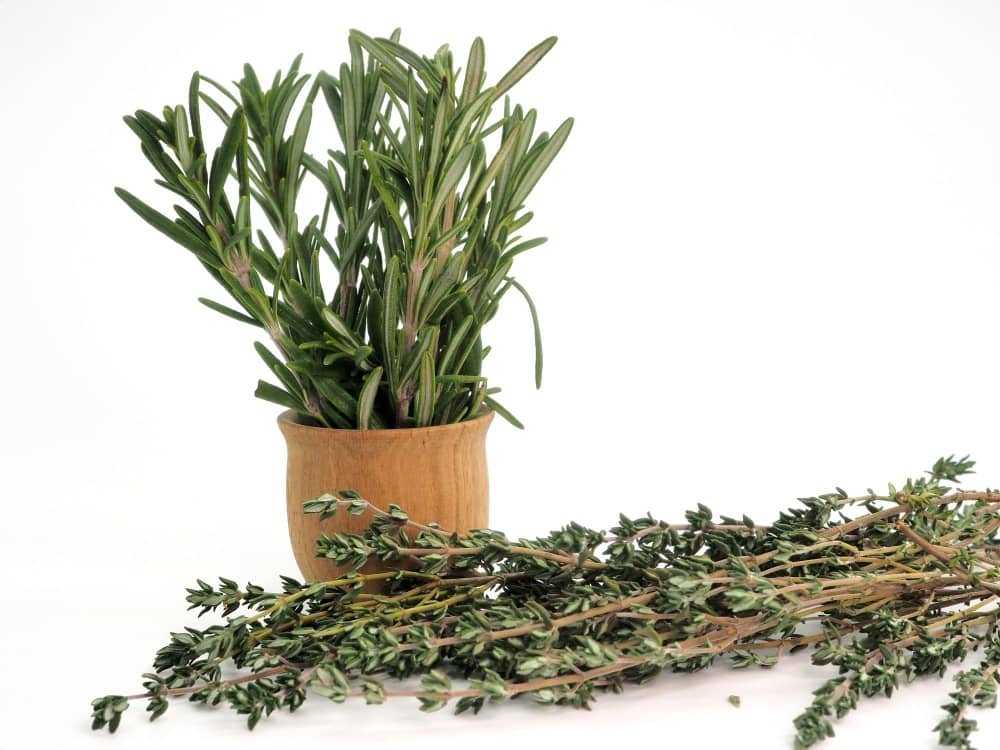
Rosemary contains fiber and small amounts of several vitamins and minerals, including calcium, iron, magnesium, potassium, and vitamin B6. However, because rosemary is usually eaten in relatively small quantities, it generally isn’t a major source of these nutrients in a typical diet.
A tablespoon of fresh rosemary adds very few calories to a meal while providing plenty of aroma and flavor. Dried rosemary is more concentrated by weight because much of the water has been removed, but the amount typically used for seasoning is still small.
What makes rosemary particularly interesting isn’t its vitamin or mineral content. The herb contains a variety of naturally occurring polyphenols and other plant compounds, including rosmarinic acid, carnosic acid, and carnosol. These compounds have been studied for their antioxidant activity and other potential biological effects.
Active Compounds in Rosemary
Rosemary contains numerous naturally occurring plant compounds, including polyphenols and volatile compounds responsible for its characteristic aroma. Researchers have studied many of these substances for their antioxidant, anti-inflammatory, and other biological activities.
Some of the best-known compounds in rosemary include rosmarinic acid, carnosic acid, carnosol, and caffeic acid. Rosemary’s essential oil also contains volatile compounds such as 1,8-cineole (eucalyptol), camphor, and α-pinene, although the exact composition can vary depending on the plant variety, growing conditions, and processing method.
Carnosic acid and carnosol are particularly notable antioxidants found in rosemary. Rosmarinic acid, which also occurs in herbs such as basil, oregano, lemon balm, and mint, has been widely investigated in laboratory research.
These findings help explain why rosemary has attracted scientific interest, but there’s an important distinction: demonstrating an effect in a laboratory doesn’t automatically mean that eating rosemary will produce the same effect in the human body.
Potential Health Benefits of Rosemary
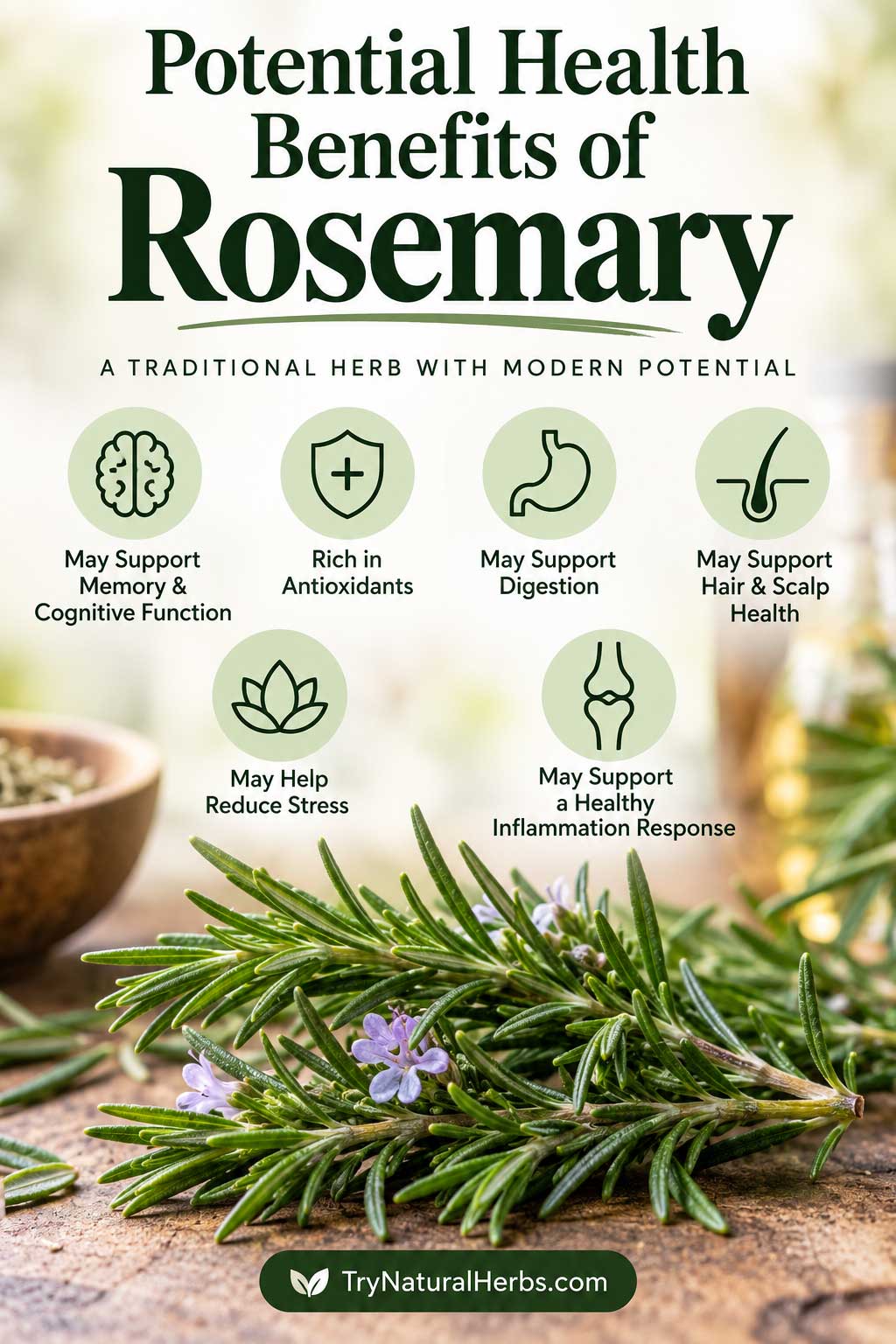
Rosemary has a long history of traditional use, but modern research is beginning to examine some of its potential effects more closely. Studies have investigated rosemary and its compounds in areas such as cognitive function, oxidative stress, inflammation, digestion, and hair and scalp health.
The strength of the evidence varies considerably. Some findings come from human clinical studies, while others are based mainly on laboratory or animal research. The form of rosemary matters as well: eating the herb, drinking rosemary tea, inhaling its aroma, and applying diluted rosemary essential oil are not interchangeable.
Here’s what the research tells us about some of the most commonly discussed rosemary benefits.
1. May Support Memory and Cognitive Function
Rosemary has been associated with memory for centuries, and cognitive function is one of the more interesting areas of modern rosemary research.
Small human studies suggest that exposure to rosemary aroma may influence certain aspects of memory and alertness. Researchers have also investigated 1,8-cineole, one of rosemary’s aromatic compounds, as a possible contributor to these effects.
Research involving oral rosemary has produced some promising findings as well, although the results depend on the dose and type of preparation used. The evidence is still too limited to conclude that rosemary can prevent or treat memory loss or neurological disease.
2. Provides Antioxidant Compounds
Rosemary is naturally rich in plant compounds with antioxidant activity, particularly carnosic acid, carnosol, and rosmarinic acid. These compounds have demonstrated antioxidant activity and have been studied for their ability to protect against oxidative damage.
Oxidative stress occurs when the production of reactive molecules exceeds the body’s ability to manage them. Over time, oxidative stress is associated with cellular damage and is studied in connection with aging and many chronic diseases.
Laboratory research has consistently demonstrated antioxidant activity in rosemary extracts and individual rosemary compounds. This is also one reason rosemary extracts are sometimes used as natural antioxidants to help protect fats and oils in foods from oxidation.
However, antioxidant activity measured in a laboratory doesn’t mean that adding rosemary to a meal will prevent diseases associated with oxidative stress. Human research is more limited, and the effects can depend on the amount and form of rosemary consumed.
3. May Have Anti-Inflammatory Properties
Several compounds in rosemary have shown anti-inflammatory activity in laboratory and animal studies. Carnosic acid, carnosol, and rosmarinic acid are among the compounds researchers have investigated for their effects on pathways involved in inflammation.
Inflammation is a normal part of the body’s immune response, helping protect against injury and infection. Problems can arise when inflammation becomes persistent, which is why researchers are interested in foods and plant compounds that may influence inflammatory processes.
Rosemary extracts have produced promising results in experimental studies, but evidence from human trials remains limited. It’s therefore too early to say that eating rosemary or drinking rosemary tea can meaningfully reduce chronic inflammation or treat an inflammatory condition.
4. May Support Digestion
Rosemary has traditionally been used to ease digestive discomfort, particularly feelings of fullness, bloating, and mild indigestion. Its use for digestive complaints also has a history in European herbal medicine.
Some of rosemary’s bitter and aromatic compounds may influence digestive processes, and laboratory research has identified several biological effects that could help explain its traditional use. However, clinical research in humans is much more limited.
Rosemary is also commonly consumed as an herbal tea after meals. While many people find a warm cup of rosemary tea soothing, there isn’t strong evidence that the tea can treat digestive disorders or conditions such as stomach ulcers.
5. May Support Hair Growth
Rosemary has become especially popular as an ingredient in hair and scalp products. Most of the interest, however, involves rosemary essential oil rather than eating rosemary or drinking rosemary tea.
One clinical study compared rosemary oil with 2% minoxidil in people with androgenetic alopecia (pattern hair loss). After six months, both groups showed an increase in hair count, while no significant increase was observed after three months. Scalp itching increased in both groups but was reported more frequently in the minoxidil group.
While these findings are promising, one study isn’t enough to establish rosemary oil as an equivalent replacement for proven hair-loss treatments. More high-quality clinical trials are needed to determine how effective it is, which preparations work best, and who is most likely to benefit.
Rosemary essential oil is highly concentrated and shouldn’t be applied to the scalp undiluted. It is typically diluted in a suitable carrier oil or included at a controlled concentration in a formulated hair product.
Eating rosemary can certainly be part of a healthy diet, but there is currently no good evidence that consuming the herb itself will stimulate hair growth.
6. Rosemary Aroma May Affect Stress and Mood
The distinctive scent of rosemary comes from volatile compounds in its essential oil, including 1,8-cineole, camphor, and α-pinene. Researchers have investigated whether inhaling this aroma can influence mood, alertness, and the body’s response to stress.
One small human study found changes in salivary cortisol after participants inhaled rosemary aroma. Other research has examined rosemary aromatherapy in stressful situations, with some promising results.
However, these studies are generally small and use different methods, making it difficult to draw firm conclusions. There isn’t enough evidence to say that rosemary aromatherapy can treat anxiety, chronic stress, depression, or insomnia.
If you enjoy the scent, fresh rosemary, dried sprigs, or appropriately diluted rosemary essential oil can simply be used for their pleasant herbal fragrance.
Essential oils are highly concentrated and should be used according to product directions rather than ingested or applied undiluted to the skin.
Rosemary Tea
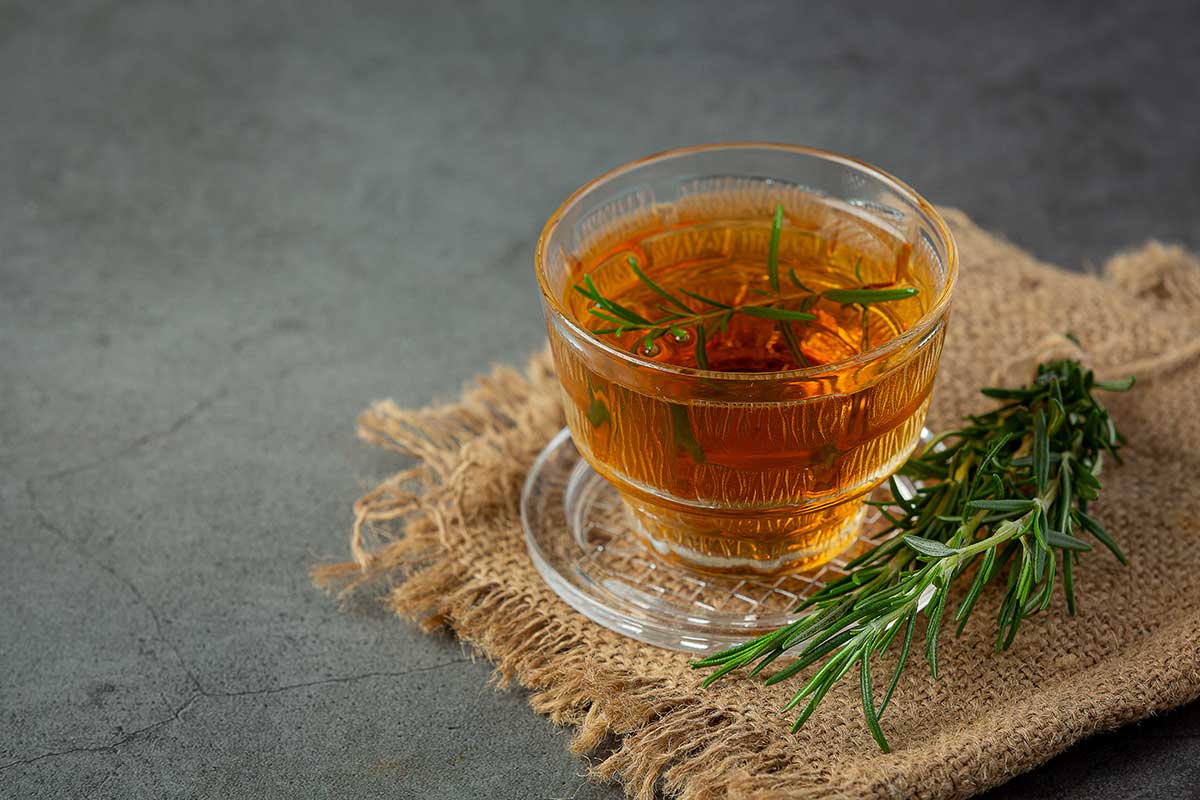
Rosemary tea is a simple herbal infusion made by steeping fresh or dried rosemary leaves in hot water. It has a strong herbal aroma and a slightly bitter, pine-like flavor that some people soften with lemon or a small amount of honey.
Drinking rosemary tea provides some of the herb’s water-soluble plant compounds, including polyphenols such as rosmarinic acid. However, research specifically examining rosemary tea in humans is limited, so its health effects aren’t as well established as some claims suggest.
Traditionally, rosemary tea has been consumed after meals and used for mild digestive complaints. It may also provide antioxidant compounds, but it shouldn’t be promoted as a treatment for inflammation, memory problems, anxiety, or other medical conditions.
How to Make Rosemary Tea
To make a cup, add about 1 teaspoon of dried rosemary leaves or a small fresh sprig to 8 ounces (240 ml) of hot water. Cover and steep for approximately 5–10 minutes, then strain. A shorter steep produces a milder tea, while leaving it longer creates a stronger and more bitter flavor.
Rosemary tea is very different from rosemary essential oil. Do not add rosemary essential oil to tea or drink it as a substitute for rosemary leaves. Essential oils are highly concentrated and aren’t interchangeable with herbal infusions.
How to Use Rosemary
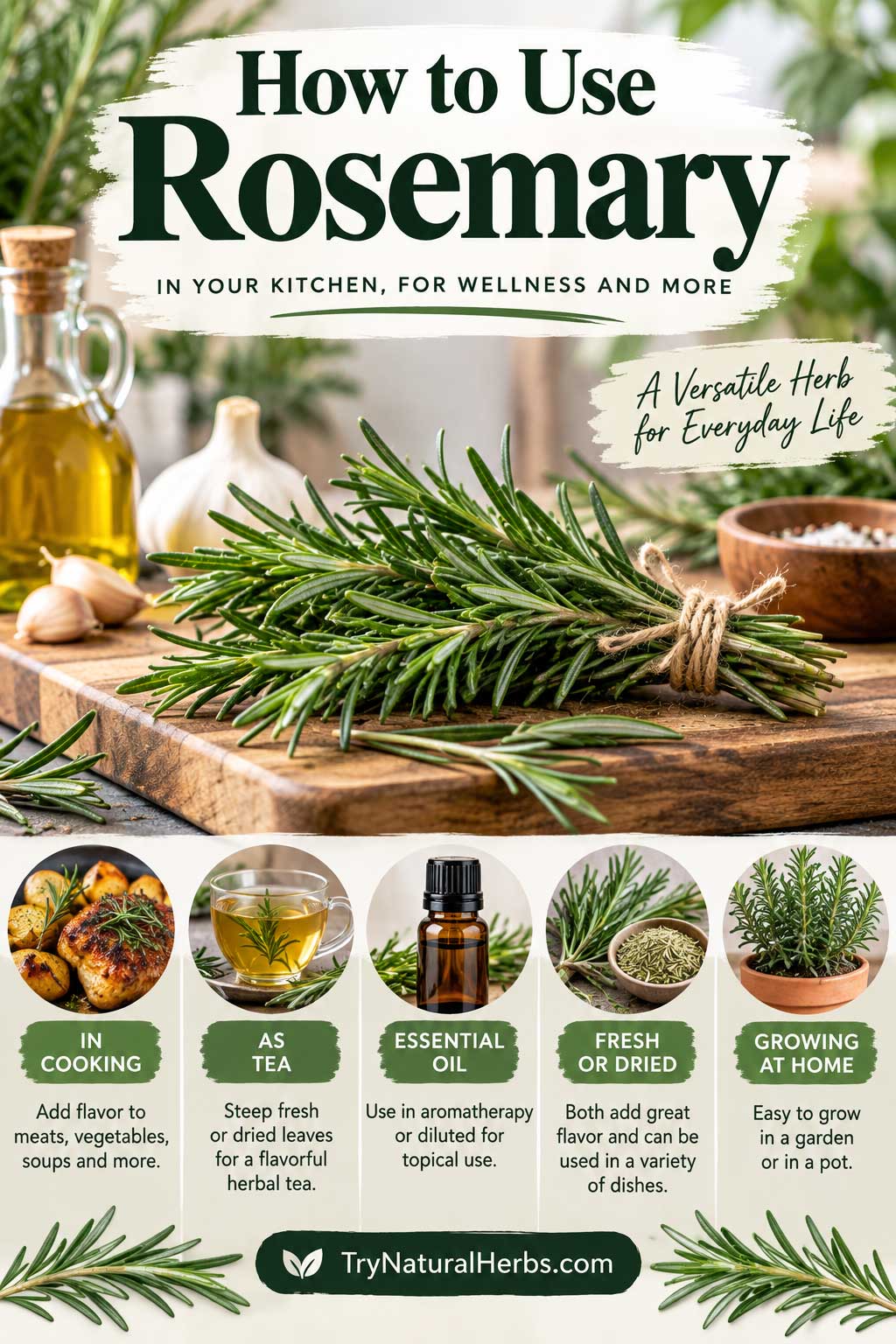
Rosemary can be used fresh or dried, and its strong flavor means a little often goes a long way. The leaves hold up particularly well during cooking, making rosemary a good choice for dishes that roast, simmer, or bake for longer periods.
Fresh rosemary has a brighter aroma and slightly softer flavor than dried rosemary. You can add whole sprigs to roasted vegetables, soups, stews, and marinades, then remove the woody stems before serving. Finely chopped leaves work well in breads, sauces, dressings, and seasoning blends.
Dried rosemary has a more concentrated flavor and is convenient for everyday cooking. Crushing the dried leaves between your fingers before adding them to a dish can help release their aroma.
Rosemary can also be steeped in hot water for tea or used to flavor olive oil, vinegar, marinades, and other foods. When making homemade infused oils, however, proper food-safety practices are important because fresh herbs introduce moisture that can allow harmful bacteria to grow if the oil is stored improperly.
Fresh vs. Dried Rosemary
Both fresh and dried rosemary can be excellent choices, but they differ in flavor, texture, concentration, and how they’re best used.
Fresh rosemary has a bright, fragrant aroma and a somewhat softer flavor. Its leaves work especially well in marinades, roasted vegetables, breads, sauces, and dishes where you want the herb’s aroma to stand out. Whole sprigs can also be added during cooking and removed before serving.
Dried rosemary has less moisture and a more concentrated flavor, so you’ll generally need less of it. As a practical starting point, use about 1 teaspoon of dried rosemary for every 1 tablespoon of fresh rosemary called for in a recipe.
For everyday cooking, the better choice usually comes down to the dish. Choose fresh rosemary when you want a brighter aroma and softer leaves, and dried rosemary when you want convenience and a concentrated flavor that holds up well during cooking.

Culinary Uses of Rosemary
Rosemary’s bold, woodsy flavor works particularly well with foods that are roasted, grilled, or slow-cooked. Because its flavor can become quite strong, it’s usually better to start with a small amount and add more as needed.
Rosemary pairs especially well with potatoes, carrots, squash, mushrooms, beans, chicken, lamb, pork, and fish. It also complements Mediterranean ingredients such as garlic, lemon, olive oil, tomatoes, and other herbs like thyme and oregano.
Finely chopped rosemary can be mixed into bread and focaccia dough, salad dressings, marinades, soups, and sauces. Whole sprigs are useful when roasting vegetables or meats because they release their aroma during cooking and can easily be removed before serving.
Rosemary can even work in sweeter recipes. Small amounts pair surprisingly well with lemon, orange, honey, apples, and some baked goods.
One of the easiest combinations to try is rosemary, garlic, olive oil, and lemon. It makes a simple seasoning for roasted potatoes and vegetables and also works well as a marinade.
Because rosemary retains its flavor during longer cooking, it can usually be added earlier than more delicate herbs such as basil or parsley.
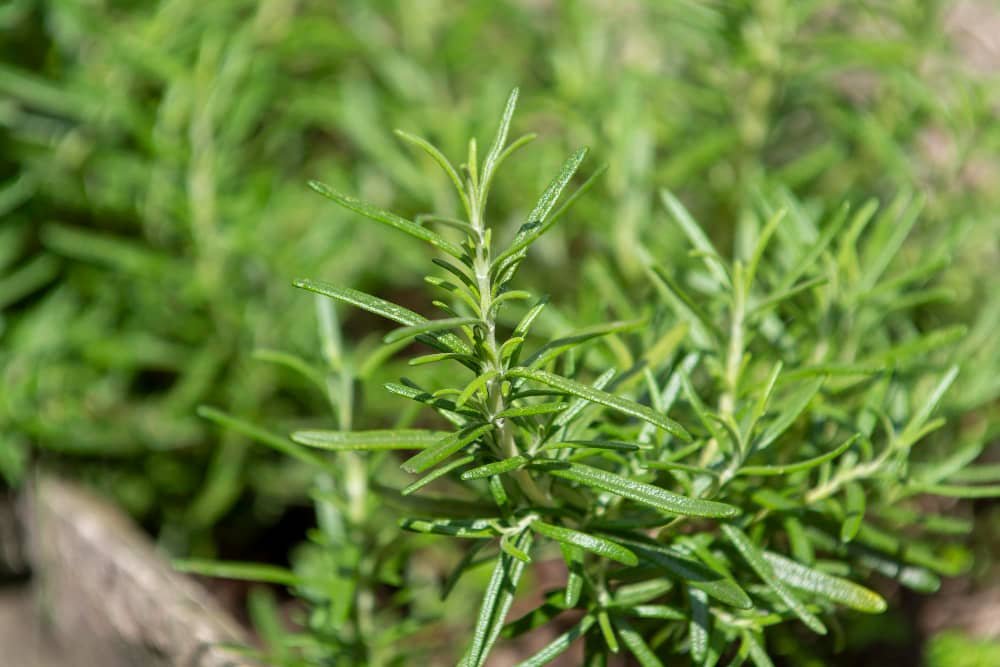
Rosemary Essential Oil vs. Rosemary Leaves
Rosemary leaves and rosemary essential oil come from the same plant, but they are not interchangeable. Their concentration, composition, uses, and safety considerations are very different.
Fresh or dried rosemary leaves are commonly used as culinary herbs and can also be steeped in water to make rosemary tea. They contain a mixture of plant compounds and are normally consumed in relatively small amounts as part of food.
Rosemary essential oil, on the other hand, is a highly concentrated product obtained from the plant’s aromatic components. It contains volatile compounds such as 1,8-cineole, camphor, and α-pinene in much greater concentrations than you would encounter by eating rosemary leaves.
This distinction is especially important when looking at rosemary research. For example, studies involving rosemary aroma or topical rosemary oil shouldn’t be used as evidence that drinking rosemary tea will produce the same effects.
Rosemary essential oil is commonly used in aromatherapy and diluted topical preparations, including some hair and scalp products. Because of its concentration, it can irritate the skin and shouldn’t be applied undiluted.
If you’re interested in how other concentrated herbal oils differ from the plants they come from, see our guide to eucalyptus essential oil benefits.
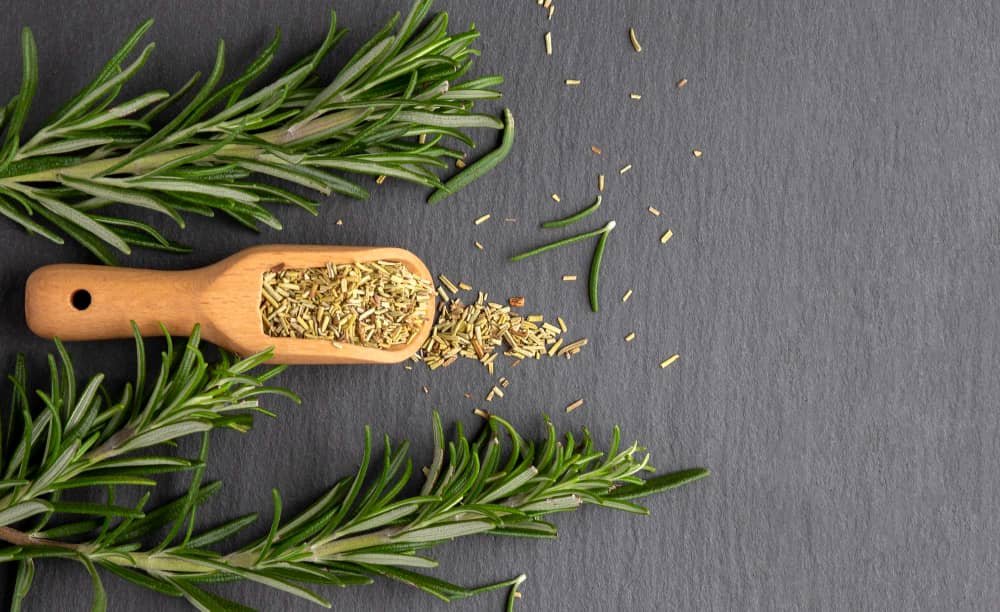
How Much Rosemary Can You Use?
Rosemary is generally used in relatively small amounts because of its strong flavor. When used as a culinary herb, fresh or dried rosemary can easily be incorporated into meals without needing to measure a specific “health” dose.
There is no single recommended daily amount of rosemary for obtaining health benefits. Studies have used different forms and concentrations, including dried rosemary, extracts, essential oil, and isolated compounds, so their doses can’t be directly applied to everyday cooking or rosemary tea.
European herbal authorities also distinguish between traditional medicinal rosemary preparations and ordinary culinary use.
For tea, a modest amount of rosemary leaves is usually enough to produce a strongly flavored infusion. Drinking more or making an unusually concentrated tea doesn’t necessarily provide greater benefits.
Concentrated rosemary extracts and supplements are different from normal culinary use and should be taken according to product directions.
Rosemary Side Effects and Safety
Rosemary is generally considered safe for most people when used in the amounts normally found in food. Adding fresh or dried rosemary to meals is very different from taking concentrated extracts or using rosemary essential oil.
Some people may experience an allergic reaction or skin irritation from rosemary, particularly when using topical products. Rosemary essential oil is highly concentrated and can irritate the skin if applied undiluted, so it should be properly diluted according to product directions before topical use.
Greater caution is appropriate with rosemary supplements, concentrated extracts, and essential oil. These products can provide much larger amounts of rosemary compounds than you would normally consume in food or tea, and their safety can depend on the dose and individual health circumstances.
Rosemary essential oil should not be casually swallowed. Essential oils can cause harmful effects when ingested improperly, and they shouldn’t be treated as interchangeable with rosemary leaves or rosemary tea.
If you use prescription medications or have an existing medical condition, it’s a good idea to speak with a healthcare professional before using rosemary regularly in concentrated or medicinal amounts.
Who Should Be Careful With Rosemary?
Normal culinary amounts of rosemary are generally different from using concentrated extracts, supplements, or essential oils.
Pregnant or breastfeeding individuals and people taking prescription medications should check with a healthcare professional before using concentrated rosemary preparations medicinally. People with a known rosemary allergy or sensitivity to related plants should also use caution with topical products.
Extra care is appropriate around children, particularly with essential oils, which should be stored safely out of reach.
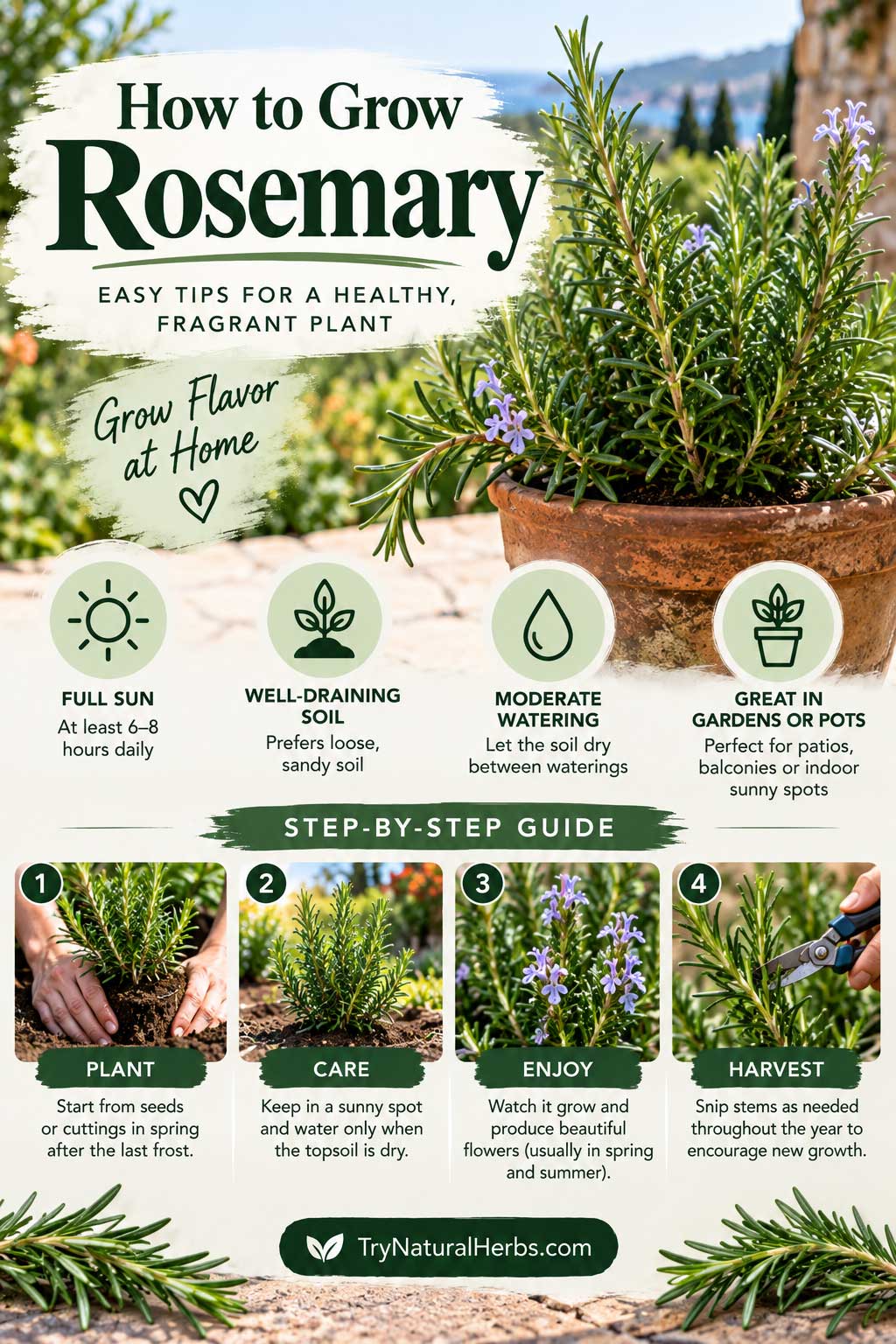
How to Grow Rosemary
Rosemary is a Mediterranean herb that thrives with plenty of sun, good drainage, and relatively dry conditions. Once established, it doesn’t need much attention, which makes it a rewarding herb to grow in the garden or in containers.
Choose a location that receives at least six hours of direct sunlight per day. Rosemary grows best in loose, well-draining soil and doesn’t tolerate roots sitting in consistently wet ground. If your garden soil is heavy or stays damp, growing rosemary in a raised bed or container may be easier.
Allow the soil to dry somewhat between waterings. Rosemary is relatively drought-tolerant once established, and overwatering is often a bigger problem than underwatering. Containers should always have drainage holes so excess water can escape.
Regular light pruning helps keep the plant bushy and encourages fresh growth. Avoid cutting heavily into old, leafless woody stems, which may be slow to produce new growth.
Rosemary is a perennial in warmer climates, but it isn’t reliably winter-hardy in many colder regions. Where winters are severe, it is often grown as an annual or planted in a container that can be moved to a bright, cool indoor location before hard freezes arrive.
Whether grown indoors or outside, good sunlight and drainage are the two most important factors for healthy rosemary.
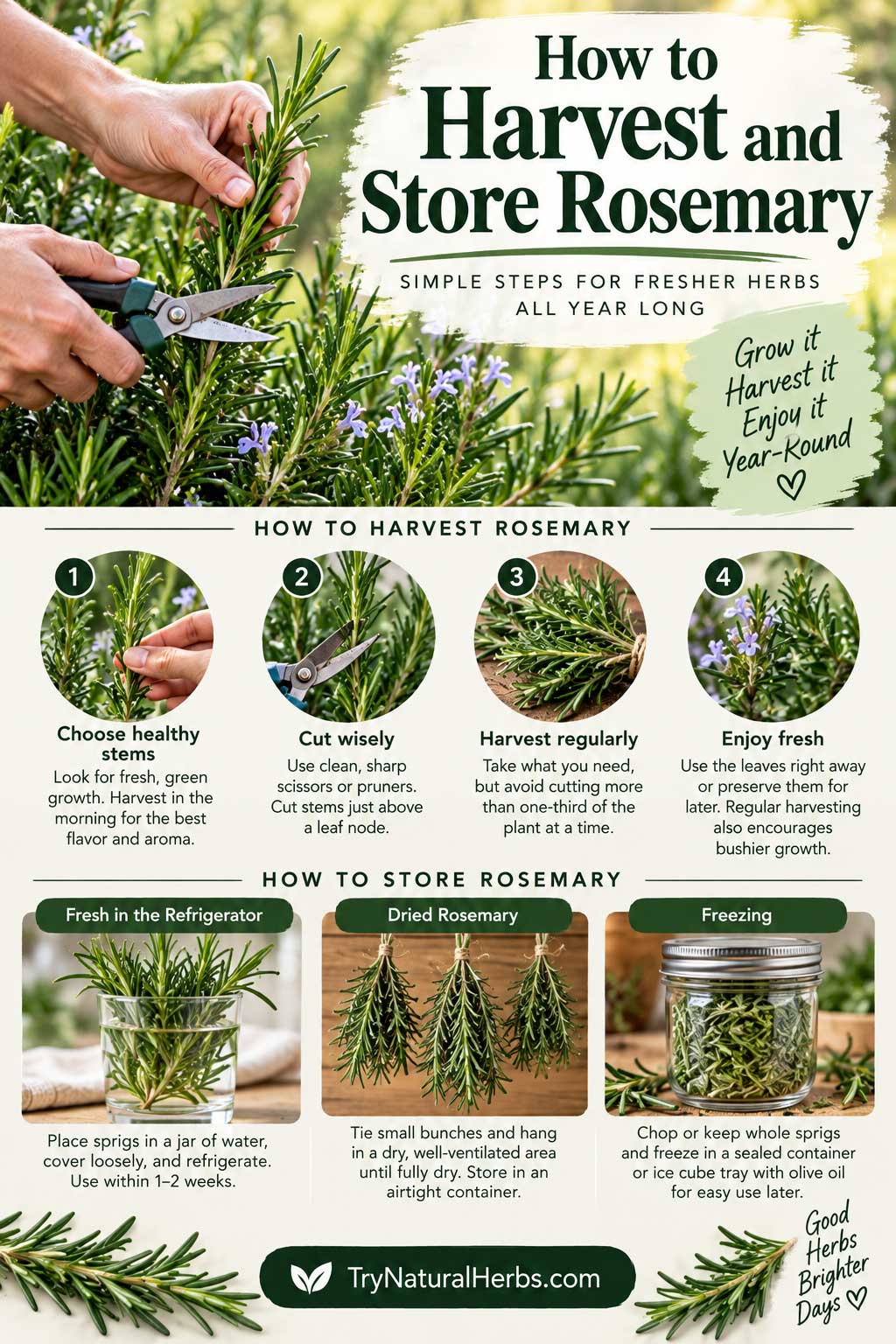
How to Harvest and Store Rosemary
Rosemary can be harvested throughout the growing season once the plant is established. For the best flavor, snip young, healthy stems as needed rather than removing large portions of the plant at once.
Use clean scissors or garden shears to cut several inches from the tips of the stems. Regular harvesting can also encourage the plant to become fuller and bushier. Avoid removing too much growth at one time, especially from a young plant.
Fresh rosemary can be kept in the refrigerator for several days. Wrap the sprigs loosely in a slightly damp paper towel and place them in a container or reusable bag. You can also place freshly cut stems in a small glass of water for short-term storage.
For longer storage, rosemary can be dried or frozen. To dry it, bundle a few stems and hang them in a dry, well-ventilated place away from direct sunlight, or use a food dehydrator at an appropriate low temperature. Once the leaves are completely dry, remove them from the stems and store them in an airtight container away from heat and light.
Rosemary also freezes well. Whole sprigs or chopped leaves can be frozen and added directly to soups, sauces, marinades, and roasted dishes without thawing first.
For the strongest aroma and flavor, store dried rosemary away from moisture, sunlight, and the heat of the stove.
Rosemary vs. Thyme
Rosemary and thyme are both aromatic Mediterranean herbs in the mint family, and they often appear together in savory recipes. However, their flavors and best culinary uses are noticeably different.
Rosemary has a stronger, pine-like, slightly bitter flavor, while thyme is generally earthier and more subtle. Rosemary holds up especially well during roasting and long cooking, making it a natural match for potatoes, root vegetables, breads, chicken, lamb, and other roasted dishes.
Thyme is easier to blend into a wider variety of foods because its flavor is less dominant. It works particularly well in soups, stews, sauces, vegetables, poultry, and seasoning blends.
Rosemary and thyme can also be used together. Their flavors complement each other particularly well with garlic, lemon, and olive oil in Mediterranean-style dishes.
Rosemary vs. Oregano
Rosemary and oregano are both members of the mint family and staples of Mediterranean cooking, but they have distinctly different flavors and culinary strengths.
Rosemary has a woodsy, pine-like aroma and a robust flavor that holds up particularly well during roasting and long cooking. It’s commonly paired with potatoes, roasted vegetables, breads, chicken, lamb, and pork.
Oregano has a more earthy, peppery, and slightly bitter flavor. It’s especially common in tomato-based sauces, pizza, grilled vegetables, marinades, Greek dishes, and many Italian and Mexican-inspired recipes.
Both herbs contain naturally occurring antioxidant compounds, including rosmarinic acid, although their overall chemical profiles differ. Oregano is particularly known for compounds such as carvacrol and thymol, while rosemary contains notable amounts of carnosic acid and carnosol.
They can also work beautifully together. Rosemary and oregano pair especially well with garlic, olive oil, lemon, tomatoes, and roasted vegetables.
Frequently Asked Questions About Rosemary
Is it safe to eat rosemary every day?
For most people, using fresh or dried rosemary regularly in normal culinary amounts is generally considered safe. Rosemary supplements, concentrated extracts, and essential oils are different and require more caution.
Can you drink rosemary tea every day?
Rosemary tea can be enjoyed as an herbal beverage, but there isn’t a well-established daily amount specifically recommended for health benefits. Moderate consumption is more sensible than drinking large amounts or making highly concentrated infusions.
What are the main benefits of rosemary?
Rosemary provides plant compounds with antioxidant activity, including rosmarinic acid, carnosic acid, and carnosol. Research has also explored rosemary in relation to memory and cognitive function, inflammation, digestion, stress and mood, and hair growth. However, the strength of evidence varies considerably depending on the benefit and the form of rosemary studied.
Is fresh rosemary better than dried rosemary?
Not necessarily. Fresh rosemary has a brighter aroma and softer flavor, while dried rosemary is more concentrated and convenient to store. Both contain naturally occurring plant compounds and can be part of a varied diet.
Can rosemary help with hair growth?
There is some human research suggesting that topically applied rosemary oil may support hair growth in people with pattern hair loss. However, the evidence is still limited, and this doesn’t mean that eating rosemary or drinking rosemary tea will make hair grow.
Can you eat rosemary leaves raw?
Yes. Fresh rosemary leaves are edible, although their tough texture and strong flavor mean they’re usually finely chopped before being added to uncooked foods such as dressings, marinades, and salads.
Is rosemary tea the same as rosemary essential oil?
No. Rosemary tea is made by steeping rosemary leaves in hot water, while rosemary essential oil is a highly concentrated product containing the plant’s volatile aromatic compounds. Rosemary essential oil shouldn’t be added to tea or treated as a substitute for rosemary leaves.
Is Rosemary Good for You?
Rosemary brings plenty of flavor to food while also providing compounds such as rosmarinic acid, carnosic acid, and carnosol that continue to attract scientific interest.
Some rosemary benefits have promising research behind them, although the evidence varies depending on whether researchers study the leaves, extracts, aroma, or essential oil.
For everyday use, fresh or dried rosemary is an easy and flavorful addition to a varied diet.
References
- Pengelly A, Snow J, Mills SY, Scholey A, Wesnes K, Butler LR. Short-term study on the effects of rosemary on cognitive function in an elderly population. Journal of Medicinal Food. 2012;15(1):10–17. doi:10.1089/jmf.2011.0005.
- Panahi Y, Taghizadeh M, Marzony ET, Sahebkar A. Rosemary oil vs minoxidil 2% for the treatment of androgenetic alopecia: a randomized comparative trial. Skinmed. 2015;13(1):15–21.
- Atsumi T, Tonosaki K. Smelling lavender and rosemary increases free radical scavenging activity and decreases cortisol level in saliva. Psychiatry Research. 2007;150(1):89–96.
- European Medicines Agency, Committee on Herbal Medicinal Products (HMPC). European Union herbal monograph on Rosmarinus officinalis L., folium — Revision 1. 2024.
- European Medicines Agency, Committee on Herbal Medicinal Products (HMPC). Rosmarini aetheroleum — Rosemary oil. European Union herbal monograph.
- Birtić S, Dussort P, Pierre FX, Bily AC, Roller M. Carnosic acid and carnosol, two major antioxidants of rosemary, act through different mechanisms. Plant Physiology. 2017.
- Andrade JM, Faustino C, Garcia C, Ladeiras D, Reis CP, Rijo P. Rosmarinus officinalis L.: an update review of its phytochemistry and biological activity. Future Science OA. 2018.