 By hw9he
Oregano benefits go beyond its bold, earthy flavor. This popular Mediterranean herb can transform a simple dish with just a small pinch, whether it’s added to tomato sauce, roasted vegetables, marinades, soups, or grilled meats.
Oregano (Origanum vulgare) also contains naturally occurring compounds such as carvacrol and thymol, which have attracted scientific interest for their antioxidant and antimicrobial properties. While that doesn’t make oregano a cure-all, it does give us another reason to take a closer look at this familiar kitchen herb.
In this guide, we’ll explore oregano’s nutrition and potential health benefits, what research says about its active compounds, and practical ways to use, store, and grow it at home.
What Is Oregano?
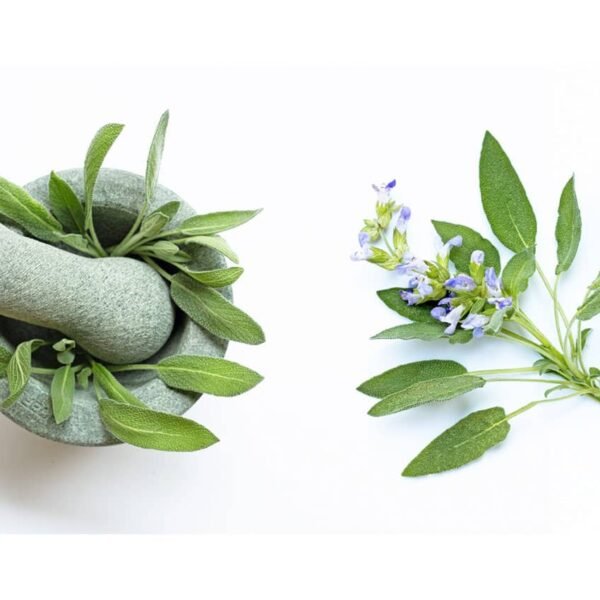
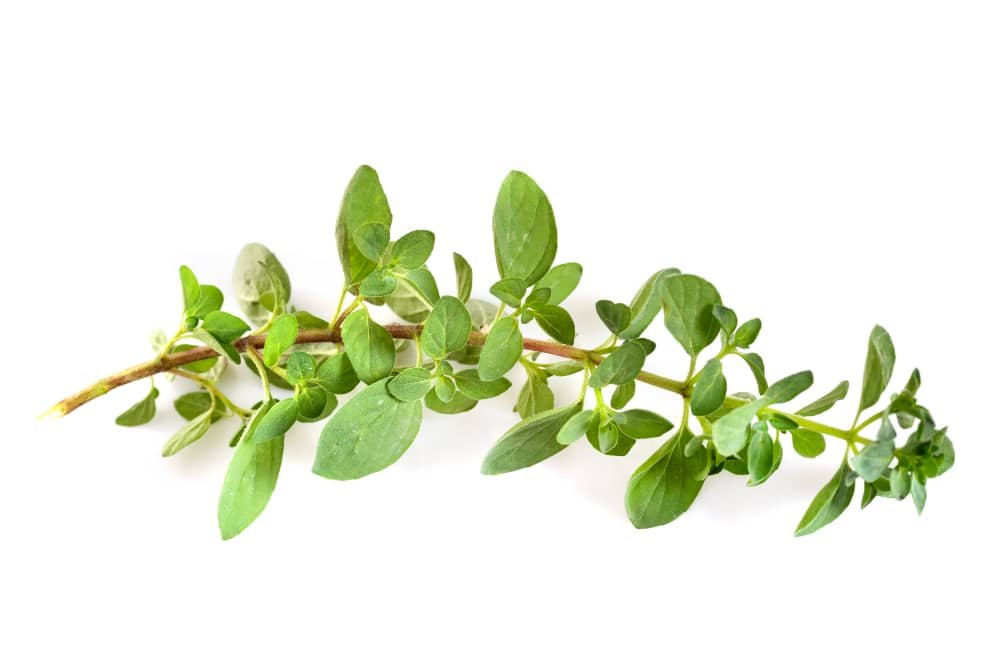
Oregano (Origanum vulgare) is a perennial herb in the mint family (Lamiaceae), the same plant family that includes basil, mint, rosemary, thyme, and marjoram. Native to parts of Europe, North Africa, and Asia, oregano has a long history as both a culinary herb and a traditional herbal preparation.
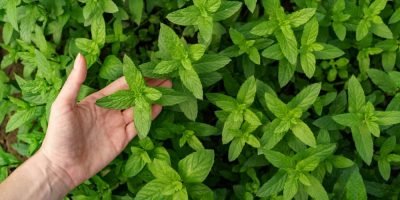
The plant produces small, aromatic leaves with a warm, slightly bitter, peppery flavor. Its taste can vary considerably depending on the variety and growing conditions. Dried oregano often tastes stronger and more concentrated than fresh oregano, which has a softer, greener flavor.
Although oregano is closely associated with Italian and Greek cooking, different types are used around the world. Mexican oregano, commonly known as Lippia graveolens, has a similar culinary role but comes from a different plant family.
Today, oregano is best known as a kitchen herb, but researchers have also studied naturally occurring compounds in the plant—including carvacrol and thymol—for their antioxidant, antimicrobial, and other potential effects.
Oregano Nutrition
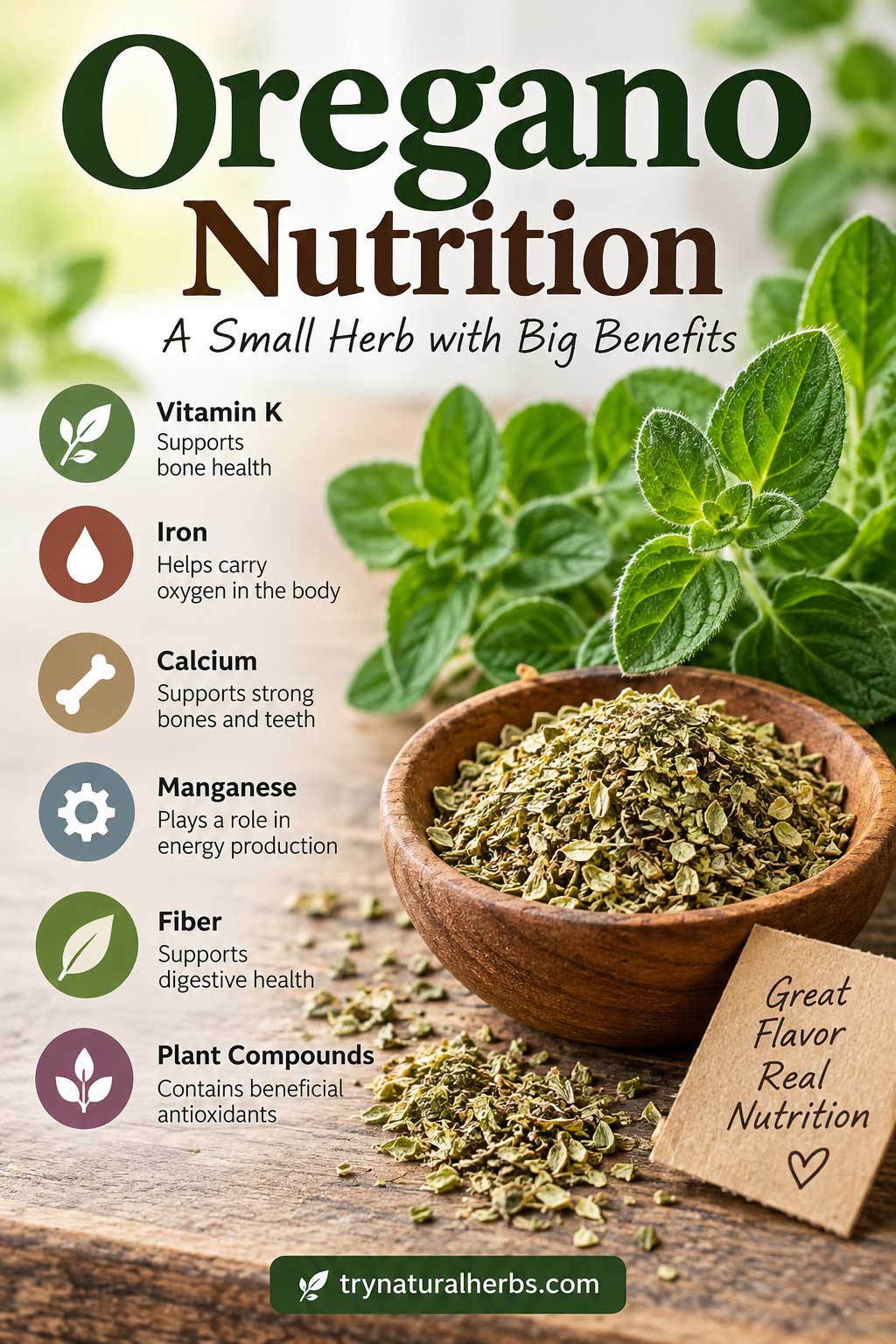
Oregano contains fiber and a variety of vitamins, minerals, and plant compounds. Dried oregano provides nutrients such as vitamin K, iron, calcium, and manganese, although the actual amount you get from a meal is usually modest because oregano is typically used by the teaspoon rather than eaten in large portions.
Oregano’s appeal goes beyond its vitamins and minerals. The herb also contains phenolic compounds and aromatic oils that contribute to its distinctive flavor and scent.
Fresh and dried oregano have somewhat different nutritional profiles because drying removes water and concentrates many components of the herb. Dried oregano is therefore more concentrated by weight, while fresh oregano offers a milder flavor and works particularly well when added near the end of cooking.
Since we normally use oregano in small amounts, it isn’t a major source of any single nutrient. Its real advantage is that it adds plenty of flavor along with a variety of naturally occurring plant compounds.
Active Compounds in Oregano
Much of the scientific interest in oregano comes from its naturally occurring plant compounds, particularly those found in its essential oil. The exact composition varies depending on the oregano species, growing conditions, harvest time, and how the plant is processed.
Two of the best-known compounds are carvacrol and thymol. These aromatic compounds contribute to oregano’s characteristic scent and have demonstrated antimicrobial and antioxidant activity in laboratory studies. However, results from laboratory experiments don’t automatically mean that eating oregano will produce the same effects in the human body.
Oregano also contains phenolic compounds such as rosmarinic acid, which contributes to the herb’s antioxidant activity.
This is also why research on concentrated oregano extracts or essential oil shouldn’t be interpreted as evidence that a teaspoon of dried oregano will produce the same effects.
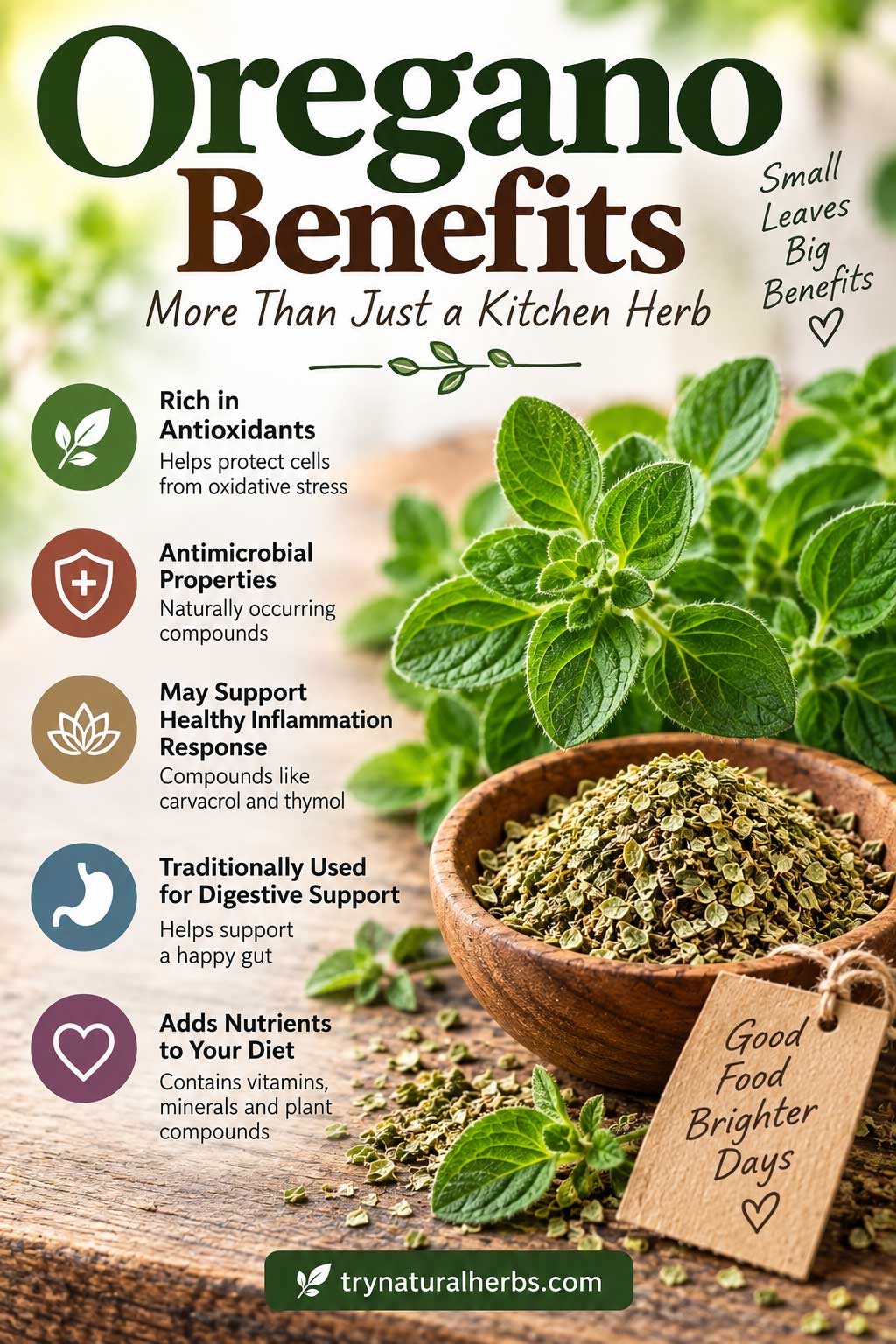
Oregano Benefits: What Does the Research Say?
Many oregano benefits promoted online come from traditional use or research involving concentrated extracts and isolated compounds. Modern research is interesting, but human evidence remains limited for many claims associated with the herb. Here’s what the evidence currently suggests.
1. Provides Antioxidant Compounds
One of the better-supported properties of oregano is its antioxidant activity. The herb contains several plant compounds—including carvacrol, thymol, and rosmarinic acid—that can act as antioxidants.
These compounds can help counter oxidative processes in the body. Laboratory studies have confirmed antioxidant activity in oregano and oregano-derived compounds, although this doesn’t mean oregano by itself can prevent diseases associated with oxidative stress.
Using oregano also has a practical nutritional advantage: its strong flavor can add depth to vegetables, beans, soups, sauces, and other foods without requiring much salt or added fat.
2. Has Antimicrobial Properties in Laboratory Studies
Oregano has attracted considerable research interest for its antimicrobial activity, particularly because of the compounds carvacrol and thymol found in oregano essential oil.
In laboratory studies, oregano extracts and essential oil have shown activity against certain bacteria and fungi. Carvacrol, in particular, appears capable of disrupting microbial cell membranes, which may help explain some of these effects.
These findings are promising, but there’s an important limitation: most of this research has been conducted in test tubes or other laboratory settings using concentrated extracts or essential oils. That’s very different from adding dried oregano to a meal or drinking oregano tea.
For that reason, oregano shouldn’t be considered a substitute for antibiotics, antifungal medications, or other treatments prescribed for an infection. The laboratory findings are interesting, but more high-quality human research is needed to understand whether oregano could have meaningful health effects in people.
3. May Have Anti-Inflammatory Properties
Inflammation is a normal part of the body’s response to injury and infection. Problems can arise when inflammation becomes persistent, which is why researchers have investigated plant compounds that may influence inflammatory processes.
Several compounds found in oregano, including carvacrol and thymol, have demonstrated anti-inflammatory activity in laboratory and animal studies. Researchers have observed effects on certain molecules and pathways involved in the inflammatory response.
However, human evidence is much more limited. These early findings don’t establish that eating oregano or taking oregano supplements can treat inflammatory conditions such as arthritis, asthma, or inflammatory bowel disease.
The early research is interesting, but it isn’t evidence that oregano itself can treat inflammatory diseases.
4. Traditionally Used for Digestive Support
Oregano has a long history of traditional use for digestive complaints, including indigestion, bloating, and stomach discomfort. Modern research has explored how oregano and compounds such as carvacrol may interact with microorganisms in the digestive system, but evidence for specific digestive benefits in humans remains limited.
Studies involving concentrated extracts or essential oils also can’t be directly applied to the small amounts of oregano normally used in cooking.
Oregano shouldn’t be used to self-treat persistent digestive symptoms. Ongoing abdominal pain, significant changes in digestion, or other unexplained symptoms should be discussed with a healthcare professional.
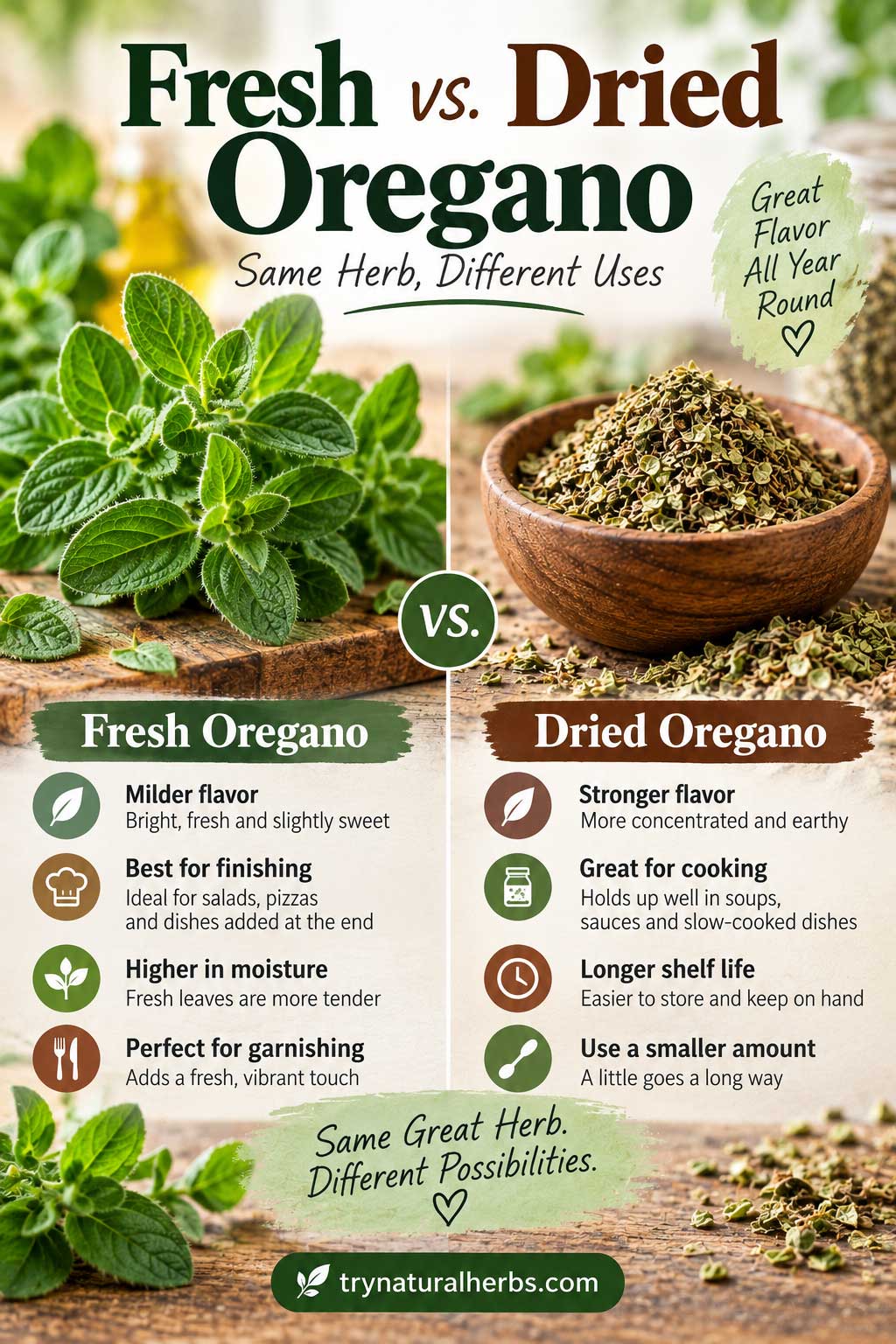
Fresh vs. Dried Oregano
Fresh and dried oregano come from the same herb, but they can taste surprisingly different. Removing most of the water during drying gives dried oregano a more concentrated flavor and changes its aromatic profile.
Fresh oregano has a greener, softer flavor with slightly bitter and peppery notes. It works well in salads, marinades, dressings, and dishes where the herb is added toward the end of cooking.
Dried oregano has a stronger, more concentrated flavor and holds up particularly well during cooking. It’s an excellent choice for tomato sauces, soups, roasted vegetables, grilled meats, beans, and seasoning blends.
Because dried oregano is more concentrated, you generally need less of it. As a practical starting point, use about 1 teaspoon of dried oregano for every tablespoon of fresh oregano called for in a recipe, then adjust to taste.
Neither version is automatically healthier. The better choice usually comes down to the dish you’re making and the flavor you prefer.

Different Types of Oregano
The name “oregano” can refer to several different herbs, and their flavors aren’t always the same. Different species and varieties can vary noticeably in flavor, aroma, and how they’re used in cooking.
Greek Oregano
Greek oregano is known for its bold, savory flavor and is one of the classic choices for Mediterranean cooking. It pairs especially well with olive oil, lemon, tomatoes, grilled meats, potatoes, and vegetables.
Its flavor tends to be stronger and more pungent than that of many milder oregano varieties, particularly when the leaves are dried.
Italian Oregano
“Italian oregano” is a culinary name rather than one precise botanical classification. Plants sold under the name can vary, and some may be oregano types or oregano-marjoram hybrids. In the kitchen, Italian oregano is generally associated with pizza, pasta sauces, roasted vegetables, and marinades. If you’re buying a live plant or seeds and want a particular variety, check the botanical name on the label.
Mexican Oregano
Despite its name, Mexican oregano (Lippia graveolens) belongs to the Verbenaceae family rather than Lamiaceae, the family that includes true oregano.
Its flavor is also different. Mexican oregano tends to have stronger citrusy, earthy notes that work particularly well with chiles, beans, salsas, stews, and other Mexican and Latin American dishes.
What About Marjoram?
Marjoram (Origanum majorana) is closely related to oregano and belongs to the same genus, but it’s a separate species rather than simply another variety of oregano.
Its flavor is generally sweeter, softer, and less pungent. That makes marjoram particularly useful in delicate soups, vegetables, poultry dishes, sauces, and herb blends where strong oregano might overpower the other ingredients.
If a recipe calls for oregano and you only have marjoram, you can often substitute it, but expect a noticeably milder flavor.
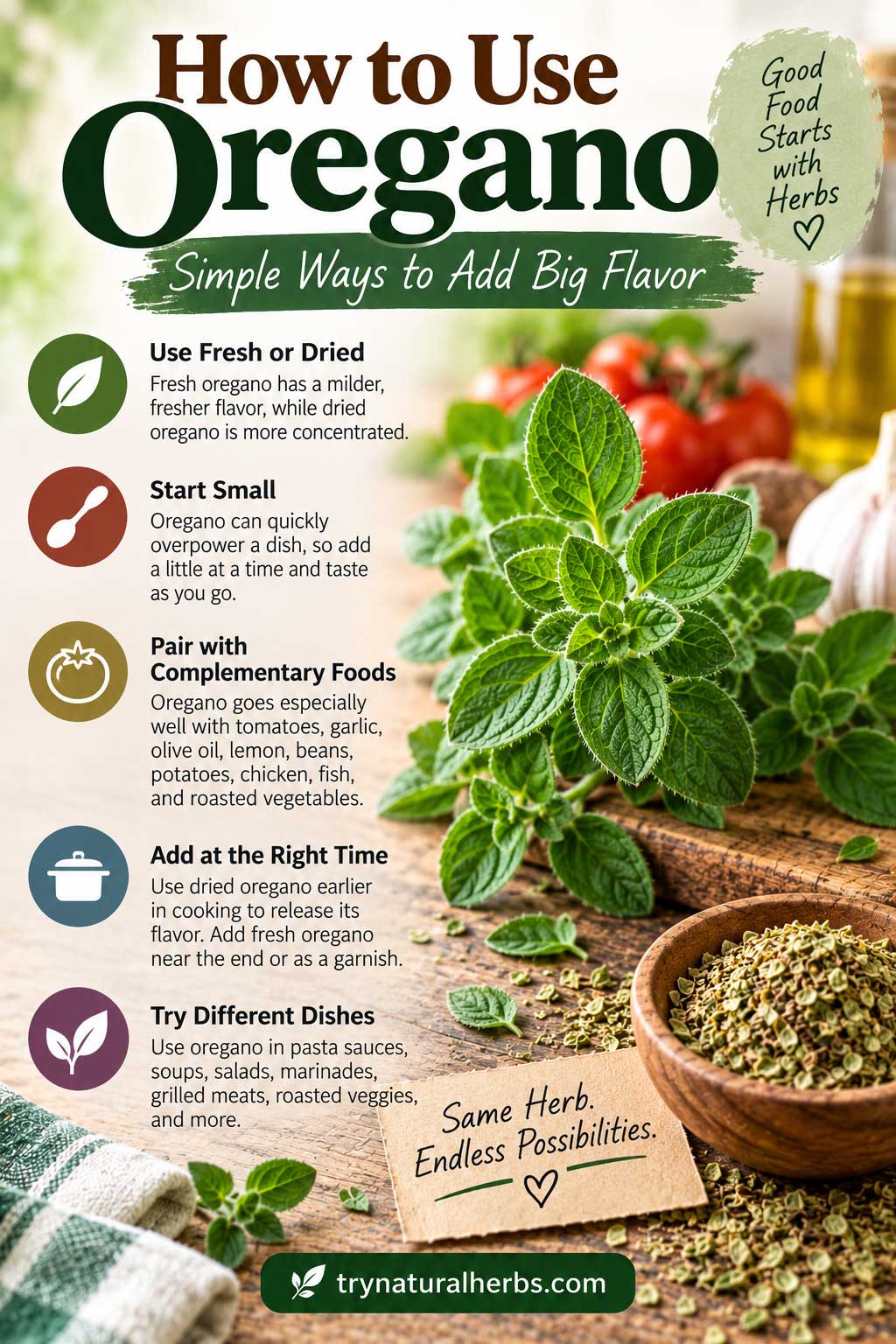
How to Use Oregano
Oregano’s bold, savory flavor makes it easy to use in everyday cooking. It pairs especially well with tomatoes, garlic, olive oil, lemon, beans, potatoes, roasted vegetables, chicken, fish, and many Mediterranean-inspired dishes.
Dried oregano can be added early in cooking, giving the leaves time to soften and release their flavor into sauces, soups, stews, and marinades. Before adding dried oregano, gently rubbing it between your fingers can help release some of its aroma.
Fresh oregano is usually better added toward the end of cooking or used as a finishing herb. The leaves can be chopped into salads and dressings, scattered over roasted vegetables, or mixed with olive oil and lemon for a simple marinade.
Oregano also works well in homemade seasoning blends. Try combining it with thyme, rosemary, basil, garlic, or red pepper flakes, depending on the dish.
Oregano can quickly overpower a dish, so start with a small amount, taste, and add more if needed.
Oregano Tea
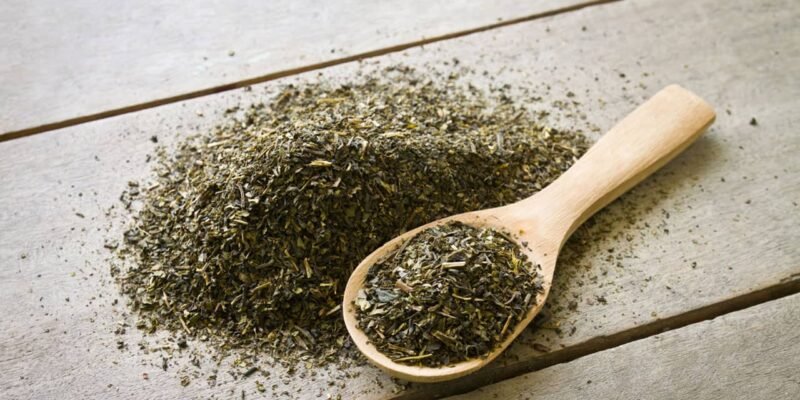
Oregano isn’t only used as a seasoning. Fresh or dried leaves can also be steeped in hot water to make a simple herbal tea with a warm, earthy, slightly peppery flavor.
To make oregano tea, add about 1–2 teaspoons of dried oregano or a few fresh sprigs to one cup of hot water. Cover and steep for about 5–10 minutes, then strain. If the flavor is too strong on its own, a little lemon or honey can make it more pleasant.
Oregano tea is sometimes promoted online for colds, coughs, digestion, and immune support. While oregano contains compounds such as carvacrol, thymol, and rosmarinic acid, there isn’t strong clinical evidence showing that drinking oregano tea treats these conditions.
For most healthy adults, an occasional cup can simply be enjoyed as a savory herbal tea rather than as a treatment for a particular condition.
Oregano tea is also very different from oregano essential oil, which is highly concentrated and shouldn’t be used interchangeably with oregano leaves or homemade tea.
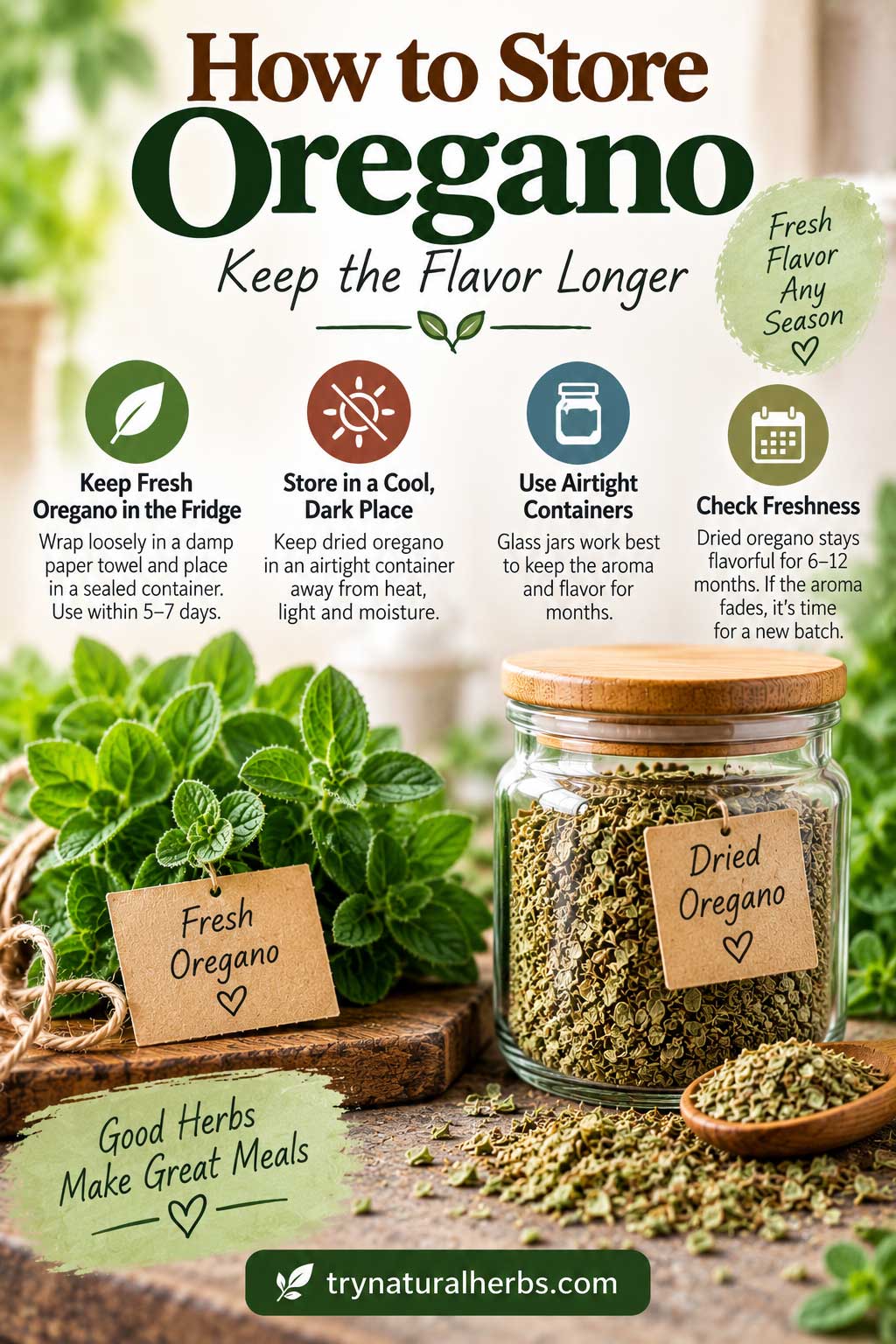
How to Store Oregano
Proper storage helps oregano keep its flavor and aroma for as long as possible. The best method depends on whether you’re using fresh or dried leaves.
For fresh oregano, remove any damaged leaves and make sure the herb isn’t excessively wet before storing it. Loosely wrap the sprigs in a paper towel and place them in a container or resealable bag in the refrigerator. Avoid crushing the leaves, and wash them just before use rather than soaking them before storage.
Another option is to place fresh oregano stems in a small glass of water, similar to a bouquet of herbs, and refrigerate them loosely covered.
Dried oregano should be kept in an airtight container in a cool, dark, dry place. A pantry or cupboard away from the stove, oven, and direct sunlight works well. Heat, moisture, and light can gradually weaken its aroma and flavor.
Dried oregano doesn’t suddenly become unusable after a particular date, but its flavor fades over time. If you open the container and can barely smell the herb after rubbing a little between your fingers, it’s probably time to replace it.
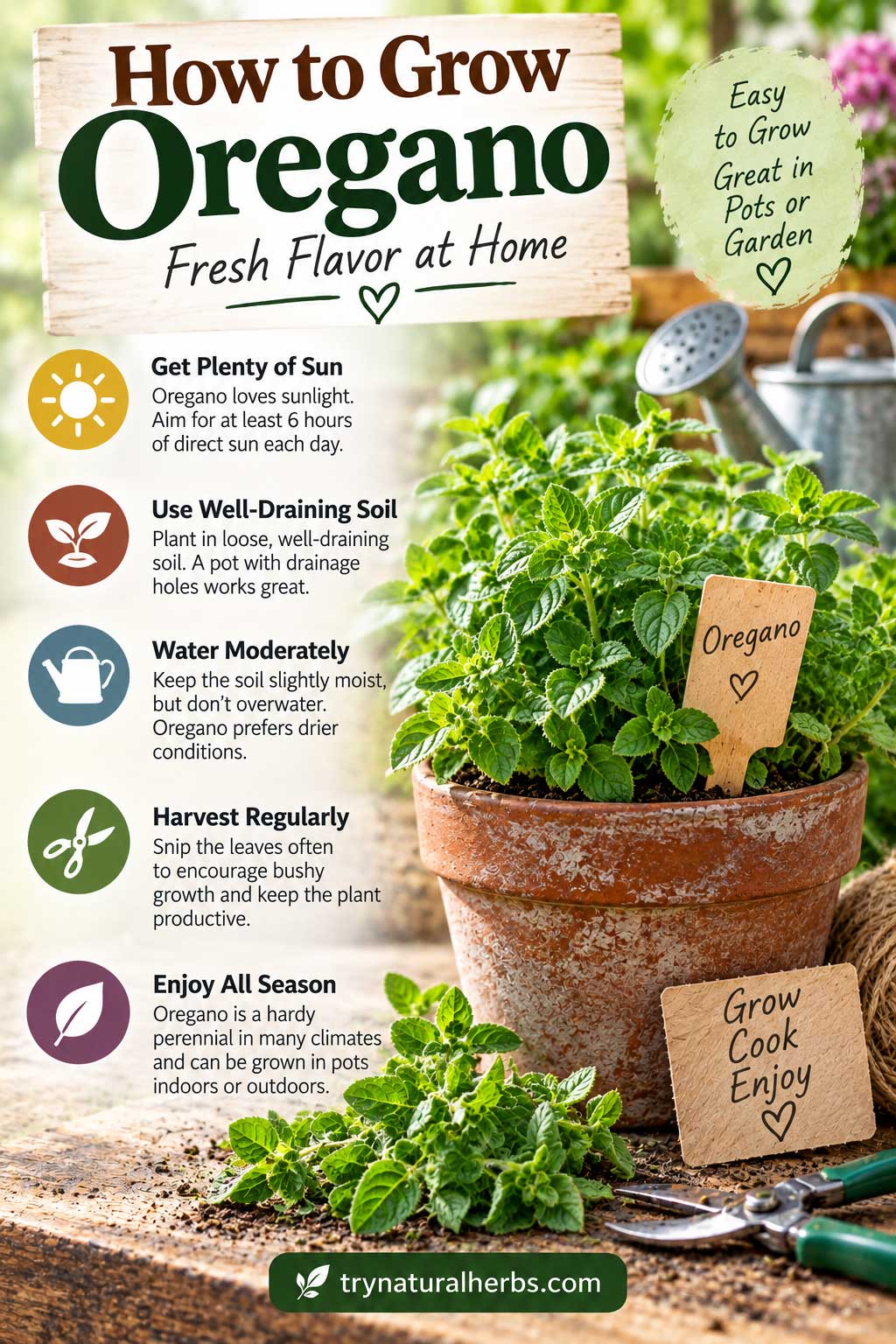
How to Grow Oregano
Oregano is a relatively easy herb to grow at home and works well in garden beds, raised beds, and containers. Once established, many types are hardy, drought-tolerant plants that can return year after year in suitable climates.
Choose a location that receives at least six hours of direct sunlight per day. Oregano generally develops its best flavor and compact growth in full sun.
Good drainage is equally important. Oregano prefers well-draining soil and doesn’t like sitting in consistently wet conditions. If you’re growing it in a container, make sure the pot has drainage holes and allow the upper layer of soil to begin drying between waterings.
You can start oregano from seed, cuttings, or a young nursery plant. Give plants enough room for air circulation, as oregano can spread as it matures.
Once the plant is well established, you can regularly snip stems for cooking. Cut just above a set of leaves to encourage new branching. The leaves can be used fresh or dried for later use.
Regular harvesting also helps keep the plant compact rather than allowing long stems to become overly woody or leggy. If your oregano flowers, don’t worry—the flowers are attractive to pollinators, although you can trim the plant back if your main goal is producing culinary leaves.
Oregano vs. Marjoram
Oregano and marjoram are closely related herbs, and their similar appearance can make them easy to confuse. Both belong to the genus Origanum, but they are different species with noticeably different flavors.
Oregano (Origanum vulgare) generally has a stronger, earthier, and more peppery taste. It stands up well to bold ingredients such as tomatoes, garlic, olives, grilled meats, and roasted vegetables.
Marjoram (Origanum majorana) is usually milder and slightly sweeter, with a softer aroma. It works particularly well in soups, poultry dishes, vegetables, sauces, and recipes where you want an herbal flavor without oregano’s intensity.
The two can often substitute for one another in cooking, but the result won’t taste exactly the same. If you’re replacing oregano with marjoram, you may need a little more marjoram to achieve a similar level of herbal flavor.
Oregano vs. Thyme
Oregano and thyme are both members of the mint family and frequently appear together in Mediterranean cooking, but their flavors are distinct.
Oregano has a bolder, more pungent and slightly bitter flavor, making it especially well suited to tomato sauces, pizza, grilled meats, beans, and roasted vegetables. Thyme tends to be more subtle, with earthy, herbal notes that complement soups, stews, poultry, vegetables, and slow-cooked dishes.
The two herbs aren’t exact substitutes, but they can often be used together. In fact, combining oregano and thyme can create a more balanced herbal flavor than relying heavily on either one.
When substituting one for the other, start with a small amount and adjust to taste.
Possible Side Effects and Safety of Oregano
Oregano used in normal culinary amounts is generally well tolerated by most people. Adding fresh or dried oregano to food isn’t the same as taking a concentrated oregano supplement or using oregano essential oil.
Although uncommon, some people can have an allergic reaction to oregano. Possible symptoms may include skin irritation, itching, or other signs of an allergic response.
Oregano essential oil is much more concentrated than the herb itself. It can irritate the skin and mucous membranes if used improperly, so it shouldn’t be treated like dried oregano or homemade oregano tea.
Anyone who is pregnant or breastfeeding, takes medications, or has an underlying health condition should check with a healthcare professional before using concentrated oregano supplements or essential-oil products medicinally.
Supplements can also vary considerably in concentration and composition. More isn’t necessarily better, and oregano supplements shouldn’t be used as a replacement for prescribed treatment.
Frequently Asked Questions About Oregano
Is oregano good for you?
Oregano can be a healthy addition to a balanced diet. It contains antioxidant plant compounds, including carvacrol, thymol, and rosmarinic acid, as well as small amounts of vitamins and minerals. However, oregano is usually eaten in small quantities, so it’s best viewed as one component of a varied diet rather than a medicinal cure-all.
Can you eat oregano every day?
For most people, using fresh or dried oregano regularly in normal food amounts is generally well tolerated. It can be added to vegetables, sauces, beans, soups, salads, marinades, and many other dishes.
Concentrated oregano supplements and oregano essential oil are different from culinary oregano and require more caution.
Is fresh oregano better than dried oregano?
Neither is necessarily better. Fresh oregano has a greener, somewhat milder flavor, while dried oregano is more concentrated and often tastes stronger. Fresh oregano works particularly well as a finishing herb, while dried oregano is convenient for sauces, soups, marinades, and dishes that cook for longer periods.
Can you drink oregano tea every day?
There’s no established daily amount of oregano tea that’s been shown to provide specific health benefits. An occasional cup is different from taking concentrated oregano extracts or essential oil. If you’re drinking it regularly for a health condition or alongside medication, check with a healthcare professional.
Is oregano the same as oregano oil?
No. Fresh and dried oregano leaves are culinary herbs, while oregano essential oil is a highly concentrated product containing much higher levels of volatile compounds such as carvacrol and thymol.
Because of that concentration, oregano essential oil requires different safety precautions from fresh or dried oregano. Always follow the directions for the specific product rather than treating it like a culinary herb.
What does oregano taste like?
Oregano has a bold, earthy, and slightly bitter flavor with peppery herbal notes. Its exact taste varies by species and variety. Greek oregano is often particularly robust, while related marjoram has a sweeter and milder flavor.
Why Oregano Deserves a Place in Your Kitchen
Oregano has earned its place in kitchens around the world for a simple reason: a small amount can bring a lot of flavor to a meal. Fresh or dried, it works beautifully with tomatoes, vegetables, beans, olive oil, marinades, and many Mediterranean-inspired dishes.
Many of the proposed oregano benefits are linked to natural compounds such as carvacrol and thymol, which continue to be studied for their biological properties. While laboratory findings are promising in several areas, many popular health claims about oregano go further than current human evidence supports.
For everyday use, there’s no need to treat oregano like medicine. Enjoy it fresh or dried, experiment with it in cooking or tea, and let its distinctive flavor be the main reason you keep it in the kitchen.
References
- Royal Botanic Gardens, Kew. Origanum vulgare L. Plants of the World Online.
- Soltani S, Shakeri A, Iranshahi M, Boozari M. A Review of the Phytochemistry and Antimicrobial Properties of Origanum vulgare L. and Subspecies. Iranian Journal of Pharmaceutical Research. 2021;20(2):268–285.
- Oniga I, et al. Origanum vulgare ssp. vulgare: Chemical Composition and Biological Studies. Molecules. 2018;23(8):2077.
- Sharifi-Rad M, et al. Carvacrol and Human Health: A Comprehensive Review. Phytotherapy Research. 2018;32(9):1675–1687.
- Leyva-López N, Gutiérrez-Grijalva EP, Vazquez-Olivo G, Heredia JB. Essential Oils of Oregano: Biological Activity Beyond Their Antimicrobial Properties. Molecules. 2017;22(6):989.
- National Library of Medicine. Oregano. Drugs and Lactation Database (LactMed®). National Center for Biotechnology Information.