 By
By Red clover (Trifolium pratense) is a flowering herb in the legume family that has been used as both a food crop and traditional herbal remedy for generations. Among the most discussed red clover benefits are its potential roles in supporting women during menopause, maintaining bone and cardiovascular health, and promoting healthy skin. Much of the herb’s modern interest comes from its naturally occurring isoflavones, which researchers have studied for several potential health effects.
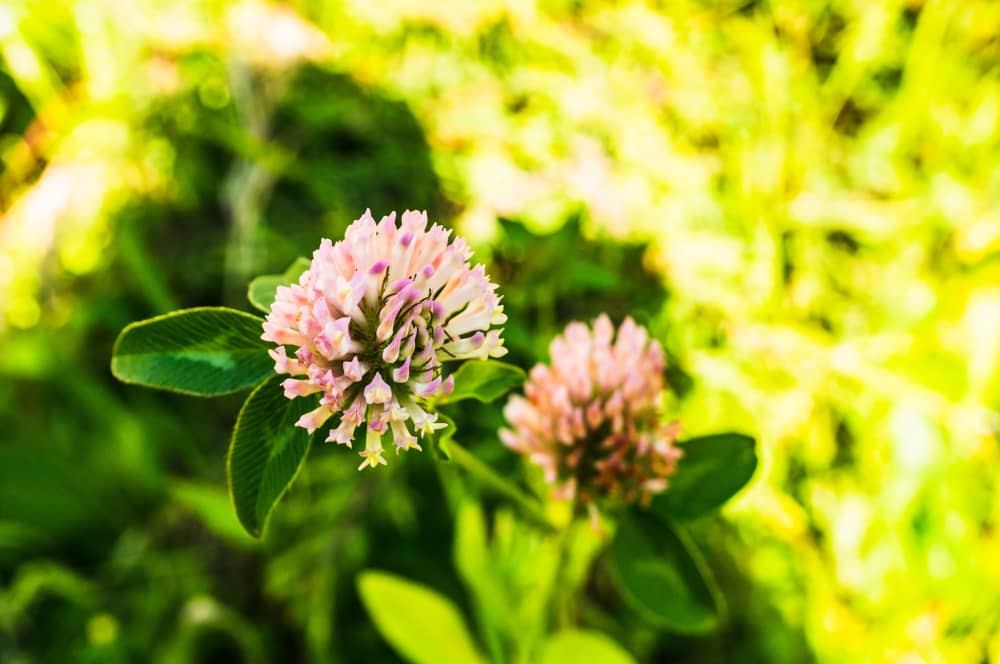
Native to Europe, parts of Asia, and northwest Africa, red clover is now widely grown in temperate regions worldwide. You may recognize it by its rounded clusters of pinkish-purple flowers and distinctive three-part leaves. Beyond herbal use, farmers have long valued red clover as livestock forage, a cover crop, and a natural way to add nitrogen to the soil.
The flowering tops are the part most commonly used in herbal preparations. You can dry them and brew them into red clover tea or process them into extracts, tinctures, and supplements. Red clover contains several isoflavones, including formononetin and biochanin A. These compounds help explain the herb’s renewed scientific interest.
While red clover has a long history in traditional herbal practices, modern research has not confirmed every claimed benefit. Studies have produced mixed results for several popular uses, making it important to distinguish traditional uses from benefits supported by stronger scientific evidence.
In this guide, we’ll explore the potential health benefits of red clover, its traditional uses, key plant compounds, how to make red clover tea, possible side effects and interactions, and what current research tells us about this familiar flowering herb.
What Is Red Clover?
Red clover (Trifolium pratense) is a herbaceous perennial belonging to the Fabaceae, or legume, family. It is closely related to other familiar clovers and is easily recognized by its rounded clusters of pink, reddish-purple, or occasionally pale flowers.
The plant typically grows in meadows, pastures, roadsides, and other open grassy areas. Its leaves are divided into three oval leaflets, often marked with a distinctive pale or whitish V-shaped pattern. Red clover usually flowers from late spring through summer, providing an important source of nectar for bees and other pollinators.
Although native to Europe, western Asia, and parts of North Africa, red clover has been introduced to many other regions and is now widely cultivated in temperate climates. Farmers commonly grow it as livestock forage and as a cover crop because, like other legumes, it works with soil bacteria to fix nitrogen and can help improve soil fertility.
Where Does Red Clover Grow?
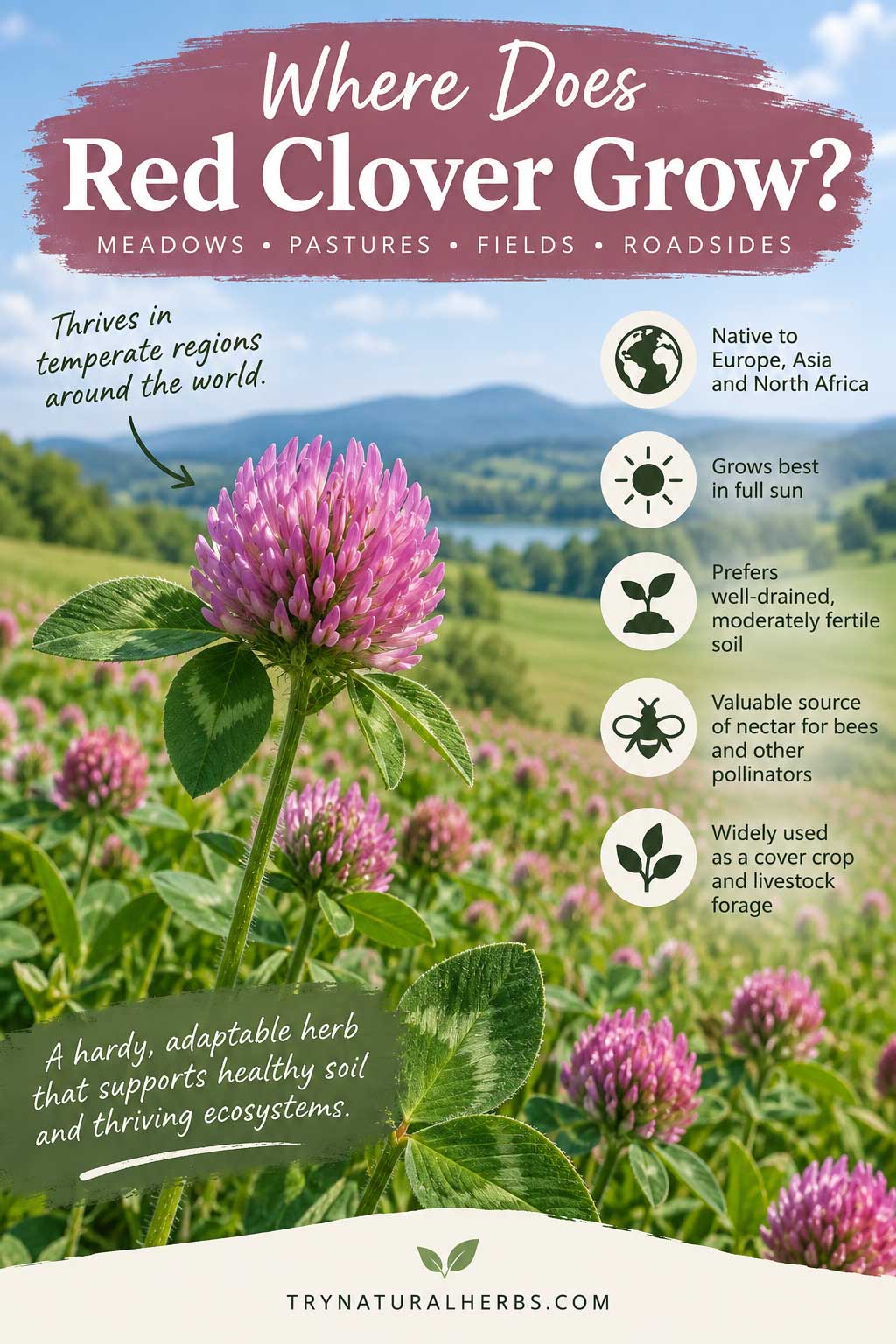
Red clover (Trifolium pratense) grows best in temperate regions with moderate rainfall and plenty of sunlight. Although it originated across parts of Europe, western Asia, and North Africa, it has been introduced to many other areas and is now commonly found throughout North America and other temperate regions.
In the wild, red clover often appears in meadows, pastures, grasslands, roadsides, field edges, and other open areas. It generally prefers well-drained, moderately fertile soil but can adapt to a range of growing conditions.
Red clover grows particularly well in full sun, although it can tolerate some partial shade. Depending on the climate and growing conditions, plants may reach around 1 to 2 feet tall and produce their recognizable pinkish-purple flower heads from late spring through summer.
Because red clover belongs to the legume family, it can form a relationship with nitrogen-fixing bacteria around its roots. These bacteria help convert atmospheric nitrogen into forms the plant can use, which is one reason red clover is widely planted as a cover crop and green manure, in addition to being grown for livestock forage.
Its flowers are also valuable to pollinators. Bumblebees are particularly well suited to feeding from red clover’s tubular flowers, although other bees and beneficial insects may visit them as well.
If you’re interested in growing red clover at home, it can be established in garden beds, wildflower areas, or larger open spaces and generally requires relatively little maintenance once established.
Traditional Uses of Red Clover
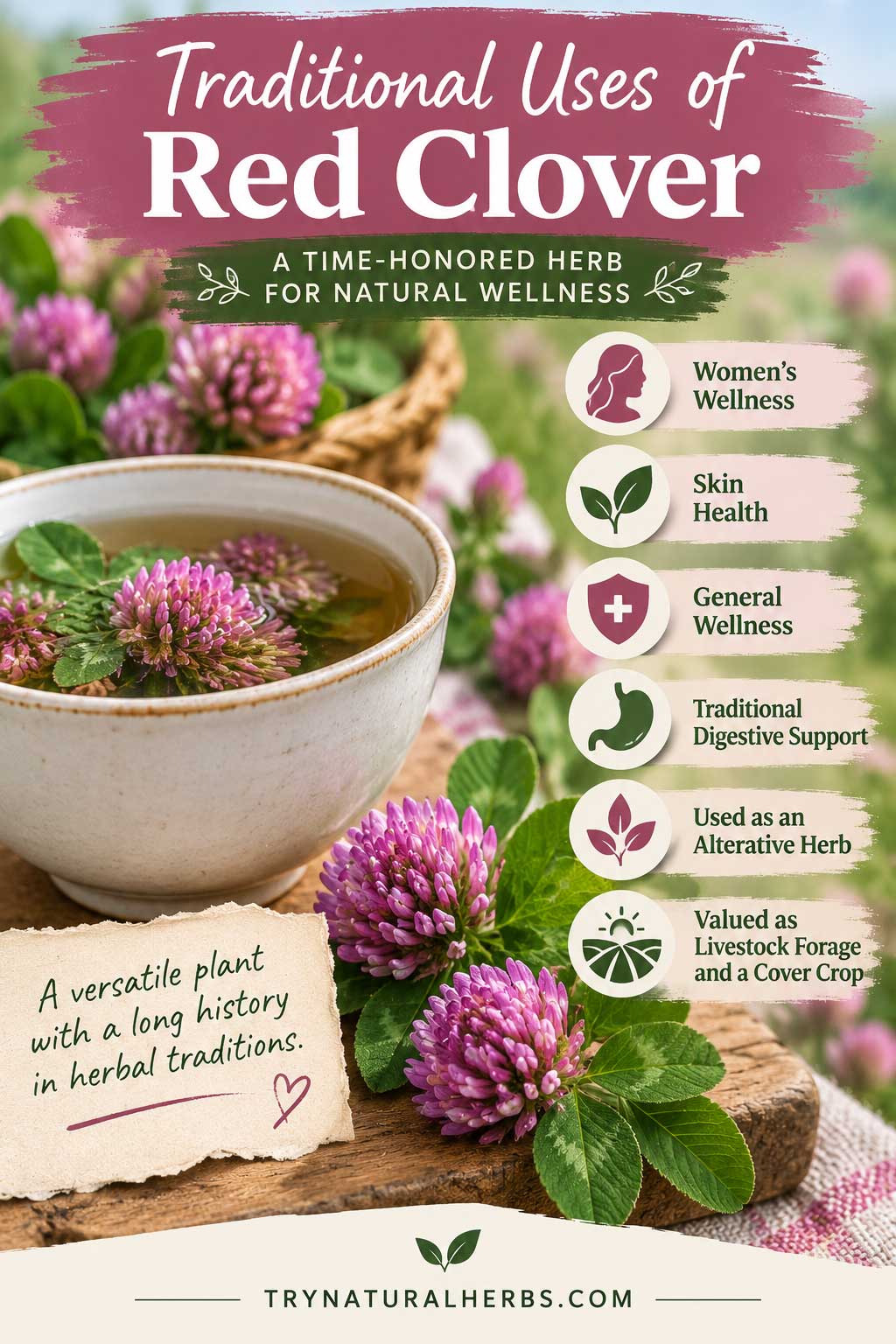
Red clover has a long history of use that extends beyond herbal medicine. For centuries, the plant has been valued as livestock forage, a soil-improving crop, and an ingredient in traditional herbal preparations.
In European and North American herbal traditions, the flowering tops were commonly dried and prepared as red clover tea, infusions, tinctures, and topical preparations. Traditional herbalists used red clover for a variety of purposes, particularly for supporting skin health and general wellness.
Red clover also developed a reputation as an alterative herb, an older herbal term used for plants believed to gradually support the body’s normal processes of elimination and overall health. This historical concept is sometimes described today as “detoxifying,” although it should not be confused with the body’s medically recognized detoxification processes carried out primarily by organs such as the liver and kidneys.
Traditional preparations of red clover were sometimes used for:
- Supporting healthy-looking skin
- Soothing occasional skin discomfort
- General respiratory support
- Women’s wellness
- Herbal tonics and seasonal preparations
Today, interest in red clover has shifted toward its naturally occurring isoflavones. These compounds have been studied particularly in relation to menopause, bone health, and cardiovascular health.
Traditional use and modern scientific evidence aren’t always the same thing. Although red clover has been used medicinally for generations, research has not confirmed all of its traditional uses.
Key Compounds in Red Clover
Much of the modern interest in red clover benefits comes from the plant’s naturally occurring isoflavones. These compounds are often described as phytoestrogens because they can interact with certain estrogen receptors in the body.
The primary isoflavones associated with red clover include:
- Biochanin A
- Formononetin
- Genistein
- Daidzein
Biochanin A and formononetin are especially abundant in red clover. After consumption, some of these compounds can be metabolized into other isoflavones, including genistein and daidzein.
Why Are Red Clover Isoflavones Important?
Isoflavones have attracted scientific interest because their chemical structures allow them to interact with some of the same receptors used by estrogen. Their effects, however, are not identical to those of estrogen produced by the body.
This estrogen-like activity is one reason researchers have studied red clover isoflavones for concerns that become more common around menopause, including hot flashes and changes in bone and cardiovascular health.
The plant also contains other compounds, including flavonoids, phenolic compounds, and coumarin-related substances. The amounts of these compounds can vary depending on the part of the plant, growing conditions, harvesting methods, and how the herb is processed.
Understanding these compounds helps explain why red clover continues to attract scientific attention, but the presence of beneficial plant chemicals alone does not prove that the herb can prevent or treat disease.
Potential Health Benefits of Red Clover
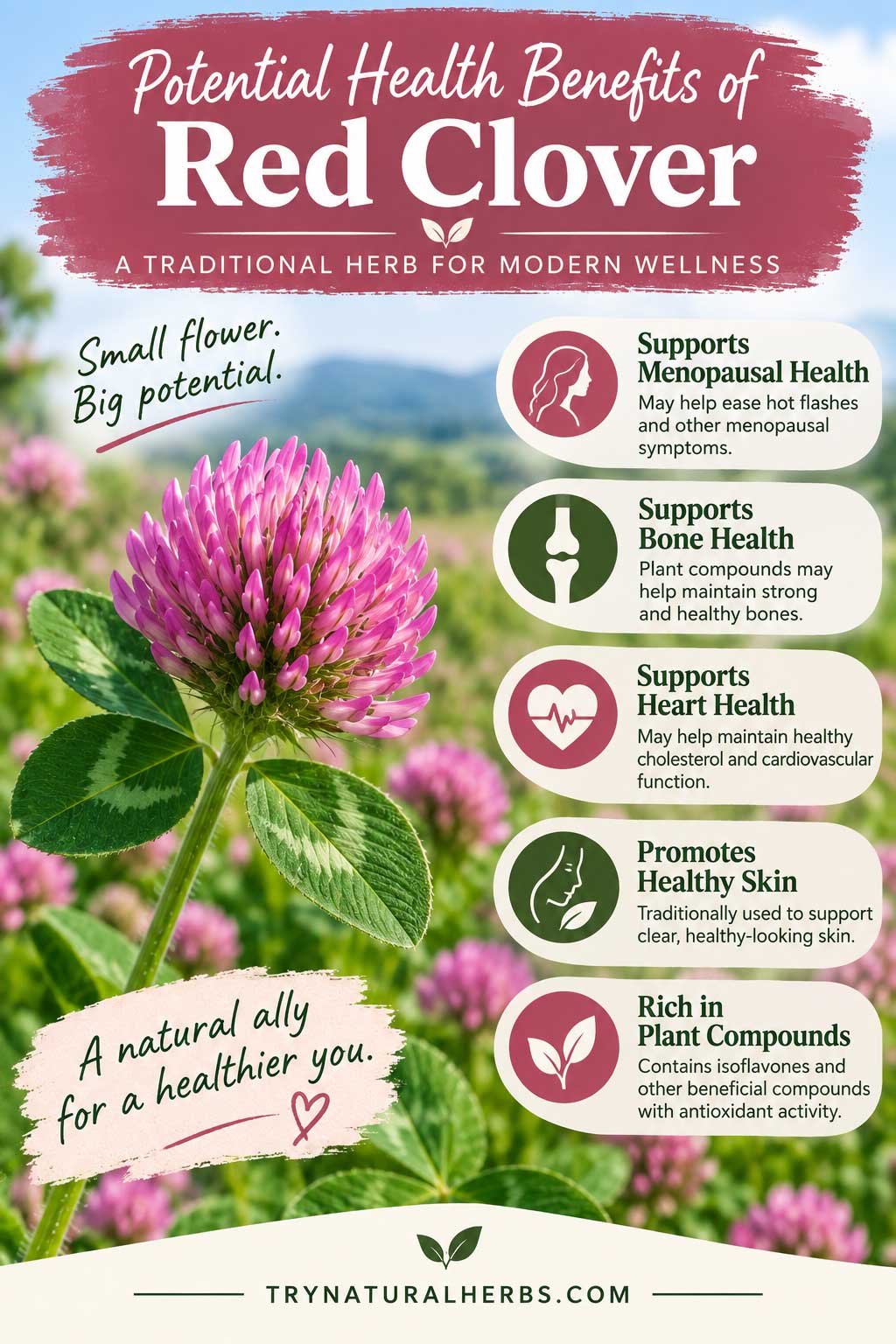
According to the National Center for Complementary and Integrative Health, red clover has been studied for several potential health uses, particularly symptoms associated with menopause, although research results have been inconsistent. Results have been mixed, however, and red clover is not considered a proven treatment for these conditions.
1. May Help With Menopausal Symptoms
Red clover is perhaps best known today for its use in supplements marketed to women experiencing menopause. As estrogen levels decline during menopause, symptoms such as hot flashes and night sweats can become more common.
Because red clover contains phytoestrogenic isoflavones, researchers have investigated whether standardized red clover extracts may help reduce the frequency or severity of hot flashes.
Results have been inconsistent. Some studies have reported improvements, while others have found little difference compared with placebo. Differences in extract composition, dosage, study duration, and individual metabolism may contribute to these varying results.
2. May Support Bone Health
Declining estrogen levels after menopause are also associated with accelerated bone loss. Because red clover isoflavones can interact with estrogen receptors, researchers have examined whether they could influence bone metabolism.
Some research suggests that concentrated red clover isoflavone preparations may have modest effects on certain measures related to bone health, particularly in postmenopausal women. However, evidence is not strong enough to consider red clover a treatment for osteoporosis or a replacement for established approaches to protecting bone health.
3. May Support Cardiovascular Health
Red clover extracts have also been studied for possible effects on cholesterol levels and other markers of cardiovascular health.
Some studies have reported changes in LDL cholesterol, HDL cholesterol, or other cardiovascular markers after supplementation with red clover isoflavones. Other studies have found little or no significant effect.
For this reason, red clover should not be used as a substitute for prescribed cholesterol or blood-pressure medications. Proven approaches such as a balanced diet, regular physical activity, avoiding smoking, and following appropriate medical treatment remain far more important for cardiovascular health.
4. May Support Healthy Skin
Red clover has traditionally been associated with skin health, and herbal preparations containing the plant have historically been used both internally and topically.
More recently, researchers have become interested in whether red clover’s isoflavones and other plant compounds could influence characteristics of aging skin, particularly after menopause. Early research has explored possible effects on skin hydration, elasticity, and texture, but evidence in humans remains limited.
Claims that red clover can treat conditions such as eczema or psoriasis are not supported strongly enough to consider it an established therapy.
5. Contains Bioactive Plant Compounds
Red clover contains isoflavones, flavonoids, and other phenolic compounds that have demonstrated antioxidant activity in laboratory studies.
While these findings are interesting, antioxidant activity observed in laboratory studies does not necessarily translate into specific health benefits in humans.
These compounds make the herb an interesting subject for further research, but claims that it “detoxifies” the body, prevents cancer, or cures disease go beyond what current evidence can reliably establish.
What Does the Research Really Say?
Most clinical studies on red clover have examined standardized extracts or supplements, rather than ordinary red clover tea. This distinction matters because standardized products provide controlled amounts of particular compounds, while homemade preparations can vary considerably.
More high-quality research is needed to determine which preparations may be useful, appropriate amounts, and who is most likely to benefit.
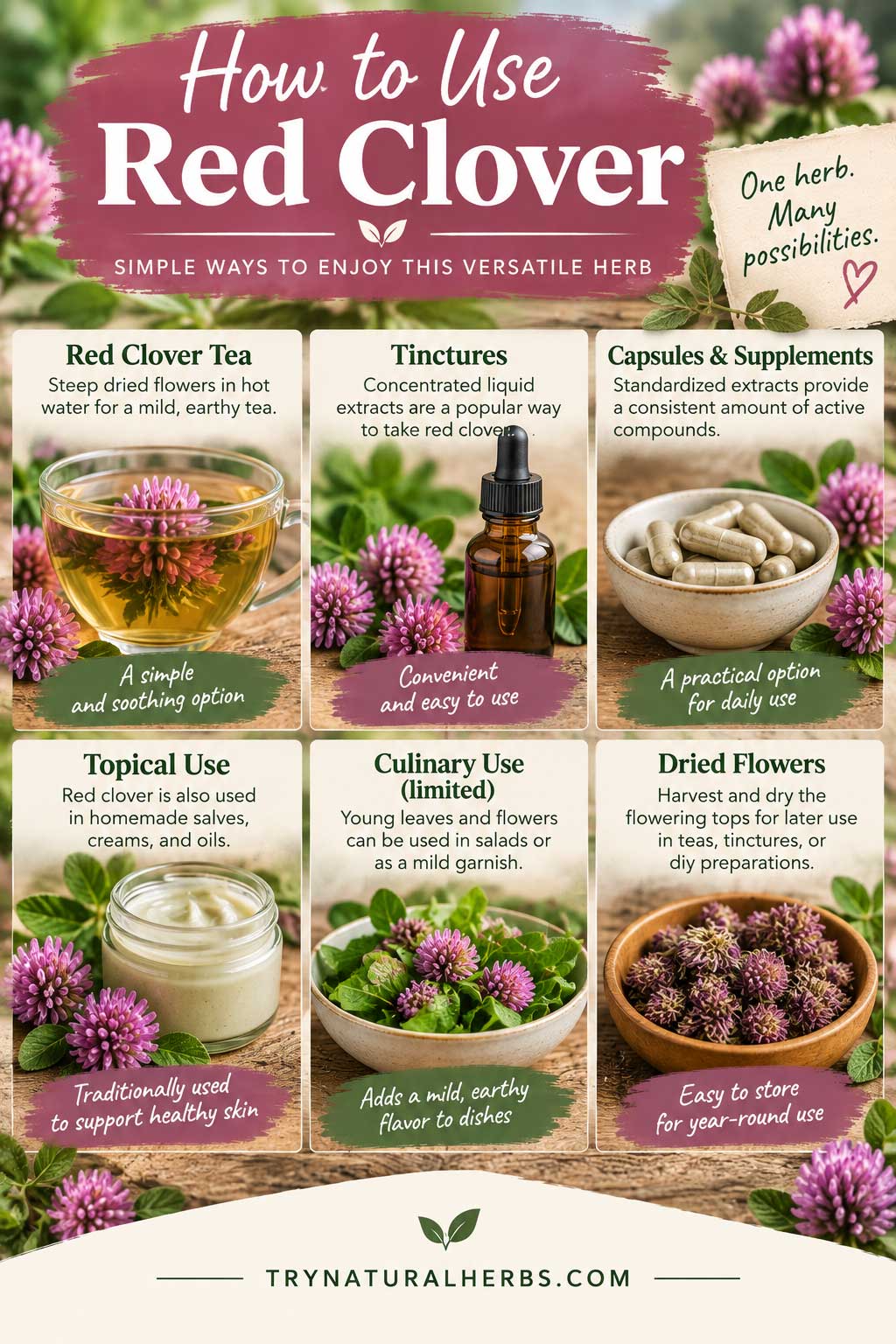
How to Use Red Clover
Red clover is available in several forms, including dried flowers, teas, tinctures, capsules, and standardized extracts. The concentration of its active compounds can vary considerably depending on the preparation.
Red Clover Tea
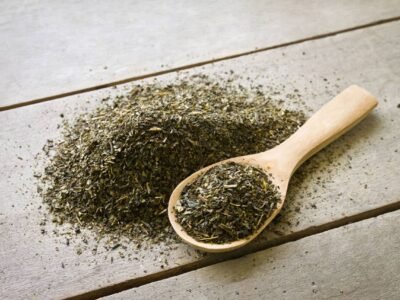
One of the simplest ways to use red clover is as an herbal tea. Dried red clover blossoms can be steeped in hot water to produce a mild, slightly sweet, earthy infusion.
Red clover tea can be enjoyed on its own or combined with other herbs. Because homemade tea is not standardized, however, the amount of isoflavones and other plant compounds in each cup can vary.
Red Clover Tinctures
Red clover tinctures are concentrated liquid preparations made by extracting plant compounds into alcohol or another liquid medium. They are typically taken in small measured amounts.
The concentration can differ considerably between products, so it is best to follow the manufacturer’s directions rather than assuming that all tinctures provide the same amount.
Red Clover Extracts and Supplements
Red clover is also sold as capsules, tablets, and standardized extracts. Many supplements are formulated to provide a specific amount of red clover isoflavones, which makes them different from traditional teas and homemade preparations.
Standardized extracts are the forms most commonly investigated in clinical studies examining menopause and related health concerns. This does not mean that every red clover supplement will produce the same results, since formulations and concentrations can vary.
Fresh and Dried Red Clover
Fresh red clover flowering tops can be used in traditional herbal preparations or dried for later use. If you harvest red clover yourself, correct plant identification is essential.
Avoid harvesting red clover from roadsides, chemically treated lawns, agricultural areas that may have been sprayed with pesticides, or places where plants could be contaminated by animals or pollutants.
Because red clover contains biologically active compounds, concentrated preparations should be approached differently from using the plant occasionally as an herbal tea. Anyone taking medications, managing a medical condition, or considering regular use of concentrated red clover supplements should discuss their use with a qualified healthcare professional.
How to Make Red Clover Tea
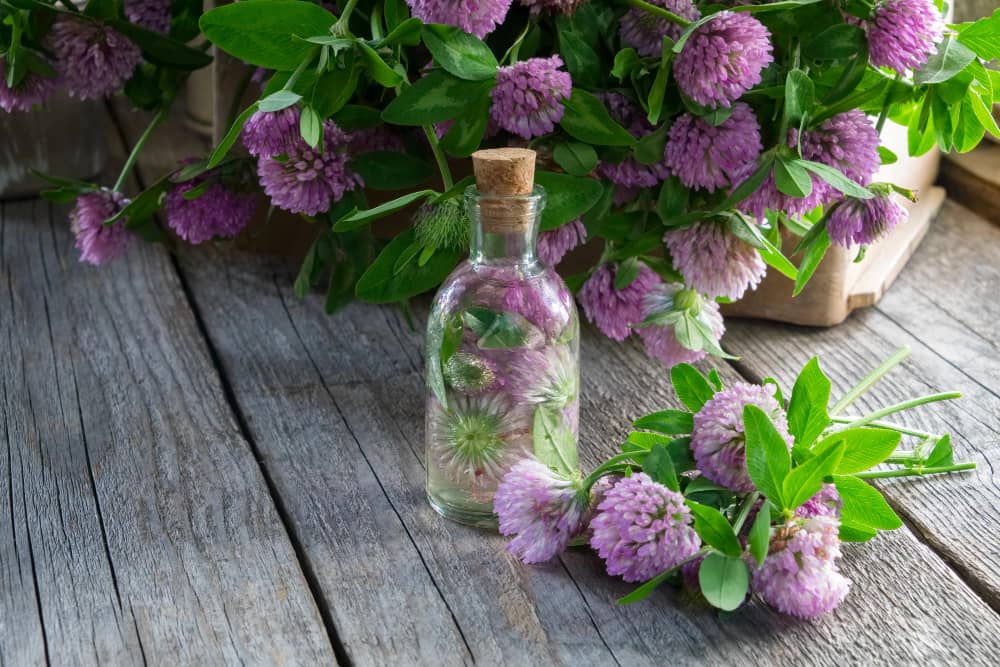
Red clover tea is one of the easiest ways to enjoy this traditional herb at home. It is typically prepared using dried red clover flowering tops, which produce a mild, slightly sweet and earthy herbal infusion.
Simple Red Clover Tea Recipe
To make one cup of red clover tea, you will need:
- 1 to 2 teaspoons dried red clover blossoms
- 1 cup (8 ounces) hot water
- Honey or lemon, optional
Instructions
- Place the dried red clover blossoms in a mug or tea infuser.
- Bring the water to a boil and allow it to cool slightly before pouring it over the herb.
- Cover the cup and allow the red clover to steep for about 5 to 10 minutes.
- Strain out the flowers.
- Taste the tea and add honey or lemon if desired.
What Does Red Clover Tea Taste Like?
Red clover tea has a gentle flavor that is often described as mildly sweet, grassy, and earthy. It is generally less intense than strongly flavored herbal teas such as peppermint or ginger.
If you find plain red clover too mild, it can be blended with complementary herbs such as mint or lemon balm. A little lemon juice or honey can also brighten the flavor.
Red Clover Tea vs. Red Clover Supplements
It is important not to assume that a cup of red clover tea provides the same amount of active compounds as a red clover supplement.
The concentration of isoflavones in homemade tea can vary according to the amount and quality of the herb, plant material used, storage conditions, and preparation method. Standardized extracts, on the other hand, are manufactured to provide measured amounts of particular compounds.
Most clinical research investigating potential red clover benefits has used standardized extracts rather than homemade red clover tea. For that reason, research findings involving concentrated extracts should not automatically be applied to drinking the tea.
If you plan to use red clover regularly—particularly in concentrated supplement form—check with a healthcare professional if you take medications, have a hormone-sensitive condition, are pregnant or breastfeeding, or have an upcoming surgical procedure.
Red Clover Side Effects and Safety
Red clover has a long history of traditional use, but concentrated extracts and supplements can still cause side effects or interact with medications.
Reported side effects may include:
- Headache
- Nausea or digestive discomfort
- Skin reactions
- Muscle aches
- Changes in menstrual bleeding or spotting in some people
The type and likelihood of side effects may depend on the preparation, concentration, amount used, and individual health factors.
Who Should Avoid Red Clover?
Red clover contains isoflavones with phytoestrogenic activity. Because of this, people with hormone-sensitive medical conditions should speak with a healthcare professional before using concentrated red clover products.
Extra caution may be appropriate for people with a history of hormone-sensitive cancers or conditions affected by estrogen. Research has not established that red clover either prevents or causes cancer, so claims in either direction should be treated cautiously.
Red clover supplements are also generally not recommended during pregnancy or breastfeeding unless specifically approved by a healthcare professional, as there is not enough reliable safety information for these situations.
Red Clover and Blood Clotting
Because red clover may affect blood clotting, people taking anticoagulant or antiplatelet medications should speak with a healthcare professional before using concentrated red clover products.
The same precaution applies to people with bleeding disorders.
Red Clover Drug Interactions
Because of its potential hormonal and blood-clotting effects, red clover may interact with certain medications.
Particular caution may be appropriate with:
- Anticoagulant and antiplatelet medications
- Hormone therapies
- Certain medications affected by changes in estrogen activity
Rather than stopping or changing a prescribed medication, discuss red clover with your doctor or pharmacist before combining the two.
Red Clover Before Surgery
Because of the possibility that red clover could influence bleeding, people using concentrated red clover products should tell their healthcare team before a planned surgery or medical procedure.
Your healthcare professional can advise whether the supplement needs to be discontinued beforehand and, if so, when.
Is Red Clover Safe for Long-Term Use?
Long-term safety is less well established than short-term use. Many studies of red clover extracts have lasted only weeks or months, leaving less information about continuous use over many years.
This does not mean that long-term red clover use has been proven to cause cancer or other serious diseases. Rather, there is not enough high-quality long-term evidence to make broad safety claims.
For occasional red clover tea, exposure is also different from taking a concentrated standardized extract every day. Anyone considering regular, long-term supplementation should discuss the potential benefits and risks with a qualified healthcare professional.
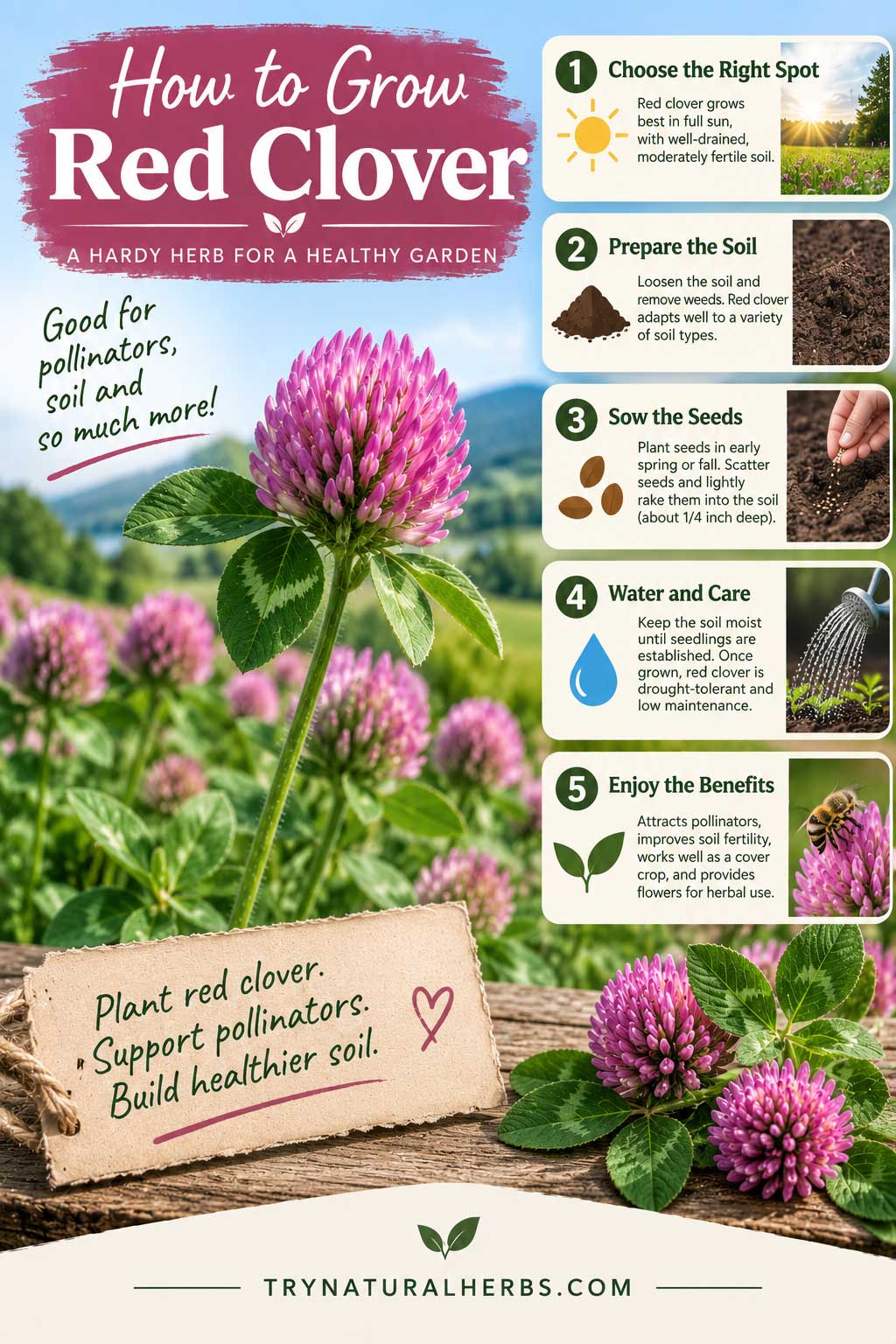
How to Grow Red Clover
Red clover is relatively easy to grow and can be a useful addition to wildflower areas, pollinator gardens, and larger garden spaces. In agriculture, it is also widely planted as a cover crop because of its ability to work with nitrogen-fixing bacteria and contribute to soil fertility.
Choosing the Right Location
Red clover grows best in full sun, although it can tolerate partial shade. Choose an open location where the plants will receive several hours of direct sunlight each day.
The plant prefers moist but well-drained soil. It can grow in several soil types, but extremely waterlogged or very dry conditions may reduce growth and flowering.
Planting Red Clover Seeds
Red clover is usually grown directly from seed. Seeds can be scattered over prepared soil and lightly pressed into the surface rather than being planted deeply.
For good establishment:
- Remove thick weeds and competing vegetation.
- Loosen the upper layer of soil.
- Scatter the seeds evenly.
- Lightly rake or press the seeds into the soil.
- Keep the area moderately moist while the seeds germinate.
Depending on your climate, red clover can generally be planted in spring or during another cool, moist period that gives seedlings time to establish.
Watering and Maintenance
Once established, red clover generally requires little maintenance. Young plants benefit from consistent moisture, particularly during dry weather, while established plants can tolerate short periods of dryness.
As a legume, red clover generally requires little additional nitrogen fertilizer once well established.
Red Clover for Pollinators
One of the best reasons to grow red clover is its value to pollinating insects. Its clusters of tubular flowers provide nectar and pollen, with bumblebees being especially effective visitors because their longer tongues can reach nectar deep inside the flowers.
Allowing some flowers to remain on the plants throughout the blooming season can provide a continuing food source for bees and other beneficial insects.
Does Red Clover Come Back Every Year?
Red clover is generally a short-lived perennial, although its lifespan depends on climate, variety, soil conditions, and how it is managed. Individual plants may survive for several growing seasons, and plants allowed to produce seed can help maintain a red clover patch over time.
Because it can spread and naturalize under suitable conditions, consider where you plant it and manage flowering or seed production if you do not want it moving into other parts of your garden.
How to Harvest and Store Red Clover
If you grow red clover at home, the flowering tops can be harvested and dried for later use in herbal preparations such as red clover tea. Proper harvesting and storage help preserve the plant’s quality while reducing the risk of moisture, mold, and contamination.
When to Harvest Red Clover
Red clover flowers are generally harvested when the flower heads are fresh, colorful, and fully or nearly fully open. Choose healthy-looking blossoms that have not started turning brown or deteriorating.
A dry day is best for harvesting. Wait until morning dew has evaporated so the flowers are not wet when collected.
How to Harvest Red Clover
Use clean scissors or garden shears to cut the flower heads along with a small portion of the upper stem and leaves if desired.
When harvesting:
- Choose healthy, undamaged flowers.
- Avoid flowers showing signs of mold or disease.
- Leave plenty of blossoms behind for bees and other pollinators.
- Never collect plants that you cannot confidently identify.
If you are gathering wild red clover, avoid roadsides, treated lawns, industrial areas, and agricultural fields where pesticides, herbicides, exhaust, or other contaminants may be present. Always make sure harvesting is permitted on the property.
How to Dry Red Clover
Spread the harvested flowers in a single layer on a clean drying screen, tray, or other well-ventilated surface. Keep them in a warm, dry location away from direct sunlight.
Check and turn the flowers occasionally to encourage even drying. Depending on humidity and airflow, drying may take several days.
The flowers should feel completely dry before storage. Storing plant material while it still contains moisture can encourage mold growth and spoilage.
How to Store Dried Red Clover
Once completely dry, place the flowers in a clean, airtight container. Glass jars work well because they protect the dried herb while allowing you to check for moisture or deterioration.
Store dried red clover in a cool, dark, and dry location away from direct sunlight, heat, and humidity.
Label the container with the herb’s name and harvest date. Check it periodically and discard the material if you notice mold, unusual moisture, an unpleasant odor, or other signs of spoilage.
Properly harvested and stored red clover can then be kept on hand for herbal tea and other traditional preparations throughout the year.
Frequently Asked Questions About Red Clover
What is red clover good for?
Red clover has traditionally been used for general wellness, women’s health, and skin-related concerns. Today, researchers are particularly interested in its isoflavones and their potential effects on menopausal symptoms, bone health, and cardiovascular health. Evidence varies by use, however, and red clover should not be considered a proven treatment for these conditions.
Does red clover contain estrogen?
Red clover does not contain human estrogen. It contains isoflavones, which are phytoestrogens—plant compounds capable of interacting with certain estrogen receptors in the body. Their effects are not identical to those of estrogen produced by the human body.
Can you drink red clover tea every day?
Red clover has traditionally been consumed as an herbal tea, but there is no single amount that is appropriate for everyone. People who take medications, have hormone-sensitive conditions, are pregnant or breastfeeding, or plan to use red clover regularly should discuss it with a healthcare professional.
Is red clover tea the same as red clover extract?
No. Homemade red clover tea can contain varying amounts of the plant’s compounds, while standardized extracts are manufactured to provide more consistent concentrations of specific constituents such as isoflavones. Many clinical studies investigating red clover have used standardized extracts rather than tea.
How long does red clover take to work?
There is no established timeframe because results depend on the preparation, amount used, individual, and reason for taking it. Studies involving standardized extracts have also used different treatment periods. Red clover should not be expected to provide an immediate or guaranteed therapeutic effect.
Who should not take red clover?
People who are pregnant or breastfeeding, have certain hormone-sensitive conditions, have bleeding disorders, take anticoagulant or antiplatelet medications, use hormone-related medications, or are preparing for surgery should speak with a healthcare professional before using red clover supplements.
Can red clover prevent cancer?
There is not sufficient evidence to claim that red clover prevents cancer. Although its isoflavones and other plant compounds have been investigated scientifically, laboratory findings should not be interpreted as evidence that consuming red clover can prevent or treat cancer.
Can you grow red clover at home?
Yes. Red clover is relatively easy to grow from seed and generally prefers full sun and moist, well-drained soil. Its flowers can also provide a valuable food source for bumblebees and other pollinators.
Final Thoughts on Red Clover
Red clover (Trifolium pratense) is much more than a familiar pink-flowering plant found in meadows and pastures. It has a long history as a forage crop, soil-improving plant, pollinator resource, and traditional herb.
Modern interest in red clover benefits centers largely on its isoflavones, particularly biochanin A and formononetin. Although these compounds have been studied for several potential health effects, current evidence remains mixed.
Red clover can be prepared as tea or found in tinctures, capsules, and standardized extracts. These preparations are not interchangeable, however, and concentrated supplements may require additional precautions because of red clover’s phytoestrogenic activity and potential interactions.
For many people, red clover is also worth appreciating simply as a plant. It is relatively easy to grow, attracts pollinators, and can contribute to soil fertility.
If you’re considering red clover for a specific health concern or plan to use a concentrated supplement regularly, talk with a qualified healthcare professional—especially if you take medications or have a hormone-sensitive or bleeding-related condition.
References
- National Center for Complementary and Integrative Health (NCCIH). Red Clover.
https://www.nccih.nih.gov/health/red-clover - Memorial Sloan Kettering Cancer Center. Red Clover.
https://www.mskcc.org/cancer-care/integrative-medicine/herbs/red-clover - MedlinePlus. Red Clover. U.S. National Library of Medicine.
MedlinePlus Herbs and Supplements - U.S. Department of Agriculture, Natural Resources Conservation Service. Red Clover (Trifolium pratense) plant information.
USDA PLANTS Database - National Library of Medicine / PubMed. Red clover and menopause research.
PubMed – Red Clover and Menopause Research - National Library of Medicine / PubMed. Red clover isoflavone research.
PubMed – Red Clover Isoflavones Research - National Library of Medicine / PubMed. Red clover and bone health research.
PubMed – Red Clover and Bone Health Research