
 By
By Eucalyptus essential oil is best known for its crisp, refreshing scent, but there’s more to this popular oil than its familiar aroma. Extracted from eucalyptus leaves, it contains naturally occurring compounds—especially 1,8-cineole (eucalyptol)—that have been studied for their respiratory, antimicrobial, and anti-inflammatory properties.
Some of the most popular eucalyptus essential oil benefits include supporting comfortable breathing, helping with occasional congestion, soothing tired muscles, freshening indoor spaces, and adding an invigorating touch to aromatherapy. If you’re building a broader natural wellness routine, you can also explore the benefits of essential oils and how different oils are commonly used.
But essential oils are highly concentrated, so you need to use eucalyptus correctly. In this guide, we’ll look at what the research actually says about eucalyptus essential oil, its potential benefits and uses, how to dilute and use it safely, possible side effects, and who should be especially cautious.
Eucalyptus Essential Oil Benefits at a Glance
Eucalyptus essential oil is a concentrated aromatic oil distilled from eucalyptus leaves. Its best-known component, 1,8-cineole (eucalyptol), has been studied for several biological effects, although the strength of evidence varies depending on the specific use.
The main potential benefits and uses of eucalyptus essential oil include supporting respiratory comfort, creating a feeling of clearer breathing during occasional congestion, providing a refreshing addition to muscle massage, and contributing antimicrobial activity in laboratory studies. Its crisp scent also makes it popular in diffusers, shower aromatherapy, scalp products, and household cleaners.
Most importantly, eucalyptus essential oil should not be swallowed and should normally be diluted before applying it to the skin. Extra caution is appropriate around young children, pets, and people with certain health conditions.
Throughout this guide, we’ll separate traditional uses and promising laboratory findings from benefits that have stronger evidence in human research.
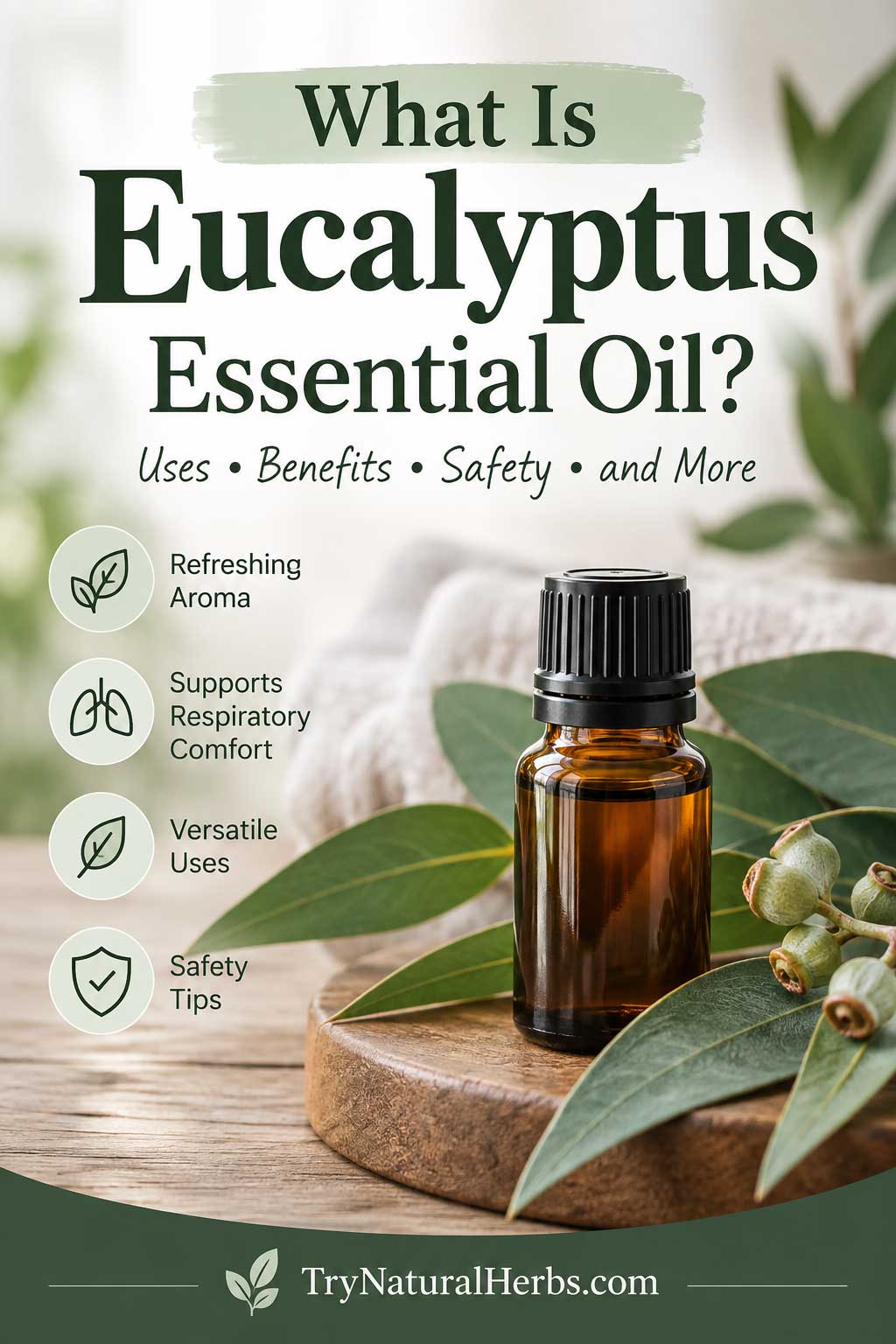
What Is Eucalyptus Essential Oil?
Eucalyptus essential oil is a concentrated aromatic oil typically produced by steam-distilling the leaves of eucalyptus trees. Eucalyptus trees are native to Australia, although they are now grown in many parts of the world.
There are hundreds of eucalyptus species, but only a smaller number are commonly used to produce essential oils. Eucalyptus globulus is one of the best known, while Eucalyptus radiata and Eucalyptus citriodora—now commonly classified as Corymbia citriodora—are also used commercially.
The characteristic fresh, penetrating aroma of many eucalyptus oils comes largely from 1,8-cineole, also called eucalyptol. This naturally occurring compound has been studied for anti-inflammatory, antimicrobial, and respiratory effects. However, the composition of eucalyptus oil varies by species, growing conditions, and distillation method.
Eucalyptus Oil vs. Eucalyptus Essential Oil
You’ll often see the terms eucalyptus oil and eucalyptus essential oil used interchangeably. In most aromatherapy products, they refer to the concentrated volatile oil distilled from eucalyptus leaves.
This is very different from using whole or dried eucalyptus leaves. Essential oil contains concentrated volatile compounds, which is why only small amounts are needed and why proper dilution and safety precautions matter.
| Type | What It Is | Common Uses |
|---|---|---|
| Eucalyptus essential oil | Concentrated distilled oil | Aromatherapy, diluted topical blends, household products |
| Fresh eucalyptus leaves | Leaves from the eucalyptus tree | Floral arrangements, traditional preparations |
| Dried eucalyptus leaves | Dehydrated leaves | Herbal preparations and fragrance |
| Eucalyptol (1,8-cineole) | One major compound found in many eucalyptus oils | Used and studied in pharmaceutical and personal-care products |
The concentration of active compounds is one reason eucalyptus essential oil shouldn’t be treated like an ordinary culinary herb. Swallowing eucalyptus essential oil can be toxic, so internal use should not be treated as a casual home remedy.
Types of Eucalyptus Essential Oil
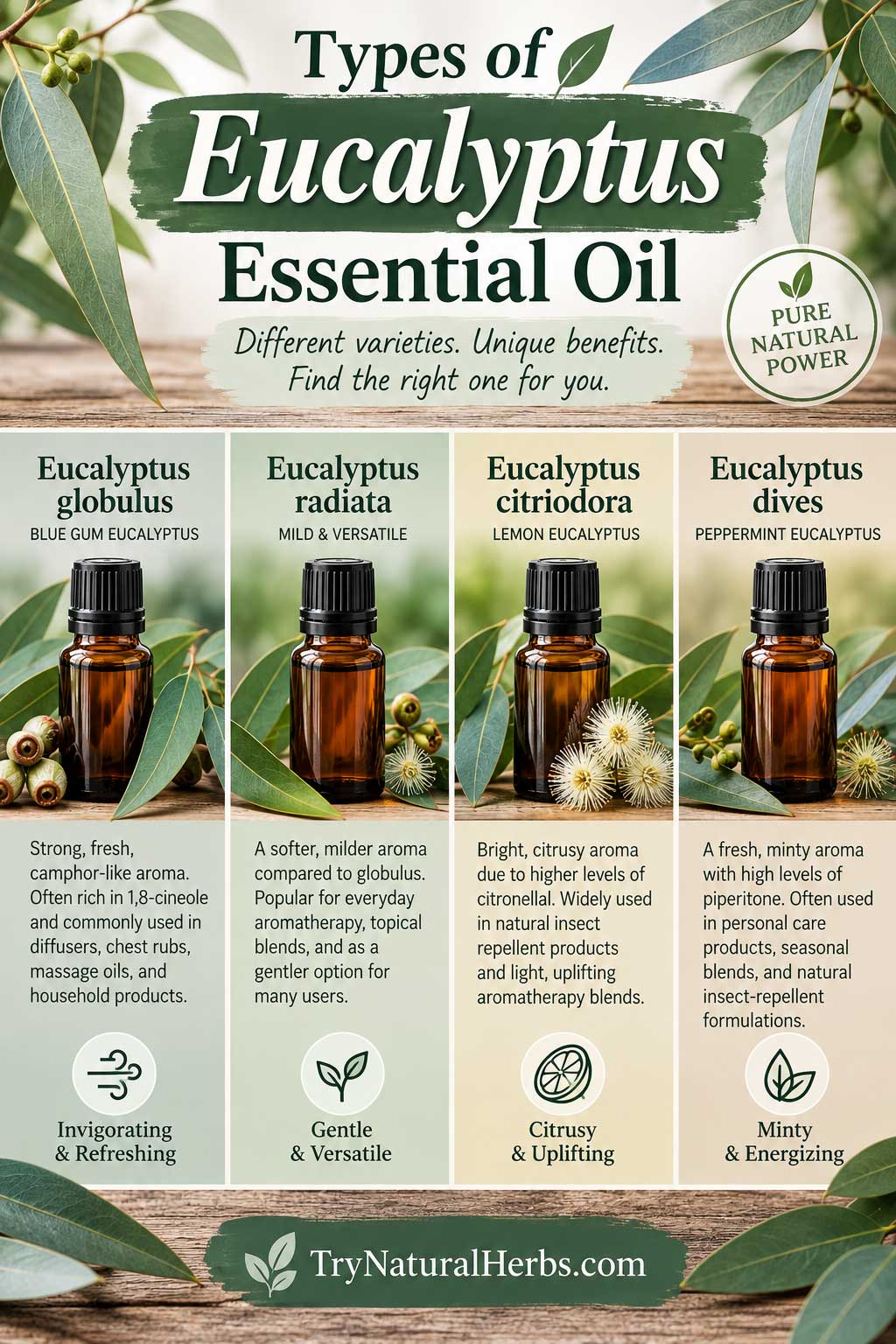
There are hundreds of eucalyptus species, but only a handful are commonly used for essential oil production. They differ in aroma and chemical composition, so checking the botanical name on the label is useful when choosing an oil.
Eucalyptus globulus
Eucalyptus globulus, sometimes called blue gum eucalyptus, is probably the variety most people associate with eucalyptus oil. It typically has a strong, fresh, camphor-like aroma and is often rich in 1,8-cineole (eucalyptol).
Because of its penetrating scent, it is commonly found in chest rubs, shower products, diffuser blends, massage oils, and household products.
Eucalyptus radiata
Eucalyptus radiata has a fresh eucalyptus aroma that many people find somewhat softer than E. globulus. It is another cineole-rich species frequently used in aromatherapy and diffuser blends.
If you find the aroma of E. globulus too intense, E. radiata may be worth considering.
Lemon Eucalyptus
Lemon eucalyptus comes from Corymbia citriodora, formerly classified as Eucalyptus citriodora. Unlike cineole-rich eucalyptus oils, it has a distinctly lemony, citronella-like aroma and a different chemical profile.
It is particularly associated with insect-repellent products. However, lemon eucalyptus essential oil is not the same thing as oil of lemon eucalyptus (OLE), the standardized ingredient used in some EPA-registered insect repellents. They should not be treated as interchangeable.
Eucalyptus dives
Eucalyptus dives has a sharper, mint-like aroma and a chemical profile that differs from the more familiar cineole-rich eucalyptus oils. It is sometimes called broad-leaved peppermint eucalyptus.
Which Type Is Best?
There isn’t one eucalyptus essential oil that’s best for every purpose. E. globulus is a versatile and widely available choice, while E. radiata is popular in aromatherapy for its somewhat gentler aroma. Lemon eucalyptus is quite different and is better known for its association with insect repellency.
| Type | Aroma | Notable Characteristic | Common Use |
|---|---|---|---|
| E. globulus | Strong, fresh, camphor-like | Often rich in 1,8-cineole | Aromatherapy, massage, household products |
| E. radiata | Fresh, somewhat softer | Cineole-rich | Diffusers and aromatherapy |
| C. citriodora | Lemon-like, citronella-like | Different chemistry from cineole-rich oils | Fragrance and insect-repellent applications |
| E. dives | Minty, sharp | Distinct chemical profile | Aromatherapy |
For most of this guide, when we discuss eucalyptus essential oil benefits, we’re primarily referring to the commonly used cineole-rich eucalyptus oils, particularly Eucalyptus globulus. Research on one eucalyptus species or isolated eucalyptol shouldn’t automatically be assumed to apply equally to every eucalyptus essential oil.
What’s in Eucalyptus Essential Oil?
Eucalyptus essential oil contains dozens of naturally occurring volatile compounds. The exact chemical profile depends on the eucalyptus species, where it was grown, when the leaves were harvested, and how the oil was distilled.
The best-known compound in many eucalyptus oils is 1,8-cineole, also called eucalyptol. It contributes much of the characteristic fresh, penetrating aroma associated with eucalyptus and has been the focus of considerable scientific research.
Other compounds may include alpha-pinene, limonene, p-cymene, and various terpenes, although their concentrations can vary considerably from one oil to another.
| Compound | What We Know |
|---|---|
| 1,8-Cineole (eucalyptol) | Major component of many eucalyptus oils; studied for respiratory, anti-inflammatory, and antimicrobial effects |
| Alpha-pinene | Aromatic terpene also found in pine and rosemary |
| Limonene | Citrus-scented terpene found in many plants and essential oils |
| p-Cymene | Aromatic compound present in a variety of herbs and essential oils |
Why 1,8-Cineole Gets So Much Attention
Much of the research associated with eucalyptus focuses on 1,8-cineole rather than eucalyptus essential oil as a whole. Laboratory and clinical research has investigated purified cineole for its effects on inflammation, mucus clearance, and respiratory conditions.
That’s an important distinction. A clinical study using a standardized cineole preparation doesn’t necessarily prove that diffusing eucalyptus essential oil will produce the same effect.
This is also why we’ll distinguish throughout this guide between evidence for eucalyptus essential oil itself, evidence for individual compounds such as eucalyptol, and traditional or aromatherapy uses that have less direct clinical research behind them.
Eucalyptus Essential Oil Benefits
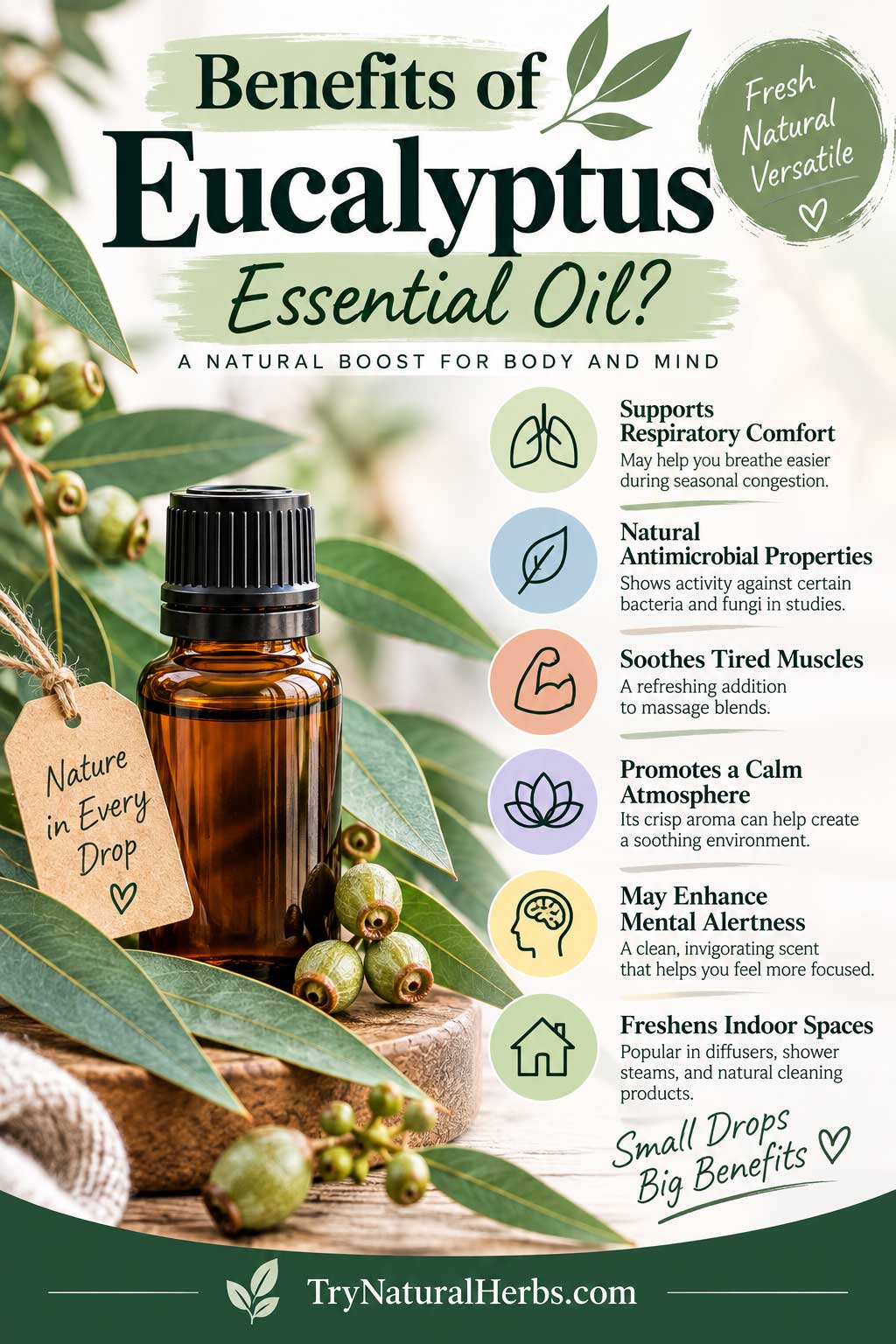
Eucalyptus essential oil has a long history of traditional use, particularly for respiratory comfort, but not every claimed benefit has the same level of scientific support. Some research involves eucalyptus oil itself, while other studies use 1,8-cineole (eucalyptol) or other standardized preparations.
Here are the potential benefits with the most practical or scientific relevance.
1. May Support Comfortable Breathing
Respiratory support is probably the best-known use of eucalyptus. Its strong, cooling aroma is why eucalyptus compounds appear in chest rubs, inhalation products, cough drops, and other products used during colds and seasonal respiratory discomfort.
Much of the scientific interest centers on 1,8-cineole, a major component of many eucalyptus oils. Research has investigated cineole for its potential anti-inflammatory and mucus-modulating effects in respiratory conditions.
It’s important to distinguish those studies from simply diffusing eucalyptus oil at home. Clinical trials involving standardized oral cineole preparations cannot be used as direct evidence that inhaling eucalyptus essential oil treats respiratory disease.
For everyday aromatherapy, however, many people find eucalyptus’s crisp aroma refreshing when they feel stuffy or congested.
2. May Help You Feel Less Congested
Eucalyptus is frequently inhaled when the nose feels blocked. Its aroma can produce a cooling, open sensation that may make breathing feel more comfortable, even when it doesn’t physically eliminate the cause of nasal congestion.
A few drops in a diffuser or the aroma released during a warm shower are common ways people use eucalyptus for this purpose.
Be particularly careful with direct steam inhalation. Hot water itself can cause burns, and adding concentrated essential oil can irritate the eyes, skin, or airways. A diffuser or commercially formulated eucalyptus product is often a simpler option.
Eucalyptus is only one option people use for temporary comfort; you can also explore natural remedies for congestion and when symptoms may need medical attention.
3. May Help With Occasional Cough Discomfort
Eucalyptus-derived compounds are included in many traditional cough and chest products. Cineole has been investigated for effects related to airway inflammation and mucus, while the strong eucalyptus aroma may provide a soothing sensory experience when you’re dealing with an occasional cough.
Research is especially interesting for 1,8-cineole in acute bronchitis. In a randomized, double-blind, placebo-controlled trial, people receiving a standardized cineole preparation experienced greater improvement in bronchitis symptoms, including cough frequency, than those receiving placebo.
That doesn’t mean eucalyptus essential oil should replace appropriate cough treatment. A persistent cough, coughing up blood, difficulty breathing, chest pain, or a cough accompanied by concerning symptoms should be medically evaluated.
For minor seasonal discomfort, eucalyptus is best thought of as a supportive aromatherapy option rather than a cough medicine.
You may also want to explore the best herbs for respiratory health and the evidence behind their traditional uses.
4. Has Antimicrobial Activity in Laboratory Studies
Eucalyptus essential oil has demonstrated activity against certain bacteria and fungi in laboratory experiments. Researchers have linked some of these effects to compounds including 1,8-cineole and other terpenes present in the oil.
In laboratory research on eucalyptus oil and 1,8-cineole, researchers observed antimicrobial activity against several clinically relevant microorganisms, including organisms grown as biofilms.
These findings are interesting, but laboratory antimicrobial activity doesn’t mean eucalyptus oil can treat an infection in the human body.
It also shouldn’t replace registered disinfectants when reliable disinfection is necessary. Adding eucalyptus to a homemade cleaner can provide a fresh scent, but that doesn’t automatically make the mixture equivalent to a tested disinfecting product.
5. May Complement a Sore-Muscle Massage
Eucalyptus oil is commonly included in massage oils, sports rubs, and balms. Its fresh scent and cooling character can make a massage feel especially refreshing after exercise or a physically demanding day.
Research into eucalyptus compounds has also explored potential anti-inflammatory and pain-modulating activity, although evidence for ordinary topical eucalyptus essential oil remains more limited than some marketing claims suggest.
For home use, think of eucalyptus primarily as an aromatic addition to massage, not a treatment for an injury.
Always dilute it in a carrier oil before applying it to your skin.
6. May Support Joint Comfort During Massage
Eucalyptus is also found in massage products for stiff or tired joints. Its cooling aroma and the massage itself may provide temporary comfort, but evidence that topical eucalyptus essential oil treats arthritis or other joint conditions is limited.
Persistent joint pain, swelling, or reduced mobility should be medically evaluated.
7. Can Freshen Indoor Spaces
One of the simplest eucalyptus essential oil uses has little to do with medicine: it smells fresh and clean.
A few drops in a diffuser can give a room a crisp, spa-like aroma. Eucalyptus also pairs well with lemon, lavender, rosemary, peppermint, and other essential oils.
Its fragrance makes it popular in room sprays, shower products, and homemade cleaners. Just remember that making a room smell clean isn’t the same as disinfecting the air. Evidence does not support using a household diffuser as a substitute for ventilation, cleaning, or proven infection-control measures.
8. May Promote a Refreshing, Relaxing Atmosphere
Eucalyptus isn’t usually considered as calming as lavender or chamomile, but its aroma can still fit well into a relaxation routine.
For some people, the clean scent is associated with spas, warm showers, massage, and time outdoors. That sensory experience may help create an environment that feels less stressful.
Research into eucalyptus aromatherapy and stress is relatively limited, so it’s better to describe this as an aromatherapy benefit rather than claim that eucalyptus treats anxiety.
Try pairing eucalyptus with lavender if you want a softer evening blend. You can learn more about lavender benefits and why this herb is more closely associated with relaxation and sleep.

9. May Help With Mental Alertness
Eucalyptus has a sharp, invigorating scent that some people enjoy while working, studying, or starting the day.
If you prefer a cooler, mintier aroma, peppermint benefits overlap with eucalyptus in several areas, particularly invigorating aromatherapy and topical cooling products.
Research on essential-oil aromas suggests scents can influence subjective measures such as alertness and mood, but evidence specifically showing that eucalyptus essential oil significantly improves memory or cognitive performance is limited.
If you enjoy the fragrance, using eucalyptus in your workspace can still be a pleasant way to create a fresh environment. Just don’t expect it to replace sleep, breaks, hydration, or other habits that actually influence concentration.
10. May Help Repel Some Insects
This benefit needs an important distinction.
Lemon eucalyptus has a strong reputation as a mosquito repellent, but ordinary lemon eucalyptus essential oil and oil of lemon eucalyptus (OLE) are not the same product.
OLE used in registered insect repellents is a processed and standardized ingredient rich in PMD (p-menthane-3,8-diol). Products containing PMD can provide meaningful mosquito protection when used according to their labels.
Importantly, the CDC distinguishes these formulated repellents from pure lemon eucalyptus essential oil, which has not undergone the same validated safety and efficacy testing for use as an insect repellent.
Regular eucalyptus essential oils may demonstrate insect-repelling activity, but their effectiveness and duration can be much less predictable.
For protection against mosquito-borne disease, use a tested, registered insect repellent rather than relying on a homemade essential-oil blend.
11. May Support a Healthy Scalp
Eucalyptus essential oil sometimes appears in shampoos, scalp treatments, and other hair-care products because of its fresh scent and cleansing feel. Its laboratory-studied antimicrobial activity is another reason it attracts interest for scalp care.
However, evidence that eucalyptus essential oil can treat dandruff, stimulate hair growth, or correct specific scalp conditions is limited.
If you want to try it, use a properly diluted product and stop if you notice burning, itching, or irritation. Persistent flaking, sores, or significant hair loss deserves proper evaluation rather than essential-oil treatment.

12. May Complement a Skin-Care Routine
Laboratory studies suggest eucalyptus oil and some of its components have antimicrobial and anti-inflammatory properties. Those findings are preliminary and aren’t enough to recommend eucalyptus oil for acne, eczema, wounds, or skin infections.
In fact, undiluted essential oil can irritate the skin.
For occasional cosmetic use, eucalyptus is better suited to properly formulated or diluted body-care products than direct application. People with sensitive or reactive skin may prefer to avoid it altogether.
Never apply eucalyptus essential oil to broken skin, and don’t use it as a substitute for appropriate treatment of an infection or persistent skin condition.
13. Has Potential Oral-Care Applications
Eucalyptus-derived compounds are used in some commercial mouthwashes and oral-care products, often alongside ingredients such as menthol and thymol. Research on formulated mouth rinses suggests these combinations can help reduce plaque and support gingival health when used as directed.
That does not mean you should rinse your mouth with straight eucalyptus essential oil or swallow it.
Commercial oral-care products are formulated at specific concentrations and come with safety instructions. Eucalyptus essential oil itself can be toxic if swallowed.
If you want eucalyptus in your oral-care routine, choose a professionally formulated product rather than making a concentrated homemade mouthwash.
14. May Provide Comfort During Occasional Headaches
The crisp aroma of eucalyptus can feel refreshing during an occasional headache, particularly when tension or congestion is involved.
However, direct clinical evidence for eucalyptus essential oil as a headache treatment is limited. Peppermint has been studied more directly for certain types of tension headaches.
If you enjoy eucalyptus aromatherapy, you can try diffusing a small amount or using an appropriately diluted massage blend. Avoid applying essential oils near the eyes or inside the nose.
Frequent, severe, sudden, or unusual headaches should be evaluated by a healthcare professional.
15. Adds Aroma and Potential Antimicrobial Activity to Household Products
Eucalyptus is popular in homemade cleaning products largely because of its crisp, clean aroma. Its essential oil also shows antimicrobial activity in laboratory studies, but that doesn’t make a homemade eucalyptus spray a proven disinfectant.
Use it for fragrance and routine cleaning where appropriate. When actual disinfection is needed, choose a product tested and registered for that purpose.
Putting the Benefits in Perspective
Eucalyptus essential oil has several promising properties, but its strongest reputation shouldn’t be confused with equally strong evidence for every claimed benefit.
Its most practical uses are aromatherapy, respiratory-comfort routines, diluted massage, and household fragrance. Research on 1,8-cineole provides additional scientific interest, particularly for respiratory and inflammatory processes, but studies of isolated or standardized cineole shouldn’t automatically be presented as proof that eucalyptus essential oil will produce the same clinical results.
That distinction allows you to enjoy eucalyptus for what it does well without turning promising research into claims the evidence doesn’t support.
What Does the Science Say About Eucalyptus Essential Oil?
Eucalyptus has attracted considerable scientific interest, but there’s an important detail behind much of the research: studies don’t always test eucalyptus essential oil itself.
Some investigate the whole oil in laboratory settings, while others use purified 1,8-cineole (eucalyptol) or standardized pharmaceutical preparations. Those results aren’t automatically interchangeable.
Respiratory Research Has the Strongest Clinical Interest
Among the compounds in eucalyptus, 1,8-cineole has some of the most interesting human research.
Human research has investigated standardized 1,8-cineole preparations for several respiratory conditions, including asthma and COPD.
A double-blind, placebo-controlled trial in people with asthma also found evidence that standardized 1,8-cineole may have anti-inflammatory effects in the airways.
Research has also examined cineole in COPD. In a six-month placebo-controlled COPD trial, people taking standardized cineole alongside their usual treatment experienced fewer, shorter, and less severe exacerbations than the placebo group.
However, these studies generally involve measured oral preparations under controlled conditions. They do not prove that putting eucalyptus essential oil in a diffuser will treat asthma, bronchitis, COPD, or another respiratory disease.
Eucalyptus aromatherapy is better viewed as a way some people use the scent for temporary respiratory comfort, not as a replacement for medical treatment.
Anti-Inflammatory Activity
Laboratory and animal research suggests eucalyptus oil and 1,8-cineole can influence inflammatory pathways.
This may help explain why eucalyptus has become popular in massage oils and topical comfort products. Still, laboratory anti-inflammatory activity doesn’t establish eucalyptus essential oil as a treatment for arthritis, injuries, or chronic inflammatory diseases.
Human research specifically testing diluted topical eucalyptus oil remains much more limited.
Antimicrobial Research
Eucalyptus essential oil has shown activity against various bacteria and fungi in laboratory studies.
Results depend heavily on the eucalyptus species, chemical composition, concentration, and microorganism being tested. A substance inhibiting microorganisms in a laboratory dish doesn’t necessarily mean it can safely or effectively treat an infection in a person.
The same caution applies to household cleaning. Lab results shouldn’t be confused with real-world disinfection. A DIY spray hasn’t been tested the way a registered disinfectant has.
Pain and Physical Comfort
Some research involving eucalyptus-containing preparations or eucalyptus aromatherapy has explored pain and physical comfort. Results are interesting but aren’t strong enough to establish eucalyptus essential oil as a stand-alone pain treatment.
For most people, its most reasonable role is as a diluted addition to massage, where the aroma, cooling sensation, and massage itself can contribute to the experience.
How Strong Is the Evidence?
| Potential Use | What the Research Shows |
|---|---|
| Standardized 1,8-cineole for respiratory conditions | Human clinical trials exist |
| Eucalyptus aroma for easier-feeling breathing | Limited direct clinical research |
| Anti-inflammatory effects | Primarily laboratory and animal evidence |
| Antimicrobial effects | Laboratory evidence |
| Muscle and joint comfort | Limited clinical evidence |
| Stress and relaxation | Limited evidence |
| Mental focus | Limited evidence |
| Skin and scalp uses | Limited direct evidence |
| Insect repellency | Stronger support for standardized OLE/PMD products |
What the Research Actually Tells Us
The strongest human research connected with eucalyptus focuses on 1,8-cineole, particularly standardized preparations studied for respiratory conditions. Eucalyptus essential oil itself has also shown antimicrobial and anti-inflammatory activity, but much of that evidence comes from laboratory studies.
So when you come across a health claim about eucalyptus, it’s worth asking: Was the study actually performed with eucalyptus essential oil in the same way I’m planning to use it?
That simple question helps separate useful research from claims that stretch the evidence.
How to Use Eucalyptus Essential Oil
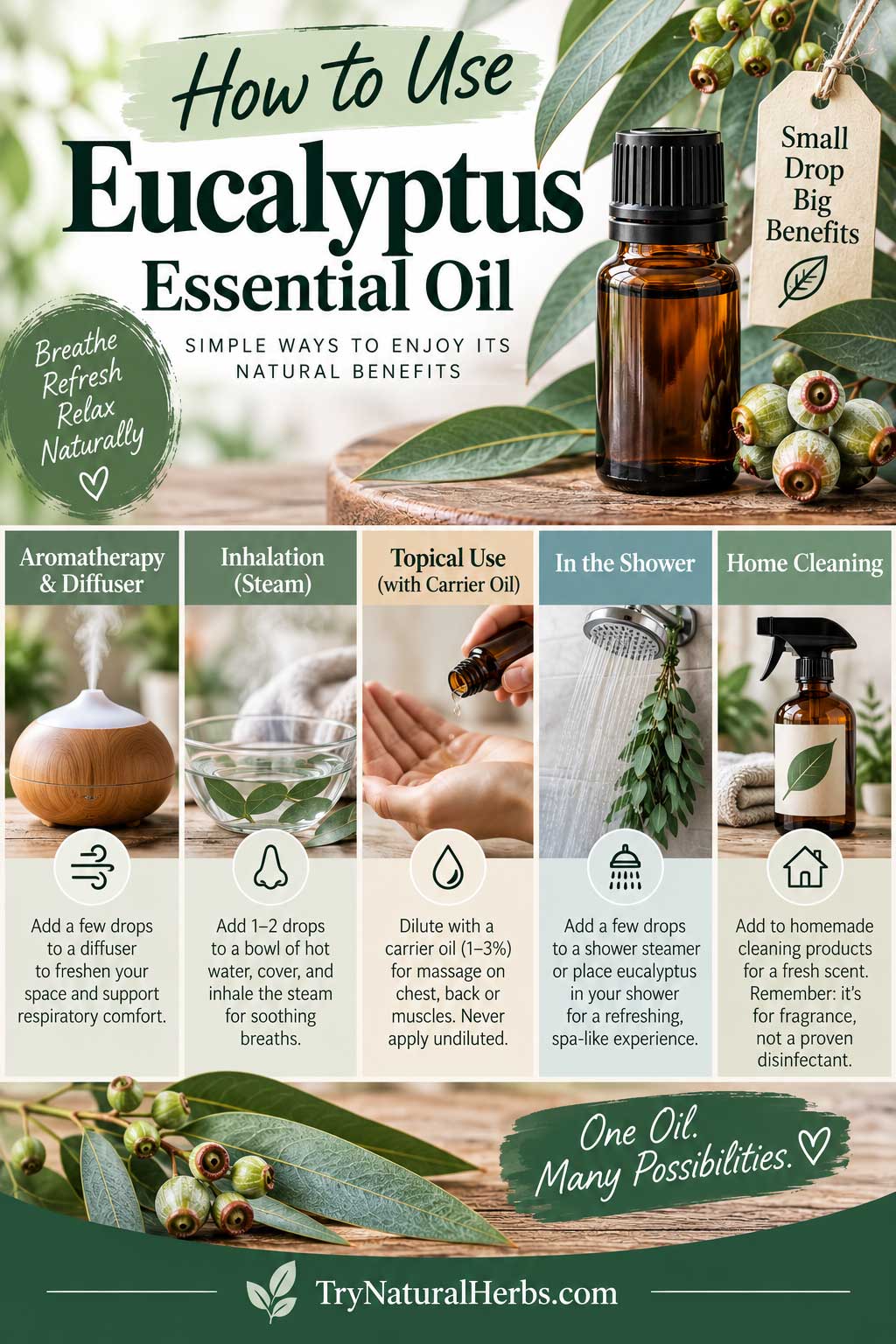
Eucalyptus essential oil can be used in several ways, but because it is highly concentrated, more isn’t better. A few drops are usually enough for aromatherapy, and topical applications should be diluted before they touch your skin.
Use It in a Diffuser
A diffuser is one of the easiest ways to enjoy eucalyptus oil. Its crisp scent works particularly well when you want a room to feel fresh or when seasonal congestion leaves you feeling stuffy.
Add eucalyptus essential oil according to your diffuser manufacturer’s instructions. Start with a small amount, especially in smaller rooms, and avoid running the diffuser continuously for long periods.
Good diffuser combinations include eucalyptus with lavender, lemon, rosemary, or peppermint.
Add It to a Massage Oil
For tired muscles or a refreshing post-workout massage, dilute eucalyptus essential oil in a carrier oil such as jojoba, sweet almond, grapeseed, or fractionated coconut oil.
For general adult body use, a 1–2% dilution is a reasonable starting point.
| Dilution | Approximate Amount |
|---|---|
| 1% | About 3 drops per tablespoon (15 mL) of carrier oil |
| 2% | About 6 drops per tablespoon (15 mL) |
| 3% | About 9 drops per tablespoon (15 mL) |
Drop size varies between bottles, so these are approximate rather than pharmaceutical measurements. Start lower if you have sensitive skin.
Use It in the Shower
A warm shower is an easy way to enjoy eucalyptus’s aroma without putting the oil directly on your body.
Instead of dropping undiluted oil onto the shower floor—where it may create a slipping or skin-contact hazard—use a commercial shower steamer formulated with eucalyptus or place a few drops on a damp washcloth positioned away from direct skin contact and running water.
The warm, humid environment helps disperse the scent.
Try a Carefully Prepared Bath Blend
Don’t add undiluted eucalyptus essential oil directly to bathwater. Essential oils don’t dissolve in water, so droplets can remain concentrated and come into contact with your skin.
If you want eucalyptus in a bath, use a properly formulated bath product or an appropriate dispersing ingredient designed for essential oils rather than assuming water alone will dilute them.
Add It to Household Products for Fragrance
Eucalyptus’s clean aroma makes it popular in homemade surface sprays and other household products.
It can make a room or freshly cleaned surface smell pleasant, but remember that adding essential oil doesn’t automatically turn a homemade cleaner into a disinfectant.
When disinfection matters, use a registered product according to its directions.
Use It in Scalp and Body Products
Eucalyptus can also be added at low concentrations to properly formulated shampoos, scalp oils, or body products.
Avoid adding large amounts directly to an entire bottle of shampoo or lotion unless you understand the final dilution. For occasional use, a professionally formulated eucalyptus product is often the easiest option.
Should You Inhale Eucalyptus Oil From Steam?
Traditional steam inhalation is popular, but leaning over very hot water carries a genuine burn risk, particularly for children.
You don’t need boiling water to enjoy eucalyptus aromatherapy. A diffuser, warm shower, or appropriately formulated inhalation product provides easier alternatives.
Can You Swallow Eucalyptus Essential Oil?
No—don’t treat eucalyptus essential oil as something to ingest at home.
Concentrated eucalyptus oil can be toxic if swallowed. This is very different from pharmaceutical products containing carefully measured or formulated eucalyptus-derived compounds.
Don’t add essential oil to tea, water, food, or homemade mouthwash simply because a product is labeled “natural” or “therapeutic grade.”
If eucalyptus essential oil is accidentally swallowed, contact a poison center or seek medical advice promptly.
A Simple Rule for Using Eucalyptus Safely
For most home users, eucalyptus fits into three straightforward categories: diffuse a small amount, dilute it properly for skin use, or choose a professionally formulated product.
Those approaches give you plenty of ways to enjoy eucalyptus without taking unnecessary risks.
How to Dilute Eucalyptus Essential Oil
If you’re applying eucalyptus essential oil to your skin, dilution matters. Essential oils are highly concentrated, and using more does not necessarily provide greater benefits—it mainly increases the chance of irritation.
For most healthy adults using eucalyptus occasionally on the body, 1–2% is a practical starting range.
| Desired Dilution | 1 Tbsp (15 mL) Carrier Oil | 1 oz (30 mL) Carrier Oil |
|---|---|---|
| 0.5% | 1–2 drops | 3 drops |
| 1% | 3 drops | 6 drops |
| 2% | 6 drops | 12 drops |
| 3% | 9 drops | 18 drops |
These numbers are approximate because essential-oil drop sizes vary between bottles.
Which Carrier Oil Should You Use?
You don’t need an expensive carrier oil. Choose one based on how you plan to use the blend.
Jojoba oil is lightweight and works well for everyday body care, while fractionated coconut oil is convenient for massage and roll-on blends. Sweet almond oil provides more glide for massage, and grapeseed oil is a lighter option that absorbs relatively quickly.
If you have allergies, check the botanical source of your carrier oil before using it.
Simple Eucalyptus Massage Blend
For an easy 2% body massage oil, combine:
1 tablespoon (15 mL) carrier oil + about 6 drops eucalyptus essential oil.
Mix well and apply a small amount to intact skin. Avoid your eyes, mouth, inside the nose, and other sensitive areas.
Patch Test Before Wider Use
Before using a new eucalyptus blend over a larger area, try a small amount on a limited patch of skin first. If you develop burning, significant redness, itching, swelling, or a rash, wash the area and discontinue use.
People with very sensitive skin may want to start below 1% or avoid eucalyptus essential oil altogether.
Keep it simple: For occasional adult body use, you rarely need a strong eucalyptus mixture. Starting with a low dilution gives you the aroma and massage experience while reducing unnecessary exposure to concentrated essential oil.
Best Carrier Oils for Eucalyptus Essential Oil
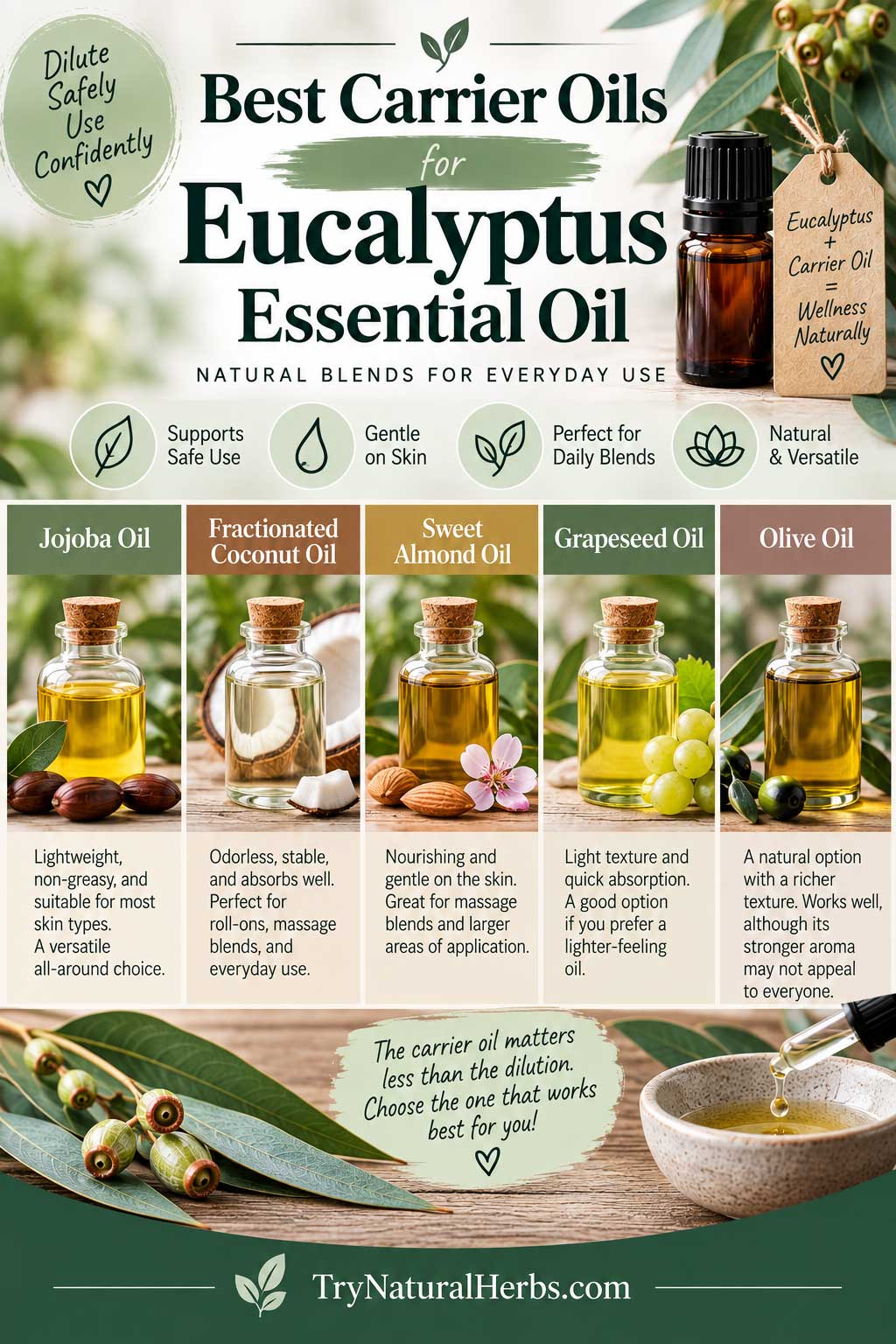
You don’t need a special carrier oil for eucalyptus. The best choice depends mostly on your skin type, how quickly you want the blend to absorb, and whether you’re using it for massage, scalp care, or general body application.
| Carrier Oil | Texture | Best For |
|---|---|---|
| Jojoba oil | Light | Everyday use, scalp and body blends |
| Fractionated coconut oil | Light, silky | Massage oils and roll-ons |
| Sweet almond oil | Medium | Full-body and muscle massage |
| Grapeseed oil | Very light | People who dislike heavier oils |
| Avocado oil | Rich | Dry skin and heavier massage blends |
| Argan oil | Light | Hair and scalp blends |
Jojoba is a versatile all-around choice, while fractionated coconut oil works particularly well in roll-ons and massage blends. Sweet almond oil provides more glide for longer massages, and grapeseed oil is a good option if you prefer something lighter.
Olive oil can also work, although its heavier texture and distinctive aroma make it less appealing for some blends.
The carrier oil matters less than the dilution. Jojoba, fractionated coconut, sweet almond, and grapeseed can all work well with eucalyptus.
Eucalyptus Essential Oil Side Effects and Safety
Eucalyptus essential oil may be natural, but it is also highly concentrated. Most problems are associated with swallowing the oil, using too much, applying it undiluted, or exposing sensitive people to concentrated vapors.
Skin Irritation
Undiluted eucalyptus essential oil can irritate the skin. Possible reactions include redness, burning, itching, or a rash.
Dilute it before topical use and stop using the product if irritation develops. A patch test is a sensible precaution when trying a new oil or blend.
Eucalyptus Oil Can Be Toxic if Swallowed
This is the most important safety point in this guide: do not ingest eucalyptus essential oil as a home remedy.
Eucalyptus oil poisoning can cause symptoms such as nausea, vomiting, abdominal discomfort, dizziness, drowsiness, breathing problems, and—in serious cases—seizures or loss of consciousness.
Poison Control warns that eucalyptus oil can be poisonous when swallowed, with potentially serious effects involving the nervous and respiratory systems.
If someone swallows eucalyptus essential oil, don’t induce vomiting. In the United States, contact Poison Control at 1-800-222-1222 or seek emergency medical help for severe symptoms. Elsewhere, contact your local poison information service or emergency provider.
Avoid the Eyes and Other Sensitive Areas
Keep eucalyptus essential oil away from the eyes, inside the nose, mouth, and other sensitive areas.
Wash your hands after handling concentrated oil, particularly before touching your face or inserting contact lenses.
Be Careful With Strong Inhalation
Some people find eucalyptus refreshing; others find concentrated aromas irritating.
Stop inhalation or diffusion if you experience coughing, wheezing, shortness of breath, eye irritation, nausea, or headache. People with asthma or fragrance sensitivity should be particularly cautious because strong scents can trigger symptoms in some individuals.
Use Extra Caution Around Children
Young children can be more vulnerable to adverse effects from concentrated essential oils. Don’t apply eucalyptus oil near a child’s face or nose, and don’t assume an adult dilution is appropriate for a child.
For infants and young children, it’s safer to seek guidance from a pediatric healthcare professional before using eucalyptus essential oil.
Pregnancy and Breastfeeding
Safety data for concentrated eucalyptus essential oil during pregnancy and breastfeeding are limited.
Occasional exposure to eucalyptus fragrance isn’t the same as repeated concentrated topical use. If you’re pregnant or breastfeeding and want to use eucalyptus regularly, discuss it with your healthcare professional.
What About Pets?
Don’t apply eucalyptus essential oil directly to a dog, cat, or other pet unless your veterinarian specifically recommends an appropriate product.
If you diffuse essential oils in a home with pets, use good ventilation, keep the diffuser where animals cannot knock it over or lick spilled oil, and allow pets to leave the room.
Contact a veterinarian promptly if an animal is exposed to concentrated eucalyptus oil and develops unusual symptoms.
Eucalyptus Essential Oil Safety at a Glance
| Use | Safer Approach |
|---|---|
| Skin | Dilute before applying |
| Diffuser | Use small amounts with ventilation |
| Eyes/nose | Avoid direct contact |
| Swallowing | Do not ingest |
| Children | Use extra caution and seek age-appropriate guidance |
| Pregnancy/breastfeeding | Discuss regular use with a healthcare professional |
| Pets | Never apply concentrated oil directly without veterinary guidance |
| Storage | Keep securely away from children and animals |
Important: Essential oils should complement—not replace—appropriate medical care. If eucalyptus causes breathing difficulty, severe skin reactions, unusual drowsiness, seizures, or other serious symptoms, seek medical attention promptly.
Who Should Be Careful With Eucalyptus Essential Oil?
Some people should be more cautious with eucalyptus essential oil, particularly young children, people with asthma or fragrance sensitivity, those with very sensitive or reactive skin, and anyone who is pregnant or breastfeeding.
If you have a seizure disorder, a chronic respiratory condition, or take prescription medications and plan to use concentrated eucalyptus products regularly, discuss their use with a healthcare professional.
Extra care is especially important with children. Avoid applying eucalyptus oil near a young child’s face or nose, and seek pediatric guidance before using concentrated eucalyptus products. A clinical review of 109 children who swallowed eucalyptus oil reported symptoms ranging from vomiting and drowsiness to more serious neurological and breathing problems.
Most healthy adults don’t need complicated precautions for occasional use. Dilute eucalyptus before applying it to the skin, use modest amounts when diffusing, and stop if it causes irritation or breathing discomfort.
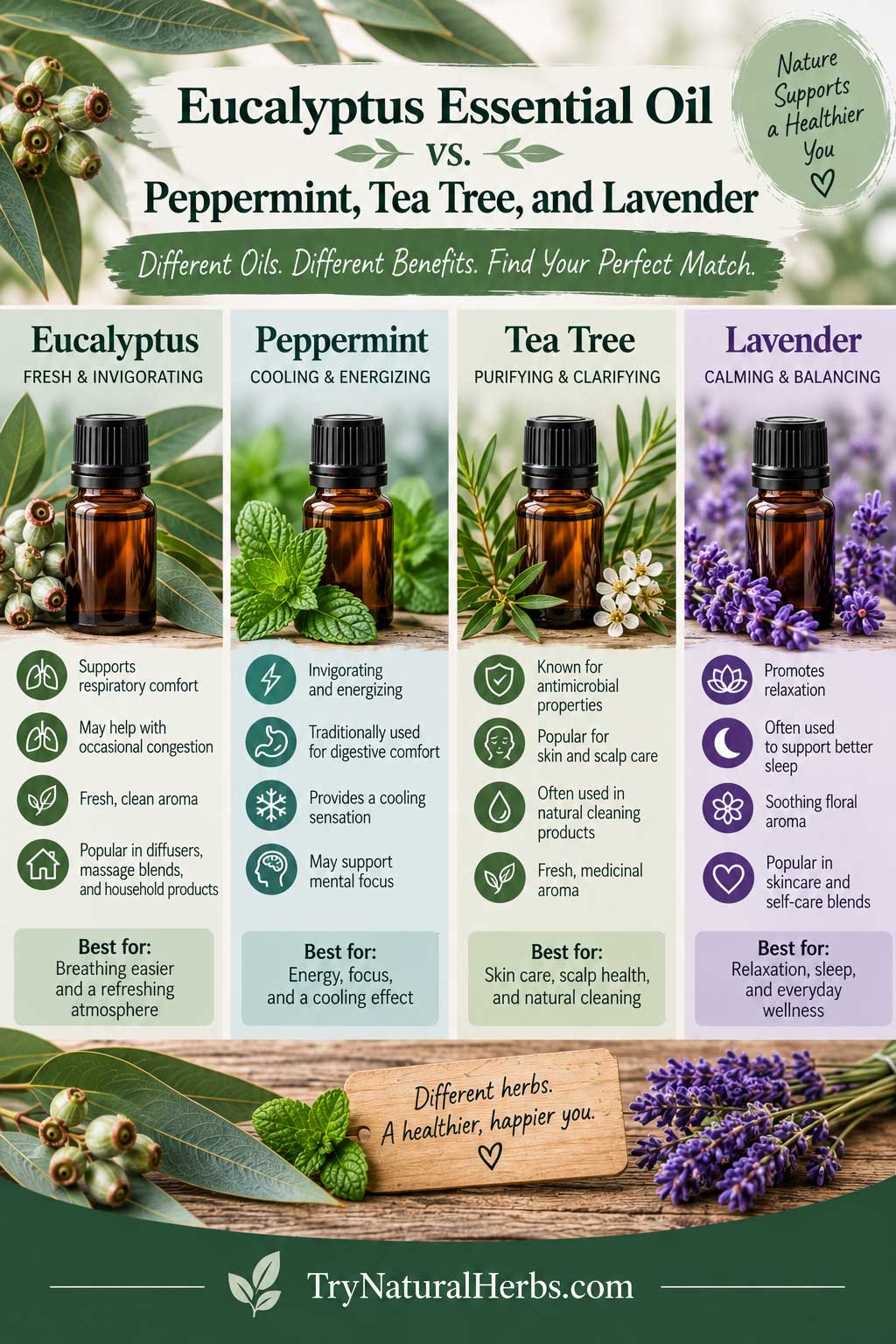
Eucalyptus Essential Oil vs. Peppermint, Tea Tree, and Lavender
Eucalyptus, peppermint, tea tree, and lavender oils sometimes appear in the same products, but they aren’t interchangeable. Each has a different chemical profile and tends to be better suited to particular uses.
| Essential Oil | Best Known For | Key Compounds | Aroma |
|---|---|---|---|
| Eucalyptus | Respiratory-comfort aromatherapy, freshening blends | 1,8-Cineole | Fresh, camphor-like |
| Peppermint | Cooling sensation, invigorating aromatherapy | Menthol, menthone | Strong, cool, minty |
| Tea tree | Topical and cleansing products | Terpinen-4-ol | Herbal, medicinal |
| Lavender | Relaxation and sleep-related aromatherapy | Linalool, linalyl acetate | Floral, herbaceous |
Eucalyptus vs. Peppermint
Both have strong, cooling aromas and are frequently combined in chest rubs and massage products.
Eucalyptus is more closely associated with respiratory-comfort products and 1,8-cineole research, while peppermint’s menthol produces its characteristic cooling sensation. Peppermint also has more direct research behind certain topical applications, including tension-headache preparations.
Eucalyptus is the more traditional choice for respiratory-comfort aromatherapy, while peppermint provides a stronger cooling sensation from its menthol content.
Eucalyptus vs. Tea Tree
Tea tree oil is much more closely associated with topical skin and scalp products. Its major component, terpinen-4-ol, has been extensively investigated for antimicrobial activity.
Our guide to tea tree oil benefits takes a closer look at its traditional uses, research, and safety.
Eucalyptus also demonstrates antimicrobial activity in laboratory studies, but its everyday use is more strongly associated with aromatherapy and respiratory comfort.
For DIY household fragrance, either can work. For skincare, choose a properly formulated product rather than assuming concentrated essential oil is automatically beneficial.
Eucalyptus vs. Lavender
Eucalyptus and lavender smell very different and tend to be used for different purposes.
Eucalyptus smells crisp and invigorating, while lavender has a softer floral aroma and considerably more research related to relaxation and sleep.
See our complete guide to lavender essential oil for its uses, potential benefits, and safety considerations.
That makes eucalyptus a good daytime or shower aroma, while lavender may be more appropriate for a bedtime routine. They’re also easy to blend together when you want eucalyptus freshness without such a sharp scent.
Can You Mix Eucalyptus With Other Essential Oils?
Yes. Eucalyptus blends particularly well with lavender, peppermint, lemon, rosemary, tea tree, cedarwood, and pine.
Just remember that combining oils doesn’t eliminate their individual safety considerations. A blend still needs appropriate dilution for topical use, and adding several essential oils can actually increase the number of compounds your skin or respiratory system is exposed to.
For beginners, simple two- or three-oil blends are usually more practical than complicated recipes containing many different essential oils.
Easy Eucalyptus Essential Oil Recipes
You don’t need complicated formulas to use eucalyptus at home. These simple blends focus on practical uses while keeping the amount of essential oil reasonable.
1. Fresh-Air Diffuser Blend
For a clean, bright aroma, try:
- 3 drops eucalyptus essential oil
- 2 drops lemon essential oil
- 2 drops lavender essential oil
Add the oils to your diffuser according to its instructions. Start with fewer drops in a small room.
2. Eucalyptus and Lavender Relaxation Blend
Eucalyptus’s crisp aroma pairs surprisingly well with softer lavender.
Combine:
- 3 drops lavender
- 2 drops eucalyptus
- 1 drop cedarwood
This works particularly well when you want a fresh but less stimulating evening scent.
For another herb traditionally associated with relaxation, see our guide to lemon balm benefits.
3. Post-Workout Massage Oil
For a simple adult body massage blend, combine:
- 1 tablespoon (15 mL) jojoba, sweet almond, or fractionated coconut oil
- 3 drops eucalyptus essential oil
- 2 drops lavender essential oil
Massage a small amount into tired muscles, avoiding broken or irritated skin.
This blend is for comfort and massage—not for treating an injury.
4. Eucalyptus Shower Aromatherapy
Instead of putting concentrated essential oil directly onto the shower floor, where it may contact your skin or create a slippery area, place 2–3 drops on a damp washcloth and position it away from your body and the direct stream of water.
The warmth and humidity will help release the aroma.
Remove the cloth afterward and keep it away from children and pets.
5. Fresh Home Diffuser Blend
For a scent that works well in kitchens and living spaces, combine:
- 3 drops eucalyptus
- 3 drops lemon
- 1 drop rosemary
This creates a crisp herbal-citrus aroma without needing artificial room fragrance.
Remember that diffusing essential oils makes a room smell fresh; it doesn’t disinfect the air.
A Note About DIY Cleaners
Eucalyptus can add a fresh scent to homemade cleaning products, but laboratory antimicrobial activity doesn’t make a DIY recipe a proven disinfectant. When disinfection matters, use a product tested and registered for that purpose.
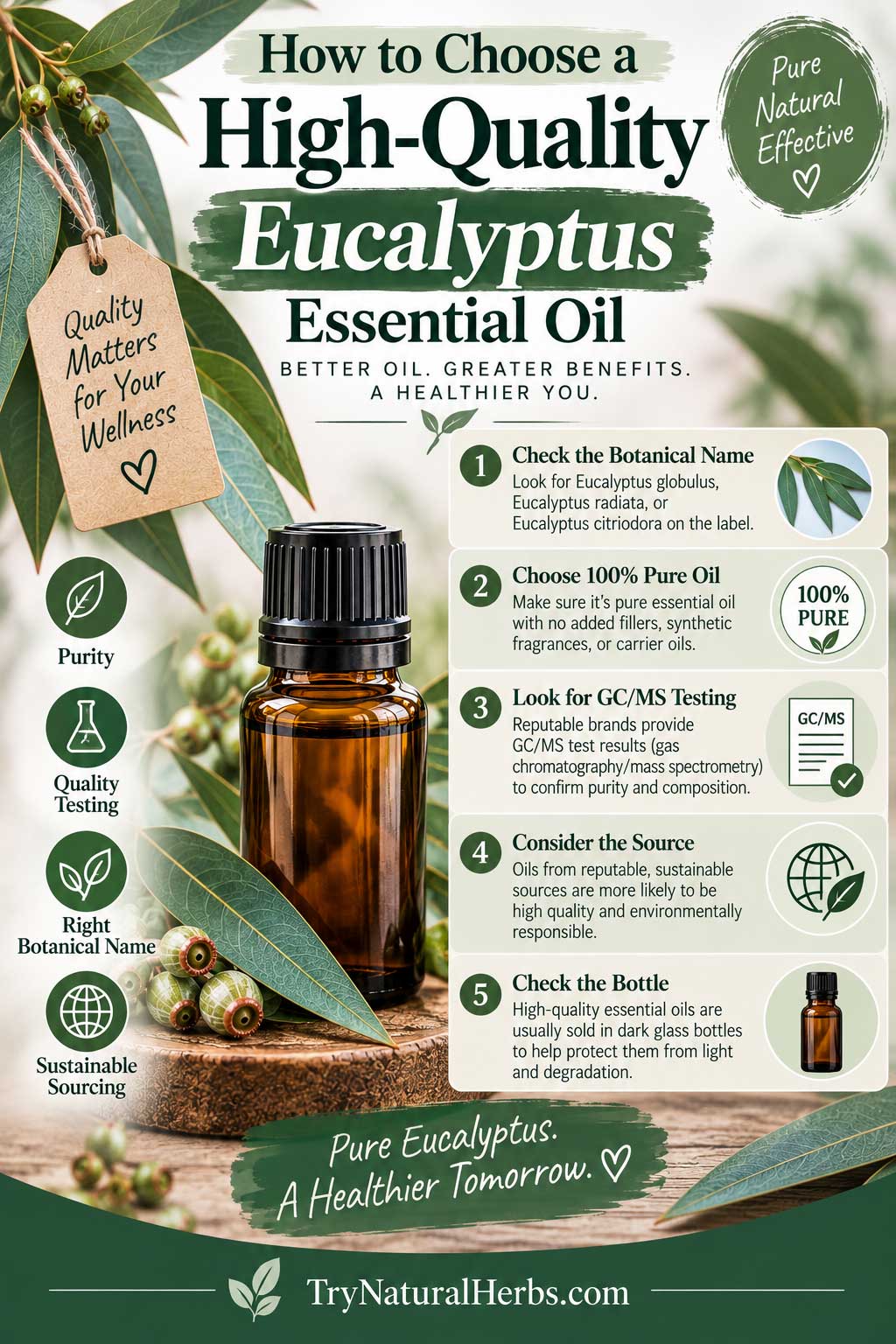
How to Choose a High-Quality Eucalyptus Essential Oil
Not every bottle labeled “eucalyptus oil” is necessarily the same. Species, growing conditions, distillation, storage, and possible adulteration can all affect the final product.
You don’t need to buy the most expensive bottle, but a reputable company should make it easy to understand exactly what you’re buying.
Check the Botanical Name
Look for the botanical species on the label, such as Eucalyptus globulus or Eucalyptus radiata.
A bottle that simply says “eucalyptus fragrance oil” may be a fragrance product rather than a genuine steam-distilled essential oil.
This matters because different eucalyptus species can have noticeably different chemical profiles.
Look for the Extraction Method
Most eucalyptus essential oil is produced through steam distillation of the leaves.
A reputable label or product page should usually identify the extraction method and plant part used.
Choose Dark Glass Packaging
Essential oils are sensitive to light, heat, and oxygen. Quality eucalyptus oil is generally sold in amber, cobalt, or another dark glass bottle rather than clear plastic.
Keep the cap tightly closed and store the bottle away from direct sunlight and heat.
Look for Batch Testing
Some reputable essential-oil companies provide GC/MS testing (gas chromatography–mass spectrometry) for individual batches.
GC/MS analysis can help identify the major volatile compounds present in an oil and detect certain inconsistencies or possible adulteration.
It isn’t an absolute guarantee of quality on its own, but transparent batch testing is a useful sign that a company takes quality control seriously.
Don’t Rely on “Therapeutic Grade”
Terms such as “therapeutic grade” can sound impressive, but they aren’t a universal government-regulated quality standard for essential oils.
Instead of relying on marketing language, look for concrete information:
- Botanical name
- Plant part
- Extraction method
- Country of origin when available
- Batch or lot number
- Ingredient list
- Testing information
- Clear safety directions
Those details tell you considerably more than a premium-sounding phrase on the front of the bottle.
Watch Out for Unrealistic Health Claims
Be cautious if a seller claims its eucalyptus essential oil can cure infections, replace medication, treat serious respiratory diseases, or safely be swallowed for numerous health problems.
Quality and medical effectiveness are two different things. Even a genuine, well-produced eucalyptus essential oil shouldn’t be marketed as a cure-all.
How Long Does Eucalyptus Essential Oil Last?
There’s no single expiration date that applies to every bottle. Shelf life depends on the oil’s composition, packaging, how frequently it’s opened, and how it’s stored.
Follow the manufacturer’s storage and expiration guidance. Replace the oil if you notice significant changes in its aroma, appearance, or consistency.
Quick Buying Checklist
| Look For | Why It Matters |
|---|---|
| Botanical name | Identifies the actual eucalyptus species |
| 100% essential oil ingredient listing | Helps distinguish it from fragrance blends |
| Steam-distilled | Common extraction method for eucalyptus |
| Dark glass bottle | Helps protect the oil from light |
| Lot or batch number | Supports traceability |
| GC/MS information | Provides additional chemical-profile transparency |
| Clear safety instructions | Sign of responsible marketing |
| No miracle claims | Avoids exaggerated or misleading health marketing |
Bottom line: Buy eucalyptus essential oil based on transparency, botanical identification, appropriate packaging, and responsible testing—not buzzwords. A trustworthy company should tell you what species is in the bottle and how the oil was produced without promising that it can cure everything.
Frequently Asked Questions About Eucalyptus Essential Oil
What is eucalyptus essential oil good for?
Eucalyptus essential oil is most commonly used for respiratory-comfort aromatherapy, massage blends, home fragrance, shower products, and household cleaning. Its major compound, 1,8-cineole, has also been studied for respiratory, anti-inflammatory, and antimicrobial effects.
Does eucalyptus oil help with congestion?
The strong aroma of eucalyptus may create a cooling sensation that makes breathing feel more comfortable when you’re congested. However, eucalyptus aromatherapy doesn’t treat the underlying cause of nasal congestion.
Can I put eucalyptus essential oil directly on my skin?
It’s better to dilute it first. For general adult body use, a 1–2% dilution in a carrier oil is a reasonable starting point. Undiluted eucalyptus oil can irritate the skin.
Can you put eucalyptus oil in a diffuser?
Yes. Eucalyptus is commonly used in essential-oil diffusers. Follow your diffuser’s instructions, start with a small amount, ventilate the room, and stop if the aroma causes coughing, headache, or irritation.
Can you sleep with eucalyptus oil in a diffuser?
You don’t need to run a diffuser throughout the night. If you enjoy eucalyptus before bed, consider diffusing it for a limited period as part of your evening routine and then turning the diffuser off. Lavender may be a better choice if relaxation and sleep are your primary goals.
Is eucalyptus essential oil safe to inhale?
Small amounts used appropriately for aromatherapy are generally tolerated by many healthy adults, but concentrated vapors can irritate some people. Those with asthma, fragrance sensitivity, or other respiratory conditions should be particularly cautious.
Can you swallow eucalyptus essential oil?
No. Eucalyptus essential oil can be toxic if swallowed. Don’t add concentrated eucalyptus oil to water, tea, food, or homemade oral remedies unless you’re using a specifically formulated product according to its directions.
Is eucalyptus oil safe for children?
Extra caution is needed with infants and young children. Don’t apply eucalyptus essential oil near a child’s face or nose, and seek age-appropriate guidance from a pediatric healthcare professional before using concentrated eucalyptus products with young children.
Is eucalyptus essential oil safe around pets?
Concentrated eucalyptus oil shouldn’t be applied directly to pets unless directed by a veterinarian. If you diffuse it, provide good ventilation, keep the oil and diffuser out of reach, and allow animals to leave the room.
What’s the difference between eucalyptus oil and lemon eucalyptus oil?
They’re derived from different plants and have different chemical profiles. Cineole-rich oils such as Eucalyptus globulus have the familiar eucalyptus aroma, while lemon eucalyptus (Corymbia citriodora) has a lemony, citronella-like scent.
Also, lemon eucalyptus essential oil isn’t the same as oil of lemon eucalyptus (OLE/PMD) used in some registered mosquito repellents.
Is eucalyptus or peppermint better for congestion?
Both are popular in respiratory-comfort products. Eucalyptus is rich in 1,8-cineole, while peppermint contains menthol, which produces a pronounced cooling sensation. Neither should replace appropriate treatment when congestion is severe, persistent, or caused by an underlying medical condition.
Does eucalyptus essential oil kill bacteria?
Eucalyptus essential oil has demonstrated antibacterial activity against certain microorganisms in laboratory studies. That doesn’t mean it can treat bacterial infections in people or that a homemade eucalyptus cleaner is automatically an effective disinfectant.
How often can you use eucalyptus essential oil?
There’s no universal schedule that’s appropriate for everyone. Use the smallest practical amount, follow product directions, avoid continuous exposure, and stop if you develop skin, eye, or respiratory irritation.
What oils blend well with eucalyptus?
Eucalyptus blends particularly well with lavender, peppermint, lemon, rosemary, tea tree, cedarwood, and pine. Rosemary is another especially versatile aromatic herb; our guide to rosemary benefits and uses explains its culinary, traditional, and aromatherapy applications. Lavender softens its sharp aroma, while peppermint or rosemary creates a more invigorating blend.
Which eucalyptus essential oil is best?
For general aromatherapy, Eucalyptus globulus and Eucalyptus radiata are two common choices. Rather than looking for a single “best” oil, choose a reputable product that clearly lists the botanical species, extraction method, ingredients, and appropriate safety information.
Is Eucalyptus Essential Oil Worth Using?
Eucalyptus essential oil has earned its place in many home wellness routines for a simple reason: it’s versatile. Its fresh aroma works well in diffusers and shower products, while properly diluted eucalyptus can be incorporated into massage and body-care blends.
There is also real science behind some of the interest in eucalyptus, particularly research involving 1,8-cineole (eucalyptol). At the same time, it’s important not to stretch research on an isolated compound or laboratory antimicrobial activity into claims that eucalyptus essential oil can treat respiratory diseases, infections, pain, or other medical conditions.
For most people, the best approach is straightforward: use a small amount for aromatherapy, dilute it before applying it to your skin, and don’t swallow it.
Used that way, eucalyptus essential oil can be a refreshing and practical addition to your routine without expecting it to do more than the evidence supports.
References & Scientific Sources
- Fischer J, Dethlefsen U. Efficacy of cineole in patients suffering from acute bronchitis: a placebo-controlled double-blind trial. Cough. 2013;9(1):25. PMID: 24261680.
- Juergens UR, Dethlefsen U, Steinkamp G, Gillissen A, Repges R, Vetter H. Anti-inflammatory activity of 1.8-cineol (eucalyptol) in bronchial asthma: a double-blind placebo-controlled trial. Respiratory Medicine. 2003;97(3):250–256. PMID: 12645832.
- Worth H, Schacher C, Dethlefsen U. Concomitant therapy with Cineole (Eucalyptole) reduces exacerbations in COPD: a placebo-controlled double-blind trial. Respiratory Research. 2009;10:69. PMID: 19624838.
- Hendry ER, Worthington T, Conway BR, Lambert PA. Antimicrobial efficacy of eucalyptus oil and 1,8-cineole alone and in combination with chlorhexidine digluconate against microorganisms grown in planktonic and biofilm cultures. Journal of Antimicrobial Chemotherapy. 2009. PMID: 19837714.
- Tibballs J. Clinical effects and management of eucalyptus oil ingestion in infants and young children. Medical Journal of Australia. 1995;163(4):177–180. PMID: 7651249.
- Van Leeuwen MPC, Slot DE, Van der Weijden GA. The effect of an essential-oils mouthrinse as compared to a vehicle solution on plaque and gingival inflammation: a systematic review and meta-analysis. International Journal of Dental Hygiene. 2014;12(3):160–167. PMID: 24720368.
- U.S. Environmental Protection Agency. Skin-Applied Repellent Ingredients. EPA guidance on registered insect-repellent active ingredients, including oil of lemon eucalyptus and PMD.
- Centers for Disease Control and Prevention. Mosquitoes, Ticks, and Other Arthropods. CDC Yellow Book. Guidance on EPA-registered repellents and the distinction between formulated OLE/PMD and pure oil of lemon eucalyptus.
- Poison Control. Eucalyptus Oil: Is It Safe? Clinical toxicology guidance on eucalyptus oil exposure, ingestion, symptoms, and poisoning response.