 By Kazim
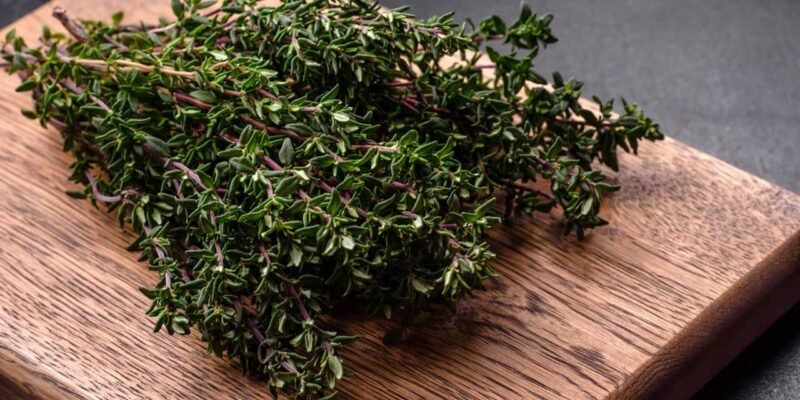
Thyme may look like a simple kitchen herb, but thyme benefits go well beyond the flavor it adds to food. With its earthy aroma, tiny green leaves, and slightly minty taste, thyme has been valued for centuries in Mediterranean cooking and traditional herbal practices.
Known botanically as Thymus vulgaris, thyme belongs to the mint family (Lamiaceae). Its leaves contain naturally occurring plant compounds, including thymol and carvacrol, that have attracted scientific interest for their antioxidant and antimicrobial properties.
In the kitchen, thyme is incredibly versatile. Fresh or dried leaves can add depth to roasted vegetables, soups, stews, sauces, marinades, chicken, fish, and many other dishes. You can also steep thyme as an herbal tea or use it to make infused oils.
Beyond cooking, thyme has a long history of traditional use for respiratory comfort, digestion, and general wellness. Modern research is exploring some of these traditional uses, although thyme should not be considered a treatment or cure for medical conditions.
In this guide, we’ll explore the benefits of thyme, its nutritional profile, different varieties, culinary uses, growing tips, and possible side effects. You’ll also discover practical ways to make this fragrant Mediterranean herb part of your kitchen and garden.
Uses and Health Benefits of Thyme
Thyme has been valued for generations as both a culinary herb and a traditional herbal remedy. Many of the potential thyme benefits being studied today are linked to its naturally occurring plant compounds, particularly thymol, carvacrol, and rosmarinic acid.
Rich in Antioxidant Compounds
Thyme contains several antioxidants that help protect cells from oxidative stress caused by free radicals. Compounds such as thymol, carvacrol, and rosmarinic acid contribute to the herb’s antioxidant activity.
While adding thyme to your meals isn’t a cure or treatment for chronic disease, it can be one flavorful way to include a wider variety of antioxidant-rich herbs and plant foods in your diet.
Contains Naturally Occurring Antimicrobial Compounds
Thymol and carvacrol, two important components found in thyme and thyme essential oil, have demonstrated antimicrobial activity in laboratory research. These compounds have been studied for their effects against certain bacteria and fungi.
Most of this evidence comes from laboratory research, so it doesn’t tell us that culinary thyme works like an antibiotic. Still, the findings offer an interesting scientific perspective on an herb that has been used traditionally for generations.
Traditionally Used for Respiratory Comfort
Thyme has traditionally been prepared as an herbal tea to soothe the throat and support respiratory comfort, particularly during cold weather.
A warm cup of thyme tea can be especially comforting during colder months, and its aromatic oils give the drink its distinctive herbal flavor. For persistent or severe respiratory symptoms, however, it’s best to seek medical advice.
May Support Healthy Digestion
Thyme has also traditionally been used to support digestion. Its aromatic qualities make it a natural addition to meals, while herbal preparations containing thyme have historically been used after eating.
One of the easiest ways to enjoy thyme is simply to incorporate it into your cooking. It pairs especially well with vegetables, beans, soups, roasted meats, and Mediterranean-inspired dishes.
Provides Small Amounts of Important Nutrients
Fresh thyme contains vitamins and minerals, including vitamin C, vitamin A precursors, vitamin K, iron, manganese, and calcium. Because thyme is usually eaten in relatively small quantities, it shouldn’t be considered a major source of most nutrients.
Nutrients aside, one of thyme’s biggest advantages is simply flavor. A small handful of leaves can brighten vegetables, beans, soups, and meats without relying on extra salt or heavy sauces.
Overall, thyme combines culinary versatility with an interesting range of naturally occurring plant compounds. Whether you use it fresh, dried, or brewed into tea, thyme can be an easy and aromatic addition to a varied diet.

How to Grow Thyme in Your Garden
Thyme is one of those herbs that gives you plenty in return for relatively little work. Once established, this hardy perennial needs minimal attention and can provide fragrant leaves for cooking throughout much of the growing season. Its small flowers can also attract bees and other pollinators to the garden.
Choose a Sunny Location
Thyme grows best in full sun, ideally receiving at least six hours of direct sunlight each day. A warm, sunny location helps the plant develop healthy growth and the fragrant, flavorful leaves prized in the kitchen.
Good drainage is equally important. Thyme doesn’t like sitting in constantly wet soil, and overly damp conditions can contribute to root problems. If your garden soil is heavy or holds water, consider growing thyme in a raised bed or container.
Planting Thyme
You can grow thyme from seed, cuttings, divisions, or young plants purchased from a nursery. Starting with a small established plant is usually the quickest option if you want to begin harvesting sooner.
When planting thyme in the garden, give each plant enough room for air circulation and future growth. Depending on the variety, spacing plants roughly 12 to 24 inches apart usually provides adequate room.
Thyme generally prefers well-draining soil that is neutral to slightly alkaline. It doesn’t require particularly rich soil, and excessive fertilizer can encourage soft growth while reducing some of the intense flavor gardeners want from culinary thyme.
Water Carefully
Newly planted thyme needs regular watering while its roots become established. After that, thyme is relatively drought tolerant.
Allow the upper layer of soil to dry somewhat between waterings rather than keeping the ground continuously moist. Container-grown thyme may need watering more frequently because pots dry out faster than garden beds.
Harvest Thyme Regularly
Once the plant is established, snip young stems whenever you need fresh thyme for cooking. Regular harvesting can also encourage bushier growth.
For the best flavor, harvest thyme before or around the beginning of flowering. Cut stems with clean scissors or garden shears, but avoid removing too much of the woody base at once.
Fresh thyme can be used immediately, stored briefly in the refrigerator, or dried for later use. With the right sunny location and well-draining soil, a healthy thyme plant can continue producing for several years.
Different Types of Thyme
The Thymus genus includes hundreds of species and cultivars, ranging from flavorful culinary varieties to low-growing ornamental plants. While many share the familiar thyme fragrance, their flavor, growth habit, leaf color, and best uses can vary considerably.
Here are a few of the most popular types of thyme you may encounter.
Common Thyme
Common thyme (Thymus vulgaris), sometimes called English or garden thyme, is one of the most widely used varieties for cooking. It has small aromatic leaves with an earthy, slightly minty flavor that becomes particularly fragrant when crushed.
This is an excellent all-purpose thyme for soups, stews, roasted vegetables, sauces, marinades, poultry, and meat dishes. It can be used fresh or dried, making it a practical variety to grow in a kitchen garden.
Lemon Thyme
Lemon thyme is prized for its fresh citrus-like fragrance. Its leaves combine the familiar herbal character of thyme with noticeable lemon notes, making it particularly useful when you want a lighter, brighter flavor.
Try lemon thyme with chicken, fish, roasted vegetables, potatoes, salad dressings, marinades, or herb-infused oils. Fresh sprigs can also add an aromatic touch to herbal teas and other beverages.
Creeping Thyme
Creeping thyme is a low-growing type that spreads across the ground, creating a dense mat of tiny leaves and colorful flowers. Rather than being grown primarily as a kitchen herb, it is especially popular as an ornamental ground cover.
Gardeners often plant creeping thyme between stepping stones, along pathways, in rock gardens, or around borders. Once established, many varieties tolerate relatively dry conditions and can produce masses of small flowers that attract pollinators.
French Thyme
French thyme has a savory, aromatic character that fits naturally into soups, sauces, poultry, vegetables, and slow-cooked dishes. If you enjoy French or Mediterranean-style cooking, it’s another useful variety to have within reach.
Thyme is also a traditional component of several classic herb blends used in French cuisine.
Which Type of Thyme Should You Choose?
If your main goal is cooking, common thyme is an excellent place to start because of its versatile flavor. Choose lemon thyme when you want a brighter citrus aroma, particularly for fish, chicken, and lighter dishes.
For landscaping, pathways, or rock gardens, creeping thyme is usually a better choice because of its spreading growth habit.
You don’t necessarily have to choose just one. Growing several varieties can give you different flavors for the kitchen while adding fragrance, flowers, and texture to your garden.
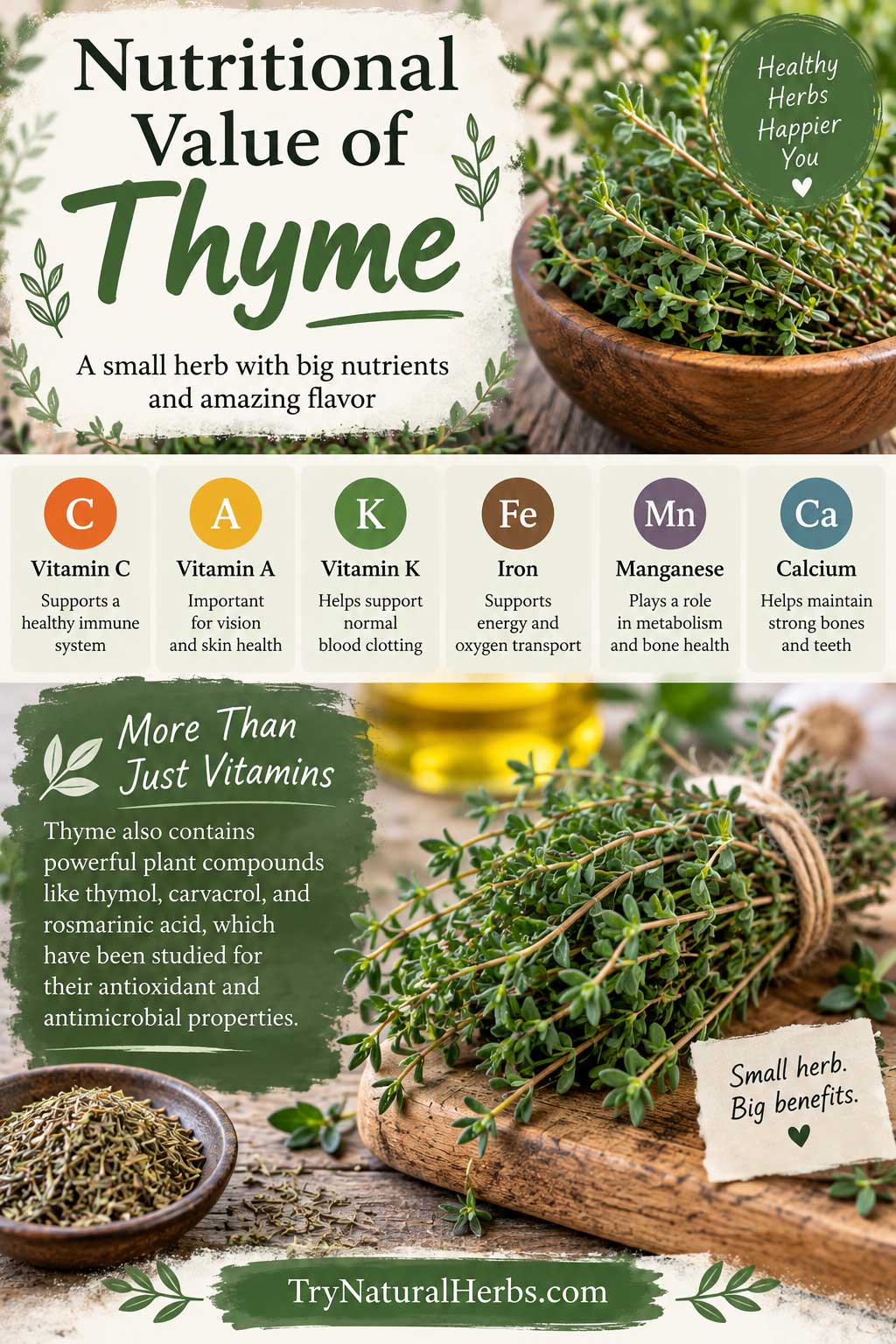
Nutritional Value of Thyme
Thyme may be used in relatively small amounts, but its leaves contain a variety of vitamins, minerals, and naturally occurring plant compounds. Fresh thyme provides nutrients such as vitamin C, vitamin A precursors, vitamin K, iron, manganese, and calcium.
Because most people use only a few sprigs or teaspoons at a time, thyme shouldn’t be relied upon as a major source of these nutrients. Instead, its nutritional value is best viewed as a small bonus alongside the flavor and plant compounds it adds to meals.
Vitamins and Minerals in Thyme
Thyme contains several micronutrients that play important roles in the body. Vitamin C contributes to normal immune function and helps protect cells from oxidative stress, while vitamin K is involved in normal blood clotting and bone health.
The herb also contains minerals such as iron, manganese, and calcium. Iron is necessary for normal oxygen transport in the body, while calcium and manganese contribute to processes involving bones and normal cellular function.
Again, the amount you actually receive from thyme depends heavily on how much you eat.
Beneficial Plant Compounds
Beyond its vitamins and minerals, thyme contains aromatic compounds and polyphenols, including thymol, carvacrol, and rosmarinic acid. Researchers have studied these compounds for several biological activities, particularly their antioxidant and antimicrobial properties.
Much of this research has involved laboratory studies, essential oils, or concentrated extracts, so the findings don’t necessarily reflect what happens when thyme is eaten in normal culinary amounts.
Fresh vs. Dried Thyme
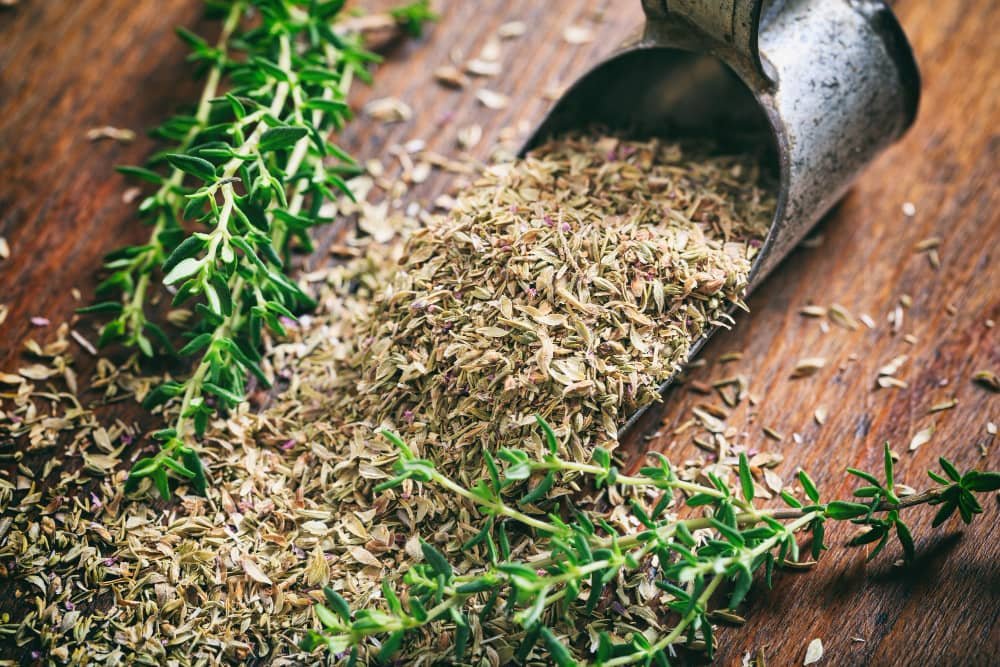
Both fresh and dried thyme can be useful additions to your diet. Drying removes much of the herb’s water, concentrating its flavor, which is why recipes generally require less dried thyme than fresh thyme.
A common kitchen guideline is to use approximately one-third as much dried thyme as fresh thyme. For example, if a recipe calls for one tablespoon of fresh thyme, roughly one teaspoon of dried thyme is usually a reasonable substitute.
Rather than focusing on thyme as a nutritional supplement, think of it as an easy way to add flavor and variety to everyday foods. A small amount can transform vegetables, beans, soups, sauces, and proteins without adding significant amounts of sugar or sodium.
Cooking with Thyme: Recipes and Tips
Thyme is one of the easiest herbs to work into everyday cooking. Its earthy, slightly minty flavor complements savory foods without overpowering them, which is why it appears so often in Mediterranean and French-inspired dishes.
You can cook with either fresh or dried thyme. Fresh thyme has a lighter, more aromatic character, while dried thyme provides a more concentrated flavor and works especially well in dishes that simmer or roast for longer periods.
What Foods Pair Well With Thyme?
Thyme pairs particularly well with:
- Chicken, turkey, beef, and lamb
- Fish and seafood
- Potatoes and other root vegetables
- Tomatoes, zucchini, and mushrooms
- Beans and lentils
- Soups, stews, and broths
- Pasta sauces
- Eggs and savory breakfast dishes
- Olive oil, garlic, and lemon
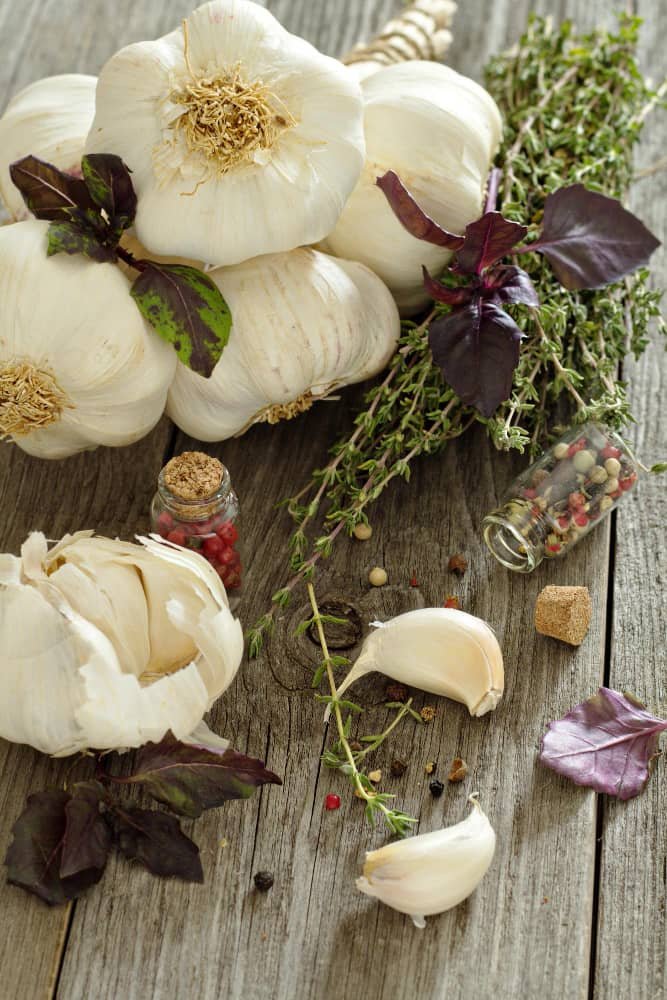
One of the simplest combinations is thyme, garlic, olive oil, and lemon. Toss it with potatoes or vegetables before roasting, or use it as a marinade for chicken or fish.
Fresh Thyme vs. Dried Thyme
Fresh and dried thyme can usually be substituted for one another, but dried thyme has a more concentrated flavor.
As a general kitchen guideline, use about 1 teaspoon of dried thyme for every 1 tablespoon of fresh thyme called for in a recipe. You can always start with less and adjust according to taste.
Fresh thyme works especially well when added toward the end of cooking or used as a finishing herb. Dried thyme benefits from having more time to release its flavor, making it ideal for soups, stews, sauces, and slow-cooked dishes.
How to Remove Thyme Leaves From the Stem
For tender young sprigs, some of the stem may be soft enough to chop along with the leaves. Older thyme stems, however, can be woody and unpleasant to eat.
To remove the leaves, hold the top of the stem with one hand and gently run the fingers of your other hand down the stem in the opposite direction of growth. The small leaves should come away easily.
You can also add whole thyme sprigs to soups, stews, and sauces while they cook. Simply remove the woody stems before serving.
Easy Ways to Cook With Thyme
You don’t need a complicated recipe to start using more thyme. Sprinkle fresh or dried thyme over potatoes before roasting, stir it into tomato sauce, add a few sprigs to homemade soup, or combine it with garlic and olive oil for roasted vegetables.
For an easy thyme-roasted chicken, season chicken with olive oil, fresh thyme, garlic, black pepper, and lemon. Roast until the chicken reaches a safe internal temperature and serve it with vegetables or potatoes.
You can also experiment with lemon thyme in lighter dishes. Its citrus aroma works particularly well with fish, chicken, salad dressings, marinades, and roasted summer vegetables.
Keep a jar of dried thyme in the pantry and a fresh plant nearby if you can—you’ll have an easy way to add flavor to everything from Tuesday-night potatoes to a slow-cooked Sunday dinner.
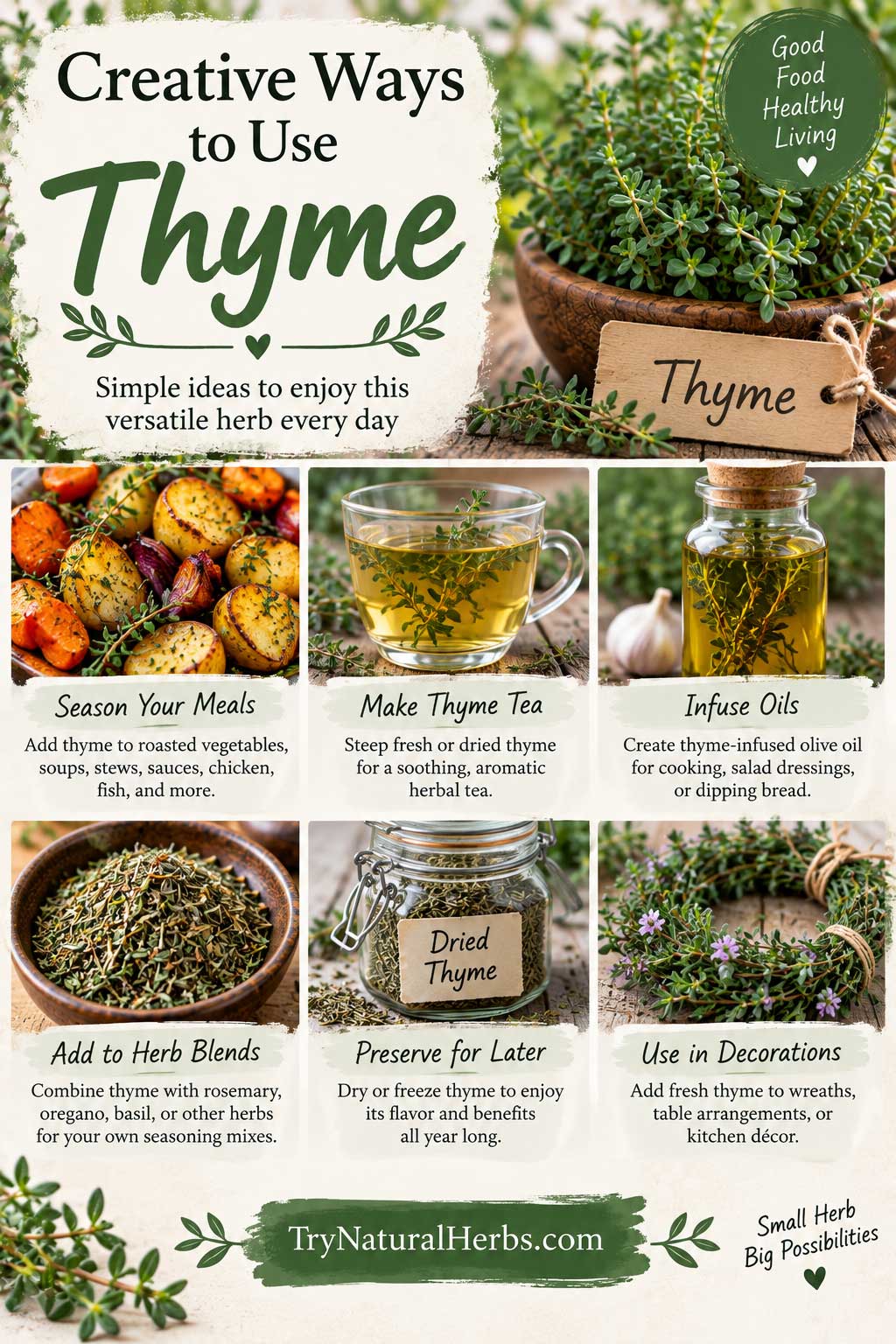
Creative Ways to Use Thyme
Thyme isn’t limited to soups, roasted vegetables, and savory dishes. Fresh and dried thyme can be used in several creative ways around the kitchen and home, making it a particularly versatile herb to grow yourself.
Make Thyme Tea
One of the simplest ways to use fresh or dried thyme is to prepare an herbal tea. Add a few fresh sprigs or about a teaspoon of dried thyme to a cup of hot water and allow it to steep for several minutes.
Strain out the leaves and taste it as-is first. If the herbal flavor feels a little strong, a squeeze of lemon or spoonful of honey softens it nicely.
Thyme tea has a long history of traditional use, particularly for soothing the throat and supporting respiratory comfort. However, it shouldn’t be considered a treatment for respiratory infections or other medical conditions.
Make Thyme-Infused Olive Oil
Fresh thyme can add wonderful flavor to olive oil, but homemade oils containing fresh herbs need to be prepared and stored carefully because moisture from fresh ingredients can create food-safety concerns.
For an easier option, add thyme directly to olive oil shortly before using it in a marinade, salad dressing, or roasted vegetable dish rather than storing fresh herbs in oil for long periods.
Thyme pairs especially well with olive oil, garlic, lemon, oregano, and rosemary.
Add Thyme to Homemade Herb Blends
Dried thyme is an excellent ingredient for homemade seasoning blends. Combine it with herbs such as rosemary, oregano, basil, parsley, or marjoram to create your own Mediterranean-inspired mixture.
Keep the finished blend in an airtight container away from heat, moisture, and direct sunlight.
Freeze Fresh Thyme for Later
If your thyme plant produces more than you can use, freezing is an easy way to preserve the harvest.
Wash and thoroughly dry the sprigs before placing them in a freezer-safe container or bag. You can also remove the leaves and freeze small portions in an ice cube tray with water or broth for convenient use in future soups, stews, and sauces.
Use Thyme in Herbal Decorations
Fresh or dried thyme can also bring natural fragrance and texture to seasonal decorations. Small bundles can be incorporated into herb wreaths, table arrangements, or kitchen decorations alongside rosemary, lavender, and other aromatic plants.
Even a few freshly cut sprigs placed in a small vase can add greenery and a subtle herbal scent to the kitchen.
Be Careful With Thyme Essential Oil
Thyme essential oil is much more concentrated than the herb used in cooking. Although it appears in some commercial skincare, aromatherapy, and personal-care products, concentrated thyme essential oil can irritate the skin and should not be applied undiluted.
Essential oils also shouldn’t be treated as interchangeable with culinary thyme or homemade thyme tea. If you’re considering using thyme essential oil therapeutically, particularly if you’re pregnant, nursing, taking medication, or managing a health condition, speak with an appropriate healthcare professional first.
Possible Side Effects and Precautions of Thyme
Thyme is generally considered safe when used in the small amounts commonly found in food. Adding fresh or dried thyme to meals is very different, however, from taking concentrated thyme extracts or using thyme essential oil.
Digestive Discomfort
Some people may experience digestive discomfort after consuming large amounts of thyme or concentrated thyme preparations. Possible symptoms can include nausea, stomach upset, or other gastrointestinal discomfort.
If thyme consistently causes digestive symptoms, reduce the amount you use or stop using it and discuss persistent symptoms with a healthcare professional.
Allergic Reactions
People who are sensitive to thyme or other plants in the mint family (Lamiaceae) may experience an allergic reaction.
Stop using thyme and seek medical attention if you develop symptoms of a serious allergic reaction, such as significant swelling, difficulty breathing, or widespread hives.
Thyme Essential Oil Requires Extra Care
Thyme essential oil is highly concentrated and shouldn’t be treated the same way as fresh or dried culinary thyme. Applying undiluted essential oil directly to the skin may cause irritation or sensitivity.
Essential oils should also not be swallowed unless their use is specifically directed by a qualified healthcare professional. Keep essential oils away from children and follow appropriate product-specific safety instructions.
Pregnancy, Medications, and Medical Conditions
Using normal culinary amounts of thyme in food is different from taking medicinal or concentrated preparations. If you’re pregnant or breastfeeding, take prescription medications, have a medical condition, or are considering using concentrated thyme supplements or extracts, talk with your healthcare provider before doing so.
This extra caution mainly applies to medicinal doses, supplements, extracts, and essential oils rather than the small amount of thyme normally sprinkled into food.
For most people, enjoying thyme as a seasoning is a simple way to incorporate the herb into everyday meals. The greatest caution is generally needed with concentrated supplements, extracts, and essential oils, rather than the small quantities normally used in cooking.
Frequently Asked Questions About Thyme
What Are the Main Benefits of Thyme?
Thyme contains naturally occurring plant compounds such as thymol, carvacrol, and rosmarinic acid, which have been studied for antioxidant and antimicrobial activity. Thyme also provides small amounts of vitamins and minerals and has a long history of traditional use for respiratory and digestive comfort. Many studies, however, use concentrated extracts or essential oils rather than ordinary culinary amounts of thyme.
Can You Drink Thyme Tea Every Day?
For many people, thyme tea made with ordinary culinary amounts of the herb can be enjoyed as part of a varied diet. Individual tolerance varies, however. If you’re pregnant or breastfeeding, take medications, have a medical condition, or plan to use thyme in concentrated medicinal amounts, talk with a healthcare professional first.
How Do You Make Thyme Tea?
Add a few fresh thyme sprigs or about one teaspoon of dried thyme to a cup of hot water. Let it steep for several minutes, then strain out the leaves. You can drink thyme tea plain or add lemon or honey for flavor.
Is Fresh Thyme Better Than Dried Thyme?
Neither is necessarily better. Fresh thyme has a lighter, more aromatic flavor, while dried thyme is more concentrated and convenient for longer-cooking dishes. As a general kitchen guideline, use about one teaspoon of dried thyme in place of one tablespoon of fresh thyme.
What Foods Go Well With Thyme?
Thyme pairs well with chicken, fish, beef, lamb, potatoes, tomatoes, mushrooms, beans, soups, stews, and roasted vegetables. It also combines especially well with garlic, lemon, olive oil, rosemary, oregano, and other Mediterranean herbs.
Does Thyme Come Back Every Year?
Yes, common thyme (Thymus vulgaris) is a perennial herb and can return year after year when grown in suitable conditions. It prefers plenty of sunlight and well-draining soil. Its ability to survive winter depends on the variety and local growing conditions.
Can Thyme Be Grown in a Pot?
Yes. Thyme is well suited to containers as long as the pot has good drainage and receives plenty of sunlight. Allow the soil to dry somewhat between waterings because established thyme generally prefers drier conditions over constantly wet soil.
Is Thyme Essential Oil the Same as Culinary Thyme?
No. Thyme essential oil is a highly concentrated product and should not be used in the same way as fresh or dried thyme. Undiluted essential oil may irritate the skin, and it should not be swallowed unless specifically directed by an appropriately qualified healthcare professional.
Final Thoughts on Thyme Benefits and Uses
Thyme is a small herb with an impressive range of uses. From seasoning roasted vegetables and soups to brewing herbal tea and growing fresh sprigs in the garden, it’s an easy ingredient to incorporate into everyday life.
Many of the potential thyme benefits are connected to naturally occurring compounds such as thymol, carvacrol, and rosmarinic acid. These compounds have been studied for their antioxidant and antimicrobial properties, although research involving concentrated extracts or essential oils shouldn’t be interpreted as proof that ordinary culinary thyme can prevent or treat disease.
Perhaps the best thing about thyme is how easy it is to use. Fresh leaves provide a fragrant finishing touch, while dried thyme works beautifully in soups, stews, sauces, marinades, and slow-cooked meals. Growing your own thyme can make it even easier to keep this Mediterranean herb within reach.
If you’re new to thyme, start simply. Add a few fresh sprigs to roasted potatoes, combine it with garlic and olive oil, brew a mild cup of thyme tea, or grow a small plant in a sunny container.
Whether it ends up in tonight’s dinner, a warm cup of tea, or a sunny corner of your herb garden, thyme earns its place as one of the most useful herbs to keep around.
References
- European Medicines Agency (EMA). Thyme Herb (Thymi herba).
https://www.ema.europa.eu/en/medicines/herbal/thymi-herba - European Medicines Agency (EMA). Thyme Essential Oil (Thymi aetheroleum).
https://www.ema.europa.eu/en/medicines/herbal/thymi-aetheroleum - Patil SM, Ramu R, Shirahatti PS, et al. A Systematic Review on Ethnopharmacology, Phytochemistry and Pharmacological Aspects of Thymus vulgaris. Heliyon. 2021;7(5):e07054.
https://pubmed.ncbi.nlm.nih.gov/34041399/ - Iowa State University Extension and Outreach. All About Thyme.
https://yardandgarden.extension.iastate.edu/how-to/all-about-thyme - University of Illinois Extension. Thyme.
https://extension.illinois.edu/herbs/thyme